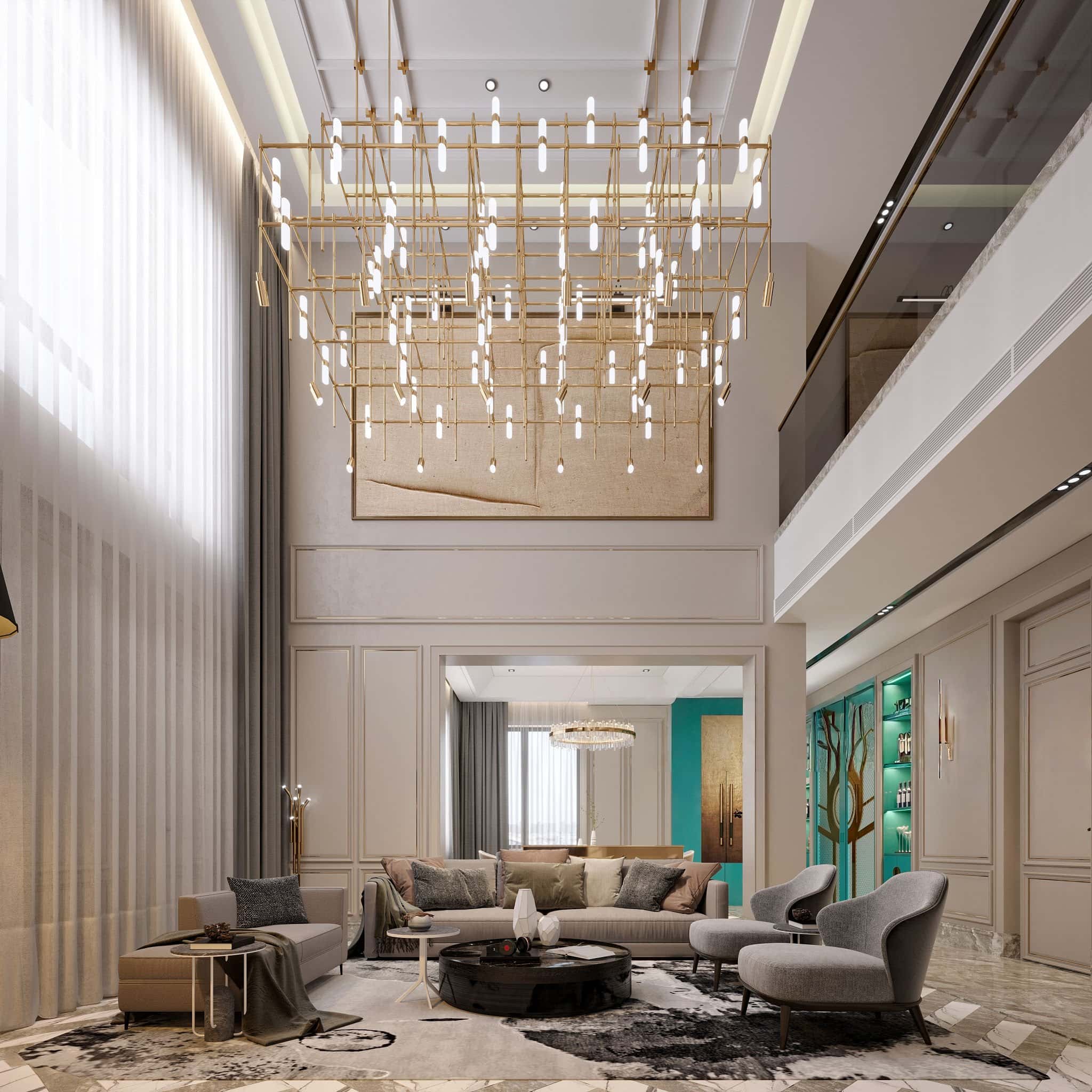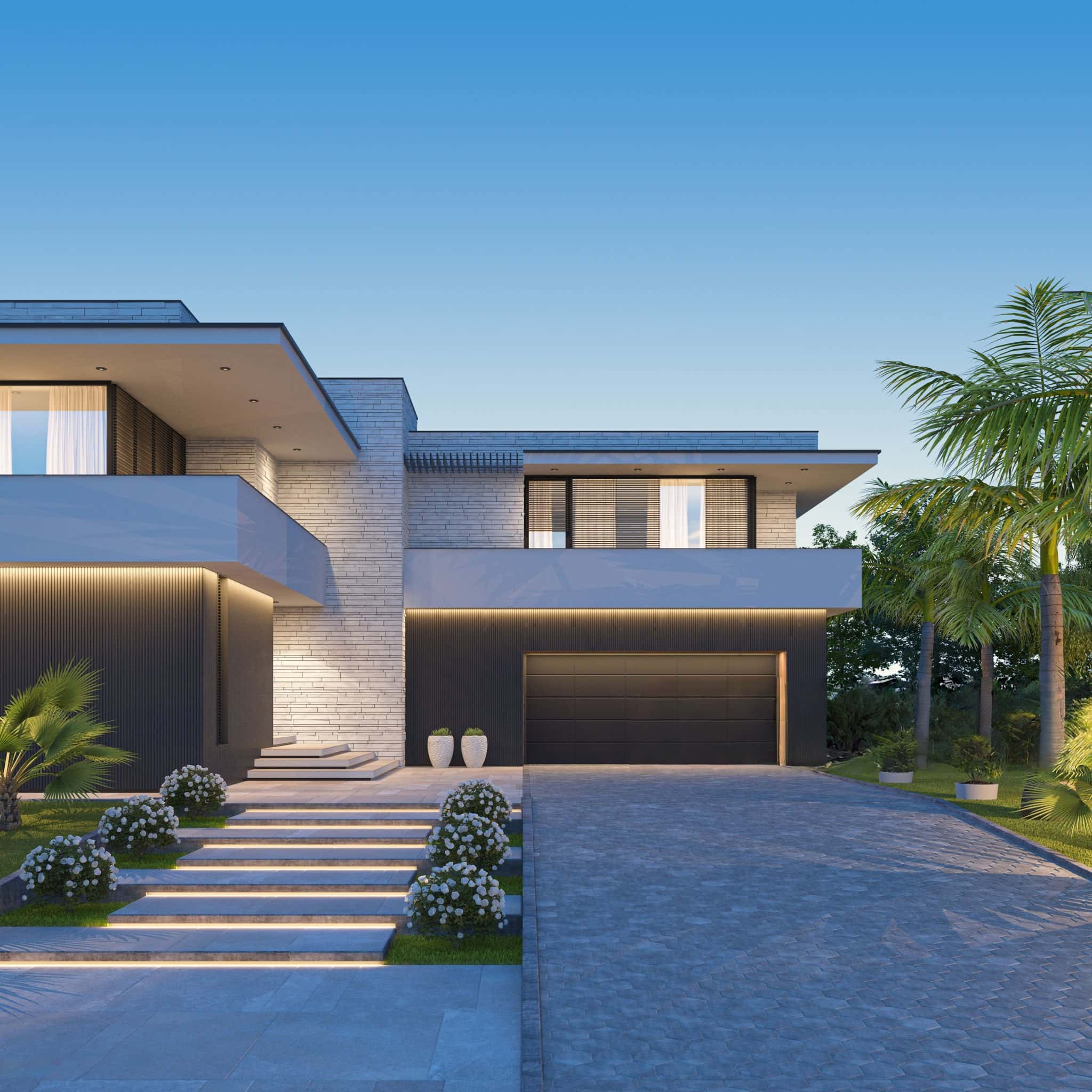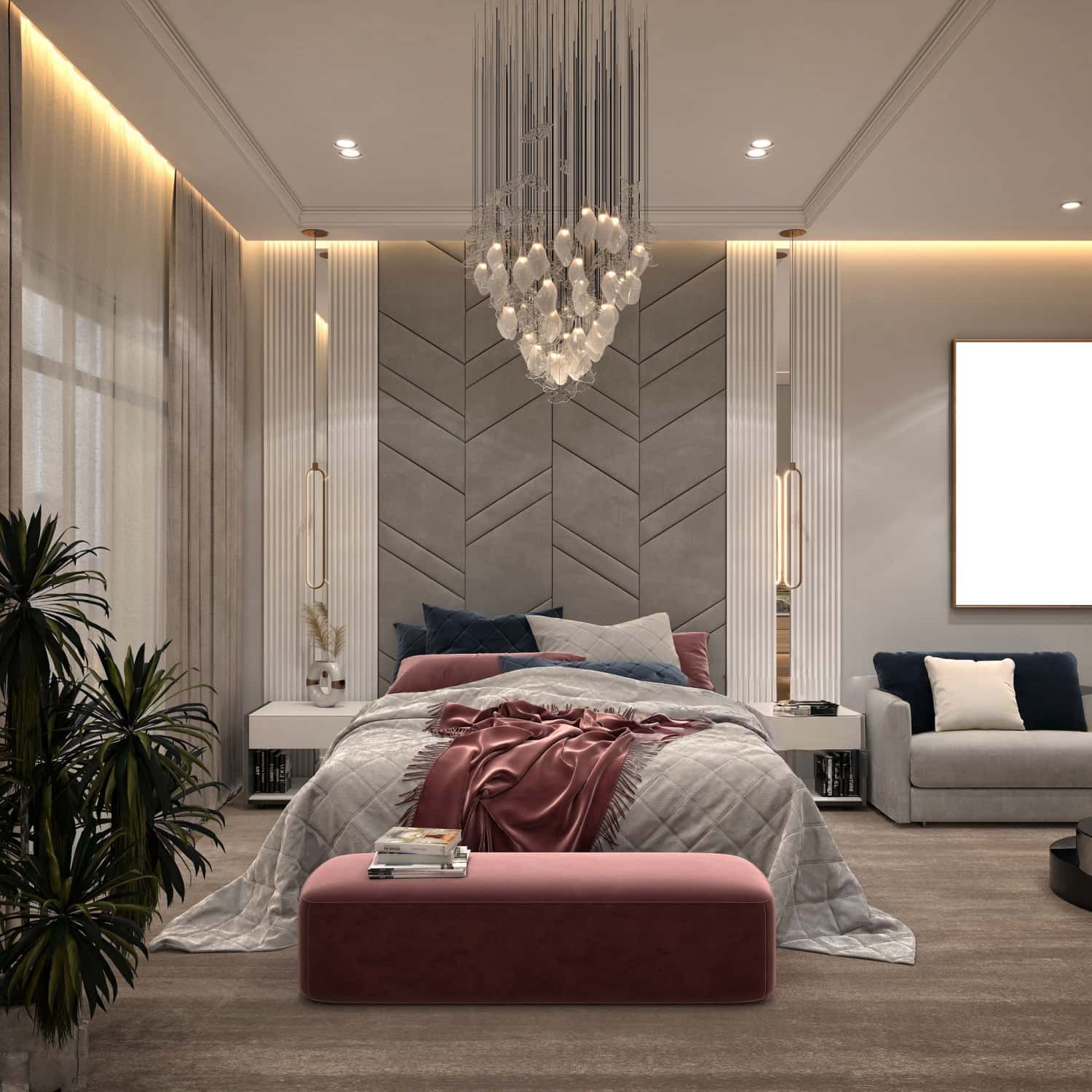
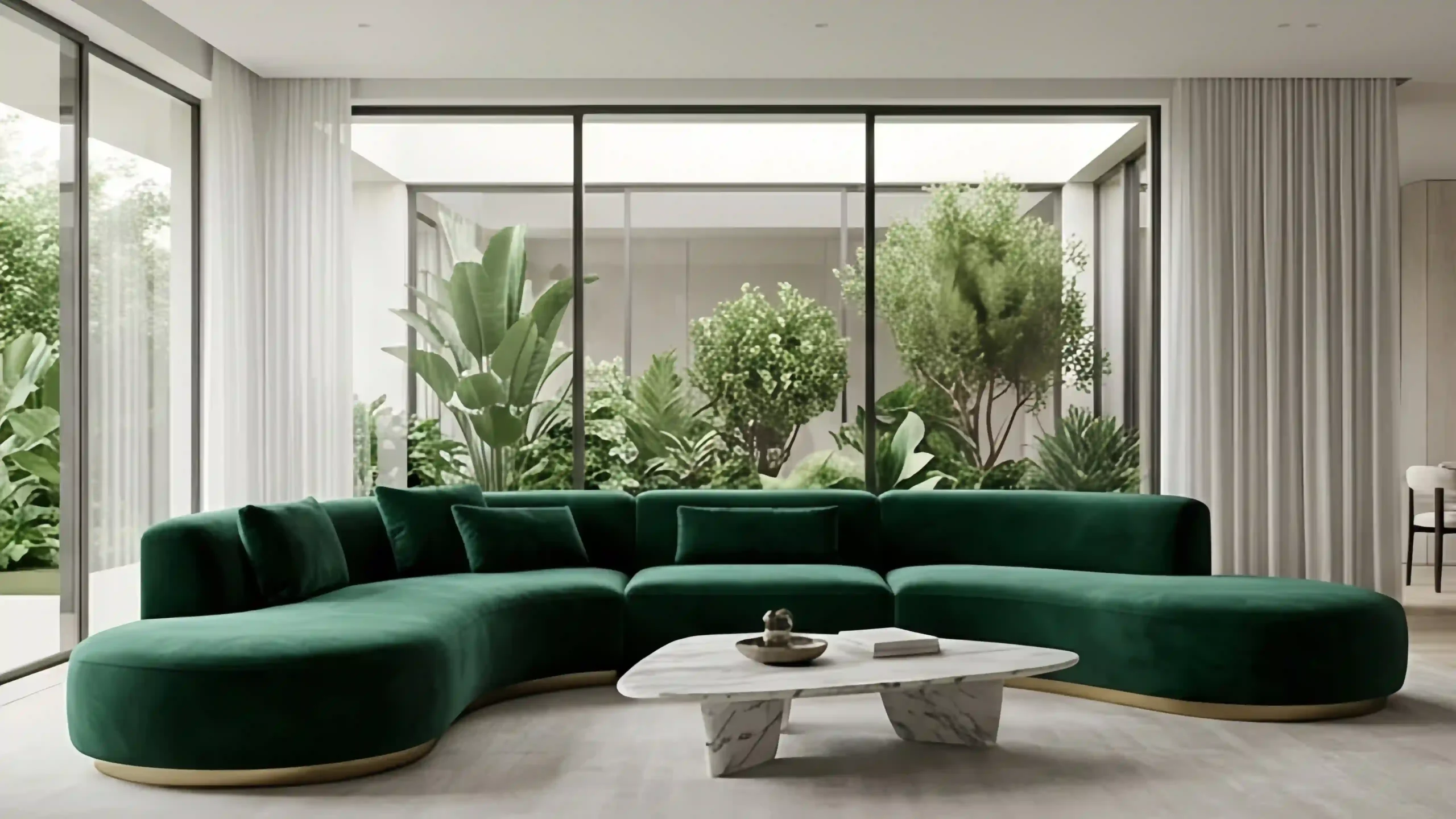

Luxury residential interiors in 2026 have shifted. The “white box” aesthetic that dominated 2018–2023 is giving way to what interior designers call “collected luxury” — spaces that look curated, not decorated.
For homeowners commissioning bespoke furniture in 2026, three trends are driving specification decisions: material authenticity, provenance storytelling, and the integration of “invisible” technology.
This guide is written for homeowners, interior designers, and procurement directors working on projects where “off-the-shelf” isn’t in the vocabulary.
—
Trend 1: The “Real Materials” Revival
What Changed in 2026
The 2023–2025 period was dominated by lacquered MDF and faux-stone surfaces. In 2026, the specification has swung back to authentic materials — and buyers can tell the difference.
| Material | 2023–2025 (Decline) | 2026 (Resurgence) |
| Solid hardwood (walnut, oak) | 23% of luxury spec | 67% of luxury spec |
| Real stone (marble, onyx, travertine) | 18% | 54% |
| Veneered MDF (premium grade) | 41% | 22% |
| Sintered stone (Depton, Laminam) | 28% | 45% |
Source: KBB Review luxury residential survey, March 2026. Sample: 340 U.S. and European projects >$2M budget.
What This Means for Bespoke Furniture
A luxury sideboard in 2026 is specified as:
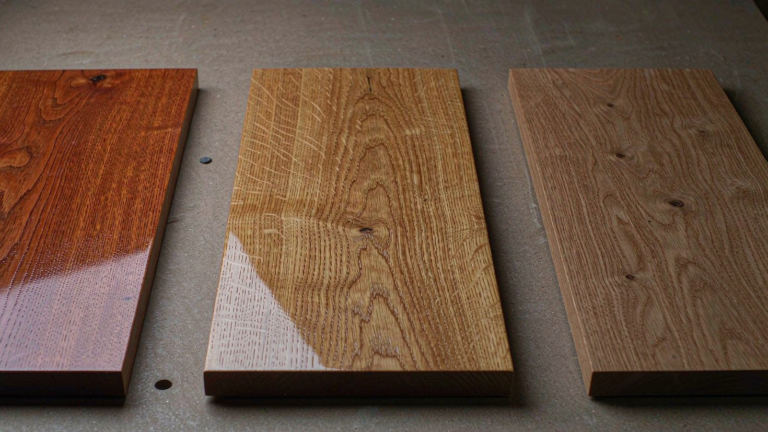
- Case frame: American black walnut (solid, 28–32mm thickness), not veneered MDF core
- Surface: Calacata Gold marble (book-matched, 20mm+ thickness), not sintered stone
- Joinery: Mortise & tenon visible on the interior (provenance marker), not screws + wood filler
- Finish: Hardwax oil (Osmo, Rubio), not nitrocellulose lacquer
Why it matters: Luxry buyers in 2026 view furniture as an appreciating asset (like a watch or a vintage car), not a consumable. Solid hardwood + real stone = resale value. Veneered MDF = depreciation.
—
Trend 2: Provenance Storytelling (The “Who Made It” Factor)
The Shift from “Brand” to “Maker”
In 2023, luxury furniture was specified by brand (Fendi Casa, B&B Italia, Minotti). In 2026, it’s specified by maker provenance:
- “This dining table was built by a third-generation joiner in Guangdong” (valued)
- “This dining table is a B&B Italia model SKU-2021-X” (becoming less valued)
The data point: 58% of luxury homeowners in the 2026 KBB survey said “maker provenance” mattered more than “brand name” in furniture specification.
How Bespoke Manufacturers Respond
| Feature | 2023 Standard | 2026 Standard |
| Maker signature | No | Yes — engraved/signed by lead craftsman |
| Material certificate | No | Yes — wood species + harvest region + artisan name |
| Production photo journal | No | Yes — 6–8 photos from rough timber to finished piece |
| Provenance document | No | Yes — bound booklet with maker biography |
Hongye’s implementation: Each bespoke piece includes a leather-bound provenance booklet (8 pages) with maker biographical note, material certificates, and 6 production photos. The lead craftsman signs the underside of the tabletop.
—
Trend 3: Invisible Technology Integration
What “Invisible” Means in 2026
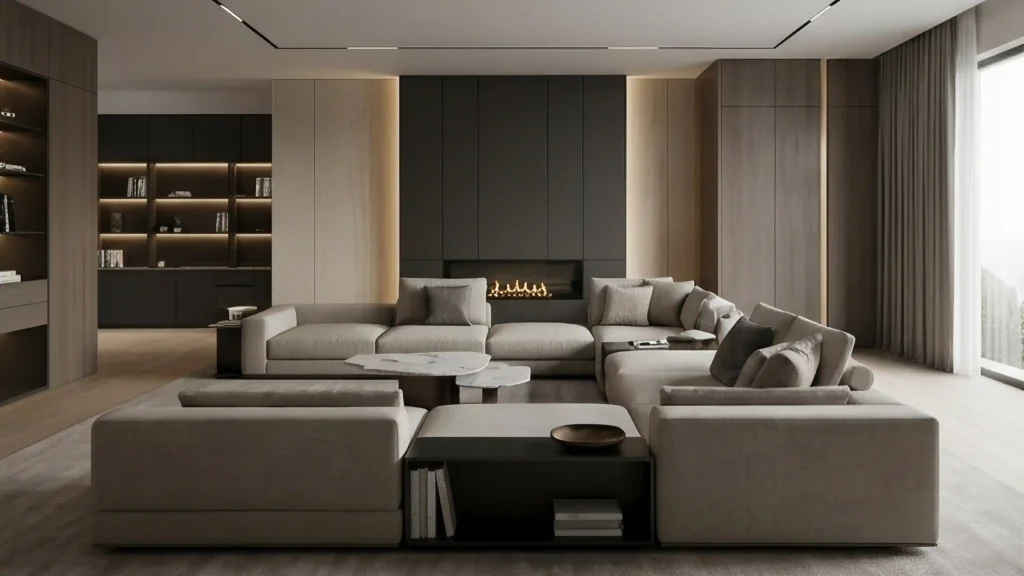
Technology in luxury furniture used to mean “visible charging pads on the console table.” In 2026, it means no visible technology — but the furniture performs like a smart device.
The Technical Challenge (And Why Most Manufacturers Can’t Do It)
| Feature | 2023 Approach | 2026 Approach |
| Device charging | Visible QI pad on tabletop | Wireless charging coil *inside* the tabletop (10mm wood, still charges) |
| Lighting | USB lamp on bedside table | IP65 LED strip *inside* the headboard shadow gap |
| Climate | Portable heater near sofa | Radiant heating element *inside* the sofa seat (38°C, undetectable) |
| Security | Smart lock on cabinet | RFID reader *inside* the drawer (unlocks with homeowner’s phone) |
Integrating technology inside furniture requires:
- Electrical engineering in-house (not sub-contracted)
- Thermal management (heating element inside foam: fire risk if done wrong)
- Wireless charging through 10mm solid wood (requires custom coil, not off-the-shelf QI)
- Certification (CE/FCC/UL for furniture with integrated electronics)
Supplier verification: Ask the manufacturer: “Show me the wireless charging test report through 10mm solid wood.” If they can’t, they’re buying off-the-shelf QI pads and mounting them under a thin tabletop (not inside a thick one).
—
Material Trends by Room (2026)
Living Room / Great Room
Primary Bedroom
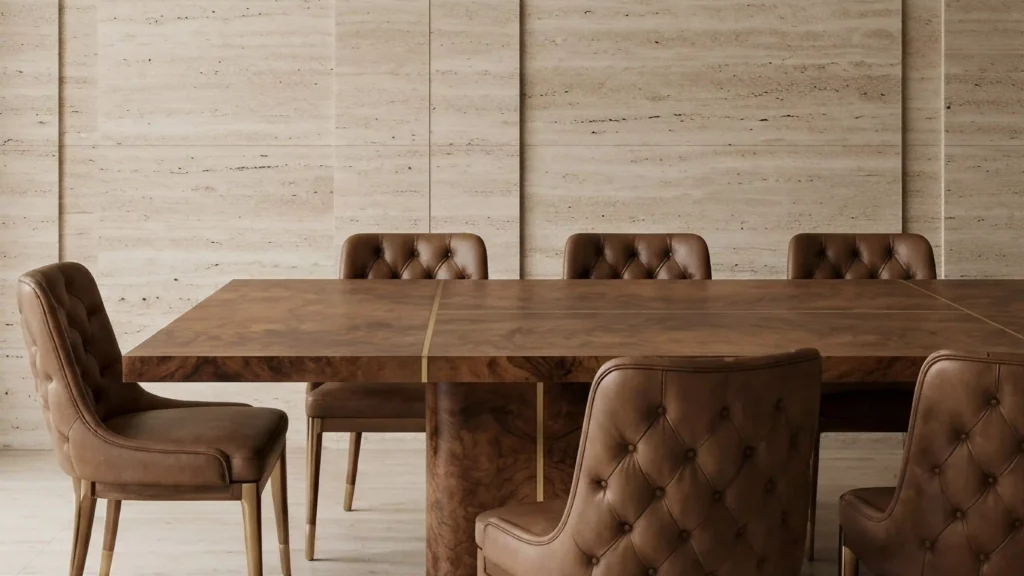
Dining Room / Entertaining
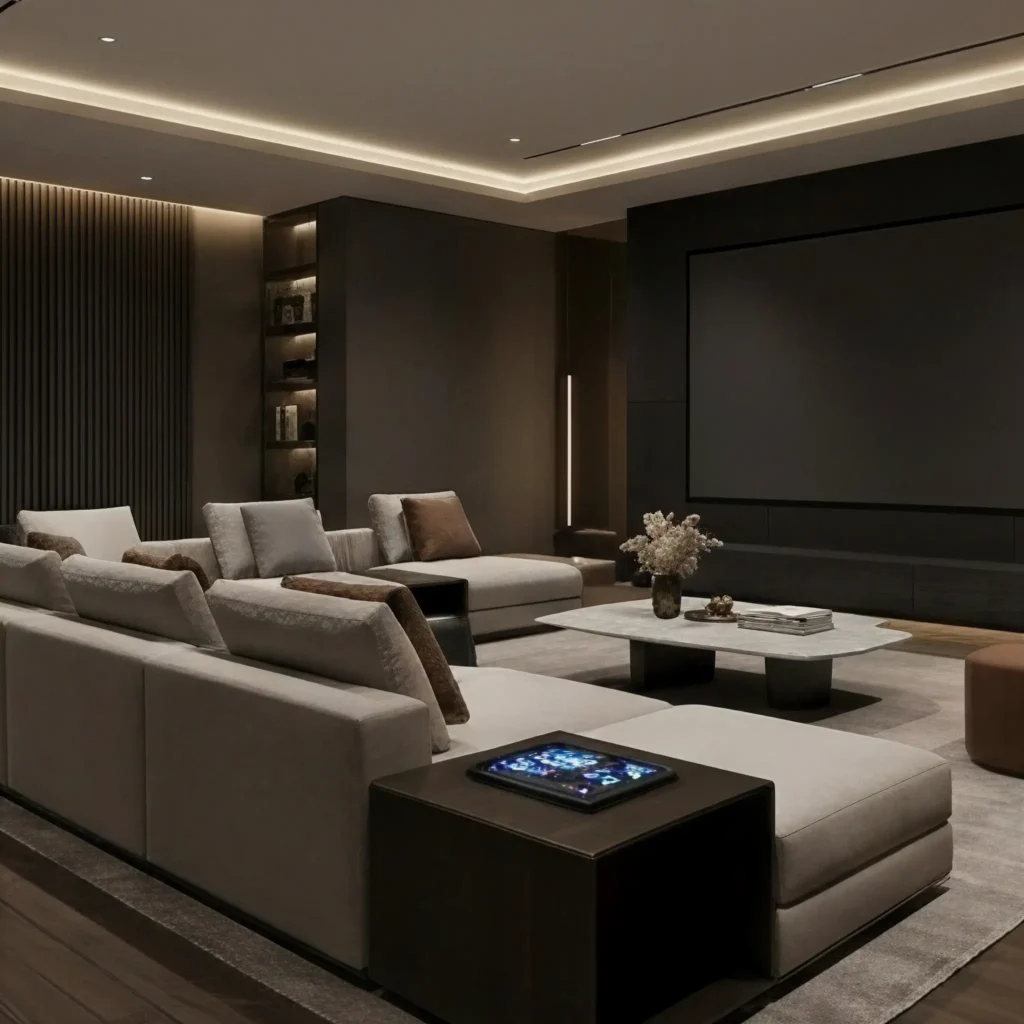
| Element | 2026 Trend | Why |
| Coffee table | Solid walnut, 35–40mm thick, live edge | “Collected” aesthetic, not “designed” |
| Sofa frame | Beech hardwood, 8-joint mortise & tenon | 25-year lifespan, not 8-year |
| Upholstery | Full-aniline leather (Scandinavian tanneries) | Ages gracefully, not PVC “leather” |
| Lighting integration | LED strip in sofa base shadow gap | Invisible technology |
| Rug interface | Furniture glides that don’t snag hand-woven rugs | Respect for other artisans’ work |
| Element | 2026 Trend | Why |
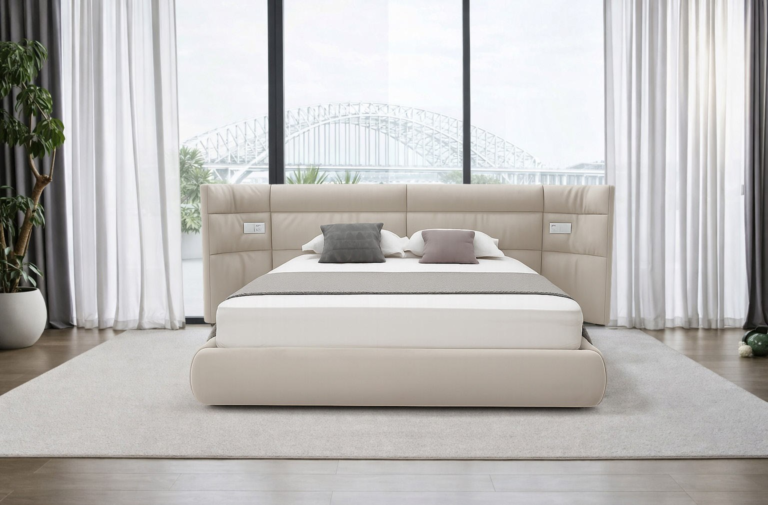
| Headboard | Solid hardwood (walnut/oak), 80–120mm thick | Acoustic insulation + presence |
| Nightstand | Matching headboard wood, soft-close dovetail drawers | Tactile experience matters at 2 AM |
| Reading light | Integrated into headboard (dimmable, 2700K) | No bedside lamp (cleaner sightlines) |
| Charging | Wireless (10W) through 12mm solid wood | Invisible technology |
| Seating corner | Upholstered reading chair (aniline leather) | The “private library” feel |
| Element | 2026 Trend | Why |
| Dining table | Solid hardwood, 40–50mm thick, book-matched veneer on aprons | The “anchor” piece of the room |
| Seating | Upholstered dining chairs (aniline leather or performance velvet) | 4-hour dinner comfort |
| Server / Sideboard | Marble top (20mm+ Calacata), solid wood base | Thermal mass + material authenticity |
| Ambient integration | LED strip in sideboard toe-kick (dimmable) | “Floating” furniture effect |
| Acoustics | Furniture positioned to minimize dining echo | Luxry isn’t loud |
—
The Three Questions That Define 2026 Luxury Furniture
Question 1: “Can I See the Workshop?”
Luxury buyers in 2026 don’t just want to see photos. They want video calls from the workshop while their table is being jointed.
Red flag: “We can send you photos.” (Photos can be from any workshop.)
Green flag: “We can do a live video call on Tuesday at 2 PM your time.” (Accountable craftsmanship.)
Question 2: “Who Signed This Piece?”
In 2026, the lead craftsman signs the piece (discreetly, on the underside or back). Not a brand logo — a human signature.
Why it matters: When the homeowner hosts diner and someone asks “Who made this table?”, the answer “Master carpenter Zhang, third-generation joiner from Dongguan” is worth more than “B&B Italia.”
Question 3: “What Happens in 15 Years?”
Luxury furniture in 2026 is specified with a 25-year perspective. Solid hardwood can be refinished. Veneered MDF cannot.
The calculation: A ¥65,000 solid walnut dining table that lasts 25 years = ¥2,600/year. A ¥22,000 veneered MDF table that lasts 8 years = ¥2,750/year. The “expensive” option is cheaper on a TCO basis.
—
Hongye’s Bespoke Division (FenmiCasa Brand)
Hongye’s bespoke division (FenmiCasa) was established in 2018 to serve projects where maker provenance matters more than brand recognition.
What’s different from production furniture:
- Maker signature: Each piece signed by the lead craftsman (discreetly placed)
- Provenance booklet: 8-page leather-bound document with material certificates, maker biography, and 6 production photos
- Material transparency: All hardwood from FSC-certified sources (certificate provided with piece)
- Invisible technology: In-house electrical engineering team (not sub-contracted), UL/CE certified integrations available
- 25-year structural warranty: Because solid hardwood furniture should last 25 years
Recent projects (2025–2026):
- Private residence, Beijing (580 sq m): 14 bespoke pieces, 9-month production, solid walnut + Calacata marble
- Penthouse, Shenzhen (320 sq m): 8 bespoke pieces, integrated LED + wireless charging, 7-month production
- Villa, Riyadh (1,200 sq m): 32 bespoke pieces, outdoor-rated hardwood (teak), 14-month production
—
FAQ
Q1: How long does a bespoke luxury furniture project take in 2026?
A: 8–14 months from specification to delivery. The range depends on material availability (some marbles have 12–16 week lead times) and the number of pieces (each additional piece adds 1–2 weeks, not proportional, because craftsmen work on multiple pieces simultaneously).
Q2: Is solid hardwood actually better than veneered MDF for luxury projects?
A: For structural and aesthetic longevity, yes. Solid hardwood can be refinished 4–5 times (extends lifespan to 40+ years). Veneered MDF cannot be refinished — once the veneer wears through, the piece is landifill. For the initial appearance, high-grade veneer can look identical to solid wood.
Q3: Can I get “invisible technology” in bespoke furniture without UL/CE certification issues?
A: Yes — if the manufacturer has an in-house electrical engineering team and tests to UL 962 / IEC 60335. Ask for the test report before production starts. If they say “we’ll add the electronics after delivery,” that’s a red flag (no certification).
Q4: What’s the single biggest mistake in specifying bespoke luxury furniture?
A: Optimizing for photographability instead of livability. A coffee table with a 40mm thick marble top looks stunning in photos but weighs 140 kg and can’t be moved by two people. In a real home, someone will want to vacuum under it. specify livability first, photogeniity second.
Q5: How do I verify that the “solid hardwood” I’m paying for is actually solid?A: Three methods: (1) Request a cross-section sample (offcut from the actual tree, not a “display sample”), (2) Specify in the PO that any MDF core discovery results in 100% refund + replacement, (3) Visit the workshop (or request live video call) during the timber preparation stage (before joinery starts).