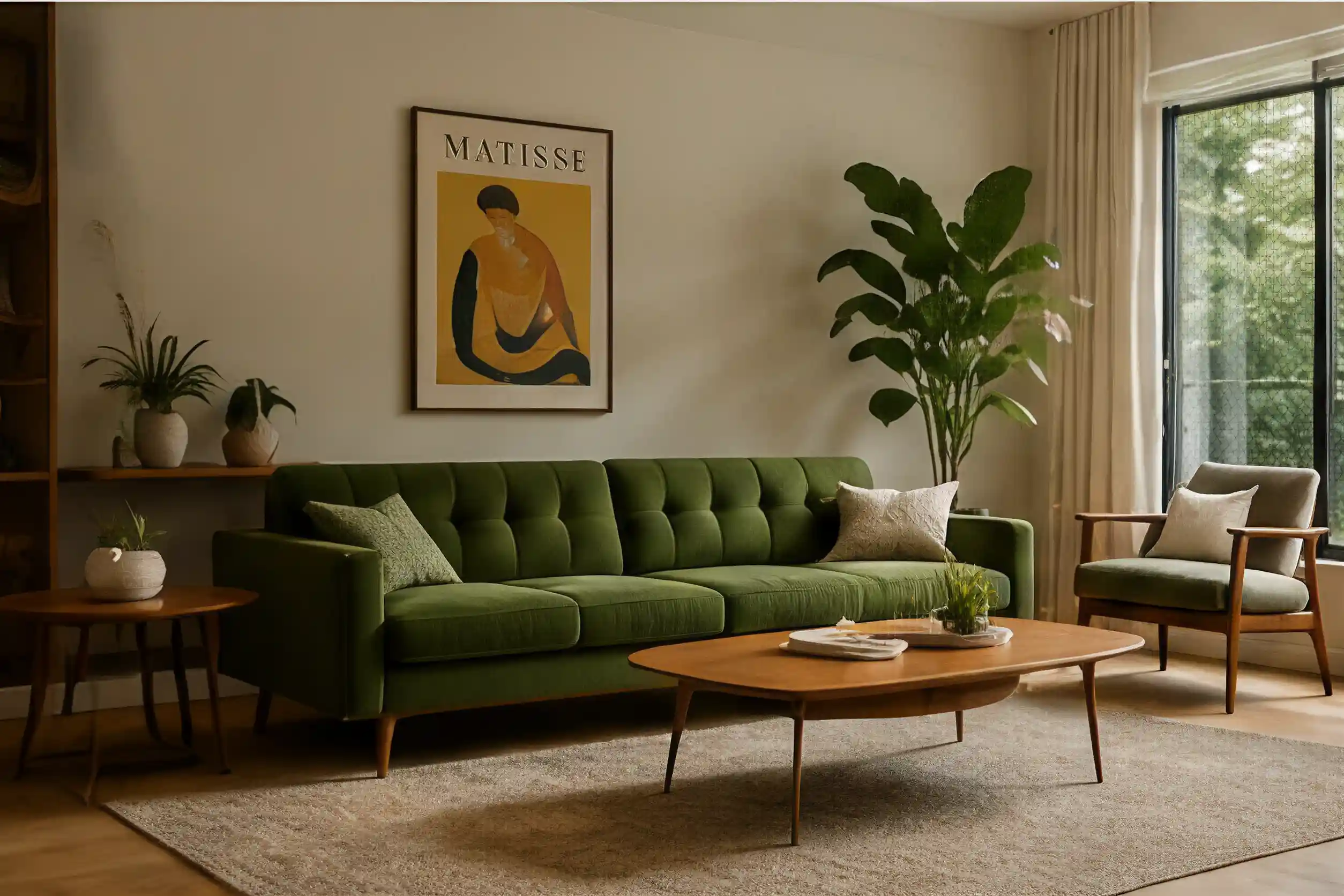

Mid-century modern furniture has been around for over 70 years. It has outlasted every trend that tried to replace it. A 2025 survey by the American Society of Interior Designers found that 41% of residential designers named MCM as the single most requested style for living room projects, ahead of contemporary, transitional, and every variant of “farmhouse.”
People keep coming back to these pieces. The clean lines, the honest materials, the refusal to add anything unnecessary. It is furniture that knows what it is.
Here is the thing, though. Most mass-market “mid-century inspired” furniture sold today has little in common with the real thing. Thin veneers glued over particleboard. Joints that wobble after two years. Proportions that feel off the moment you walk into the room. If you have spent time around vintage Danish pieces from the 1950s and 60s, the difference is impossible to unsee.
This guide walks through what makes mid-century modern furniture authentic, which pieces matter most for a modern home, what materials to insist on, and where to find quality custom manufacturing that honors the original design philosophy without museum-piece prices.
What Defines Authentic Mid-Century Modern Furniture
Not everything with tapered legs qualifies. The real mid-century modern movement, spanning roughly 1945 to 1970, was a design philosophy, not an aesthetic checklist. Understanding what made it work helps you separate genuine quality from marketing.
The core principles
Three ideas drove the original designers. First, form follows function: every curve, every angle, every taper served a purpose. Second, materials should be honest: if a piece used walnut, you saw walnut, not a photograph of walnut glued onto something cheaper. Third, good design was for everyone. The goal was not luxury. The goal was democratic access to objects that worked well and looked good doing it.
Table 1: Key Mid-Century Modern Designers and Their Signature Contributions
| Designer | Country | Signature Piece | Design Philosophy |
| Hans Wegner | Denmark | Wishbone Chair (CH24, 1949) | Sculptural forms from traditional joinery |
| Charles & Ray Eames | USA | Lounge Chair & Ottoman (1956) | Industrial materials applied to residential comfort |
| Arne Jacobsen | Denmark | Egg Chair (1958) | Organic curves, no straight lines |
| George Nakashima | USA | Conoid Chair (1960s) | Live-edge slabs, respect for wood’s natural character |
| Florence Knoll | USA | Knoll Sofa (1954) | Architectural proportions, clean right angles |
| Gio Ponti | Italy | Superleggera Chair (1957) | Extreme lightness; the chair weighs just 1.7 kg |
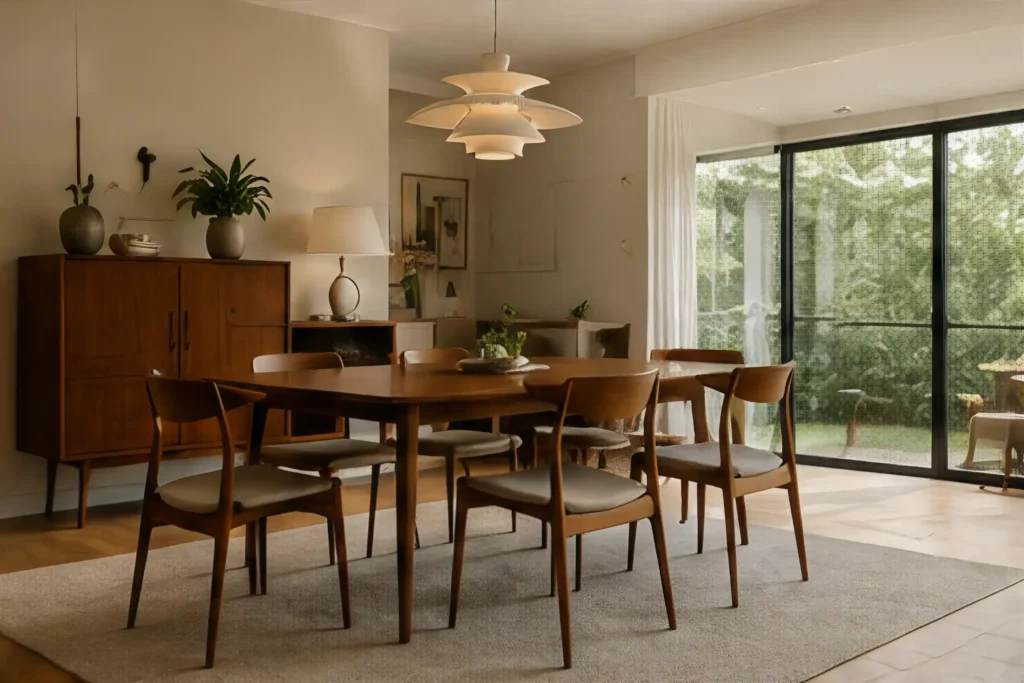
Our production team works regularly with these design references. A recent project for a Los Angeles client combined Wegner-style dining chairs with a custom Nakashima-inspired live-edge walnut table. The chairs came from our workshop in Foshan. The table slab was sourced from a California walnut grower and shipped to our factory for finishing. Total project cost was about 60% of what equivalent vintage pieces would have run.
Materials that mattered
Walnut was the backbone. American black walnut, specifically: dark, warm, with grain that rewards close looking. Teak came next, especially from Danish workshops, though today’s teak supply chain is a different conversation. Oak appeared less often but showed up in casegoods and shelving units. Rosewood was the premium choice for accent pieces, though CITES restrictions have made it largely unavailable for new production.
Upholstery leaned toward natural materials. Wool, cotton, and linen dominated. Leather appeared on lounge chairs and executive pieces. The 1950s also saw the introduction of molded fiberglass and bent plywood. These materials felt futuristic at the time and still read as modern today.
Table 2: Common MCM Materials — Then vs. Now
| Material | Original Use (1945-1970) | Modern Equivalent | Availability |
| American Black Walnut | Casegoods, chair frames | Still available, sustainably harvested | Good |
| Teak | Danish furniture, outdoor pieces | Limited old-growth; plantation teak common | Moderate |
| Rosewood | Accent pieces, veneers | CITES-restricted, not available for new builds | None |
| Molded Fiberglass | Eames shells, tabletops | Still produced, safer resin formulations | Good |
| Bent Plywood | Chair seats, sculptural forms | Widely available, improved adhesives | Excellent |
| Wool Upholstery | Sofas, lounge seating | Available in wider color ranges than original | Excellent |
One thing we tell clients: if a salesperson tries to sell you “genuine mid-century rosewood” in 2026, walk away. Real rosewood is not entering the supply chain legally. What you are getting is either mislabeled or illegal. Some manufacturers use Santos rosewood (a different species, technically pau ferro) as a substitute. It looks similar and performs well. Just make sure the label is honest.
Why Mid-Century Modern Keeps Coming Back
Trends cycle. Most disappear. Mid-century modern has now survived four distinct revivals: the late 1980s, the early 2000s (thanks partly to Mad Men’s set design), the mid-2010s, and the current wave that started around 2022. Each revival brings new people to the style, and each time, the pieces that stick around are the ones built properly.
The practical reason
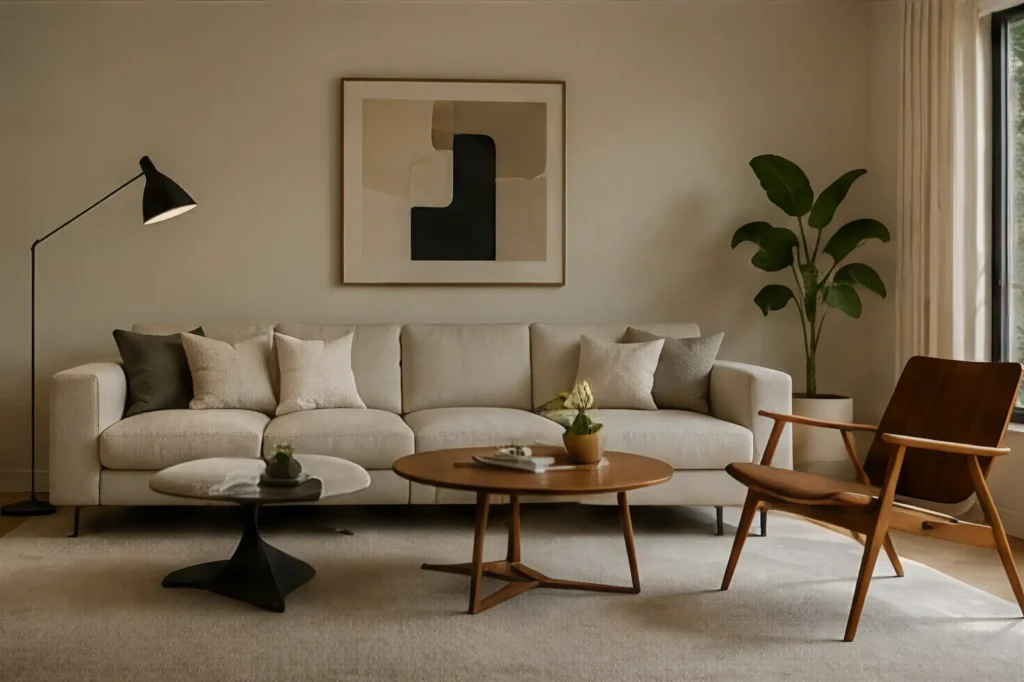
MCM furniture works with how people actually live. Low-profile sofas do not block sightlines in open-plan homes. Storage pieces with legs create visual space, a real benefit in apartments and smaller homes where every square foot counts. The shapes are simple enough to mix with other styles. You can put a Wegner chair next to a contemporary sectional and nothing looks wrong.
Table 3: MCM Furniture in Different Home Settings
| Room | Key MCM Piece | Why It Works | Styling Tip |
| Living Room | Low-profile sofa with tapered legs | Creates openness in smaller spaces | Pair with a shag or Berber rug for texture contrast |
| Dining Room | Oval or round walnut table | Encourages conversation, no head-of-table hierarchy | Mix chair styles — Wegner on one side, upholstered on the other |
| Home Office | Walnut desk with minimal hardware | Clean surface reduces visual clutter | Add a single statement lamp, nothing more |
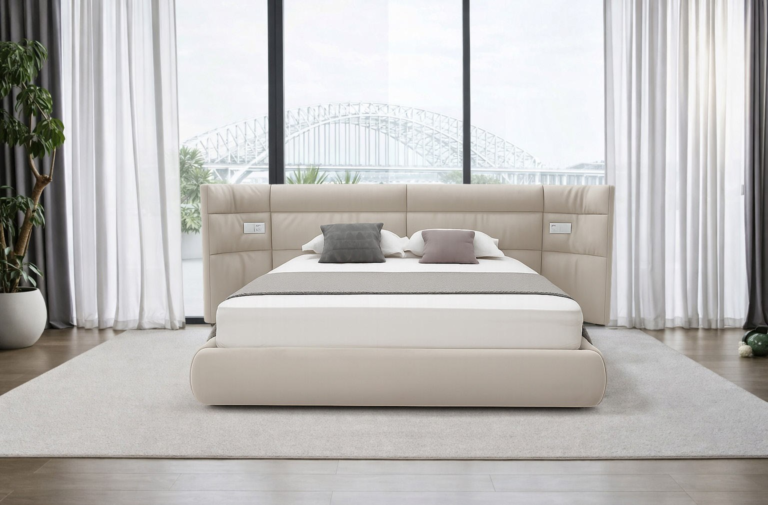
| Bedroom | Platform bed with integrated nightstands | Low profile makes ceilings feel higher | Stick to two colors max for bedding |
| Entryway | Wall-mounted credenza or console | Functional storage that does not eat floor space | Keep styling to 3 objects — mirror, vessel, book stack |
From our experience working on roughly 40 residential projects over the past three years, the living room pieces get the most daily use and the most compliments from guests. Dining chairs come second. Something about a well-made wooden chair makes people want to touch it.
The aesthetic reason
There is a quality to mid-century design that photographs well but feels even better in person. The proportions have been worked out over decades. A 1950s-designed chair that is still in production is probably not going to look dated next year. Compare this to furniture from the 1980s or the overstuffed leather everything of the early 2000s. Those pieces read as obviously from their era. MCM reads as good, without qualification.
Pinterest’s 2025 trend report noted a 67% year-over-year increase in searches containing “mid-century modern” combined with “2025” or “2026.” People are not looking at archival photos. They are actively furnishing homes with this style right now.
How to Tell Quality MCM Furniture from Imitations
Walk into a showroom. You will see dozens of pieces that look mid-century modern from across the room. Get closer. The differences become obvious fast.
The construction test
Pull out a drawer. Examine the joint where a leg meets the frame. Flip the piece over if you can. Quality mid-century furniture, including quality reproductions, uses joinery that makes engineering sense. Dovetails on drawers. Mortise-and-tenon joints at structural stress points. Corner blocks for reinforcement. Cheap imitations use staples, dowels, and glue alone.
Table 4: Quality Indicators — Authentic vs. Budget MCM
| Feature | Quality Construction | Budget Imitation | What to Check |
| Wood type | Solid hardwood or thick veneer over hardwood ply | Thin paper veneer over MDF or particleboard | Look at exposed edges and drawer sides |
| Joinery | Dovetails, mortise-and-tenon, dowels with reinforcement | Staples, glue-only butt joints | Pull out a drawer, look underneath |
| Finish | Oil, lacquer, or catalyzed conversion varnish; feels like wood | Thick polyurethane; feels like plastic | Run your hand over the surface |
| Leg attachment | Integrated into frame or secured with corner blocks | Screwed directly into underside with no reinforcement | Wiggle the leg — it should not move |
| Upholstery base | Webbing or sinuous springs with padding | Thin foam over plywood | Sit on it and pay attention to the feel after 5 minutes |
| Weight | Solid hardwood pieces feel substantial | Exceptionally light (particleboard) or surprisingly heavy (MDF) | Lift one corner |
I have seen a $1,200 “walnut” credenza that was actually MDF with a photograph of wood grain heat-transferred onto the surface. It looked fine in photos. In person, after six months of use, the edges started peeling. The client spent more replacing it than they would have spent buying properly in the first place.
Color and grain authenticity
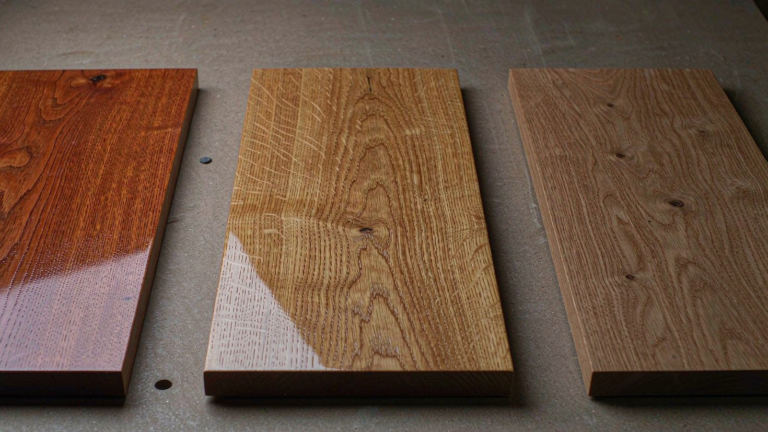
Walnut should be somewhere between milk chocolate and dark espresso. Not orange. Not gray. If a piece claims to be walnut but looks like it was stained with coffee, the base wood is probably not walnut at all. Oak has a distinctive grain pattern. Tight, visible pores, usually a medium honey tone. Teak ranges from golden brown to deep reddish brown and develops a silver-gray patina outdoors if left untreated.
Sourcing Mid-Century Modern Furniture: Vintage vs. Custom
You have two real paths for getting quality MCM pieces into a home: hunt down authentic vintage, or commission custom pieces built to original standards. Each has tradeoffs.
Table 5: Vintage vs. Custom MCM Furniture — A Comparison
| Factor | Vintage (Original 1950s-70s) | Custom (New Production) |
| Authenticity | Genuine period piece | Reproduction using original methods |
| Cost Range (Dining Set) | $3,000 – $15,000+ | $1,800 – $6,000 |
| Condition | Varies widely; expect some wear | Flawless, made to order |
| Wait Time | Immediate (if found) | 8-16 weeks |
| Customization | None — you get what exists | Full control over dimensions, wood, finish, upholstery |
| Sustainability | No new resources consumed | Choose FSC-certified wood, low-VOC finishes |
| Risk | Veneer damage, joint looseness, authenticity disputes | Depends entirely on manufacturer quality |
Vintage hunting can be rewarding. It can also be a full-time job that ends with a $4,000 chair that needs $800 in restoration work. One client spent three months looking for an original Florence Knoll sofa in good condition. She found one. The shipping from a Chicago auction house to her home in Sydney cost nearly as much as the piece itself.
The custom route makes more sense for most people. You get the proportions, the materials, and the construction quality that defined the era. You do not get the patina of age, but you also do not get someone else’s water damage or a previous owner’s attempt at refinishing with hardware-store polyurethane.
Incorporating MCM Furniture into Contemporary Interiors
The fear is that mid-century pieces will make a home look like a period movie set. They will not, if you mix them properly.
The 60/40 rule
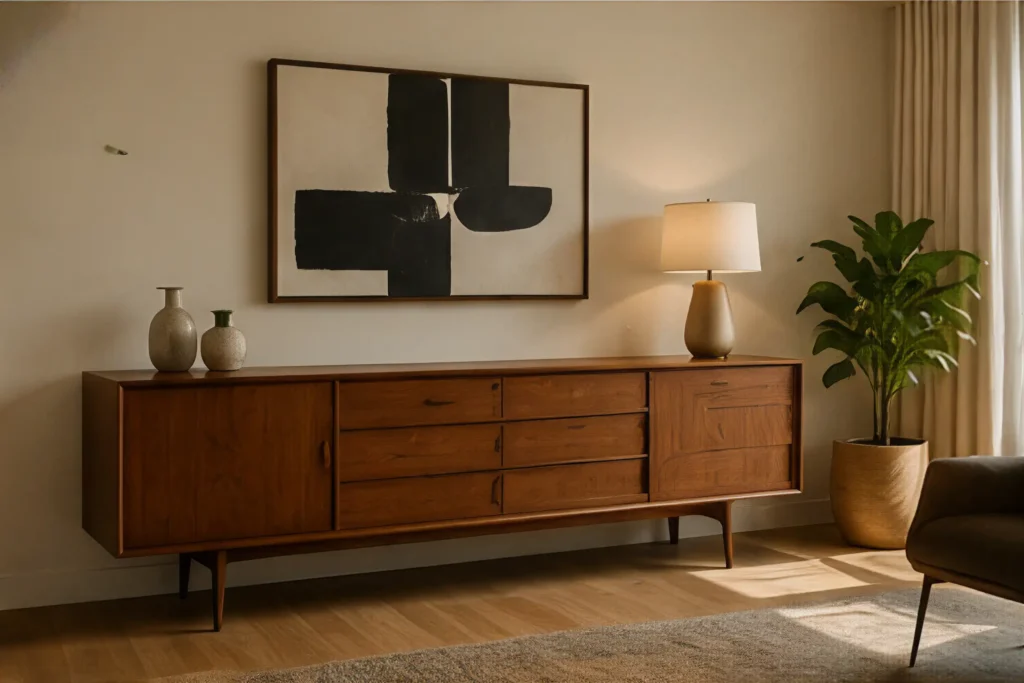
A guideline we use with clients: roughly 60% of visible furniture should reference the primary style (in this case, mid-century modern), and about 40% should contrast against it. The contrast pieces prevent the space from feeling like a museum display. A 1970s Italian glass coffee table next to a Wegner-style sofa. A contemporary abstract painting above a vintage-inspired walnut credenza. A modern Moroccan rug under classic Danish dining chairs.
Table 6: MCM + Contemporary Pairing Examples
| MCM Piece | Contrast Pairing | Effect |
| Walnut dining table with tapered legs | Industrial metal pendants overhead | Warm wood against cool metal creates tension |
| Low-profile Knoll-style sofa | Oversized contemporary floor mirror | Low horizontal vs. tall vertical — balanced composition |
| Teak sideboard with sliding doors | Large-scale abstract canvas above | Clean lines grounded by expressive art |
| Wishbone-style dining chairs | Concrete or terrazzo dining table | Organic forms against raw mineral surfaces |
| Platform bed with integrated storage | Plush, high-pile wool rug underneath | Minimalist structure meets maximalist texture |
| Molded plywood lounge chair | Floor-to-ceiling linen curtains | Hard curved shell softened by flowing fabric |
Lighting matters more than furniture. A room full of beautiful mid-century pieces under 5000K daylight LEDs will look like a dental office. Stick to 2700K-3000K warm white. Use dimmers. Table lamps at eye level create pools of light that make the wood grain visible and the space feel inhabited rather than staged.
Five Common Mistakes When Buying MCM Furniture
Some patterns keep showing up across client conversations. Here are the ones worth knowing before you buy.
Mistake one: prioritizing looks over ergonomics. A gorgeous dining chair that nobody wants to sit in for more than 20 minutes is a design object, not furniture. Test pieces before committing. If you cannot test in person, ask for seat height, seat depth, and backrest angle measurements. Compare them to a chair you already find comfortable.
Mistake two: buying a full matching set. The mid-century showroom look, where every piece shares the same wood species, the same finish, the same year, reads as a retail display. Real homes accumulate furniture over time. Pieces should relate to each other but not match exactly.
Mistake three: ignoring scale. Mid-century pieces were designed for mid-century room proportions. A classic Wegner sideboard is about 180 cm long. If your wall is 220 cm, it fits beautifully. If your wall is 400 cm, that same sideboard looks lost. Custom manufacturers can adjust dimensions. Vintage dealers cannot.
Mistake four: skimping on upholstery fabric. The frame might last 30 years. The fabric will not. Spend the extra money on high-rub-count upholstery (30,000+ double rubs for residential use). Performance velvet, solution-dyed acrylic, and Crypton-treated fabrics all handle daily life better than standard cotton or linen blends.
Mistake five: treating mid-century modern as a fixed rulebook. The designers of the 1950s and 60s were experimenting. They broke rules constantly. Eames mixed molded plastic with cast aluminum. Nakashima left bark edges exposed. Wegner combined woven paper cord with solid hardwood in ways nobody had done before. The spirit of the movement was innovation. Faithfully copying 1958 is the opposite of that spirit.
Frequently Asked Questions
What is the difference between mid-century modern and Danish modern?
Danish modern is a subset of mid-century modern that came specifically from Denmark’s design workshops between roughly 1945 and 1970. Danish pieces tend to use lighter woods (teak and oak more than walnut) and emphasize organic, sculptural forms over strict geometry. American mid-century modern, by contrast, includes industrial materials like molded fiberglass, bent plywood, and chrome-plated steel. Both share the same core values of function-driven design and honest materials. If you walk into a room and notice the wood grain before anything else, you are probably looking at Danish modern.
Is mid-century modern furniture still in style for 2026?
Yes. According to the ASID 2025 Trend Report, MCM remained the most-requested residential style among interior designers for the third consecutive year. The current revival differs from previous ones because younger homeowners in their 30s and 40s are driving demand, not just collectors. They are buying pieces to live with, not to archive. What has changed is the color palette. The 2026 version of MCM skews toward warmer tones: cognac leather instead of black, honey oak alongside traditional walnut, olive green upholstery rather than mustard yellow.
How much should I budget for quality mid-century modern furniture?
A well-made custom dining table in walnut with seating for six starts around $1,800 and can reach $4,500 depending on size and detailing. Lounge chairs run $600 to $1,800 per piece. A credenza or sideboard typically falls between $1,200 and $3,500. These numbers assume solid hardwood construction with proper joinery. If you see prices significantly below these ranges, ask about the substrate material. You are probably looking at veneer over engineered wood rather than solid construction.
Can mid-century modern work in a small apartment?
It is one of the better styles for small spaces. The furniture sits low, which makes ceilings feel higher. Pieces with legs expose floor underneath, creating a sense of openness that skirted or boxy furniture eliminates. Wall-mounted storage units, a hallmark of the era, free up floor space entirely. The trick is scale. A standard 220 cm sofa will overwhelm a compact living room regardless of style. Look for apartment-scaled pieces: sofas around 180 cm, dining tables that extend only when needed, and nesting side tables that tuck away when not in use.
Where can I buy authentic mid-century modern furniture in 2026?
For vintage pieces, auction platforms like 1stDibs and Chairish carry verified inventory. Local estate sales in design-heavy cities (Los Angeles, New York, Copenhagen, Milan) occasionally yield finds. For custom pieces built to original standards, direct-from-manufacturer sourcing through companies like Fenmi Casa offers specific advantages: you choose the wood species, dimensions, finish, and upholstery. Lead times run 8 to 16 weeks. Prices typically land at 40-60% of equivalent vintage auction values, with the benefit of a warranty and zero restoration needs.
About Fenmi Casa: Fenmi Casa produces custom mid-century modern furniture at our workshop in Foshan, China. We build with FSC-certified American walnut, European oak, and plantation teak using traditional joinery methods. Every piece is made to order with client-specified dimensions, finishes, and upholstery. For a project consultation or custom quote, email your room dimensions and reference images to contact@fenmicasa.com. We reply within one business day with a material proposal and timeline.