
Art Deco furniture represents the pinnacle of decorative design — bold geometry, luxurious materials, and uncompromising craftsmanship. This guide explores the style’s defining characteristics, shows how to integrate Art Deco pieces into contemporary interiors, and provides sourcing guidance for authentic and inspired designs.
What Defines Art Deco Furniture
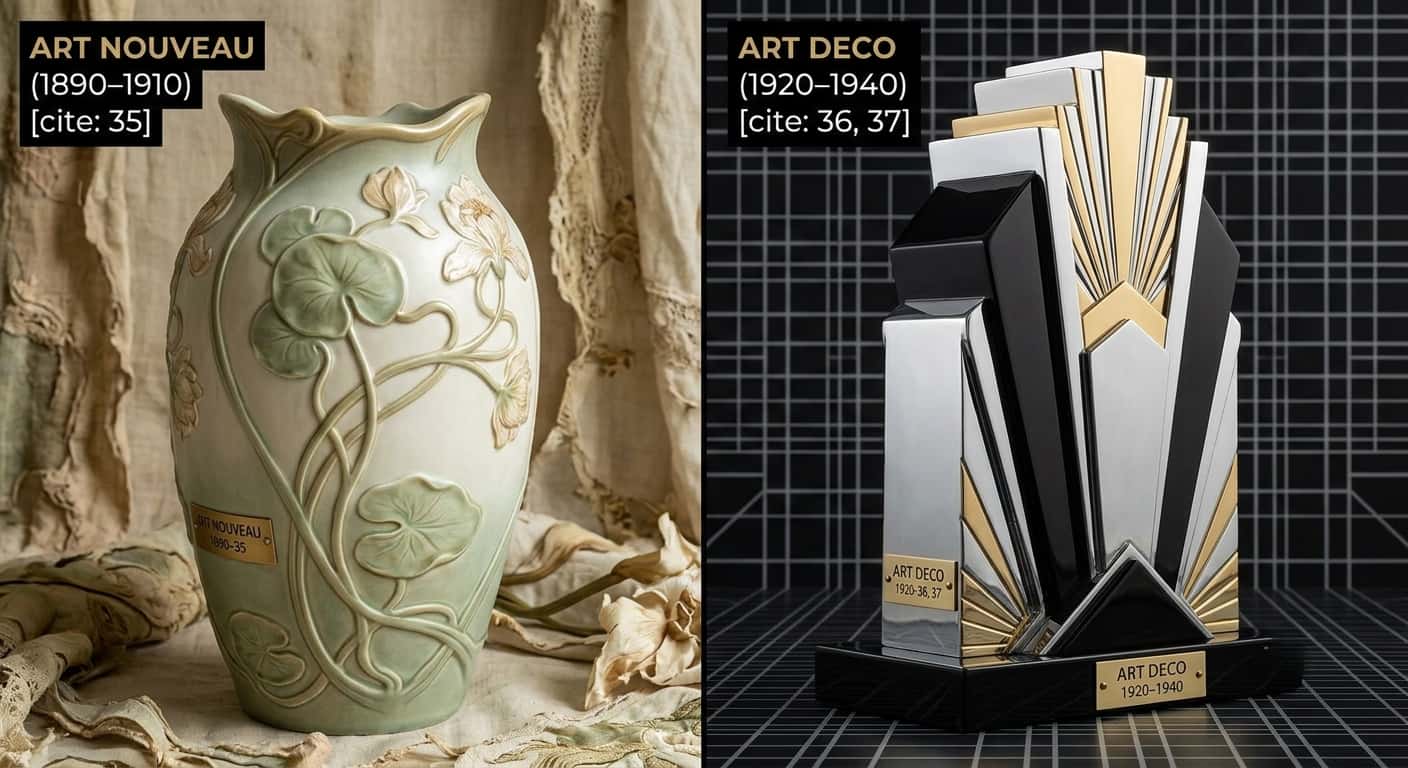
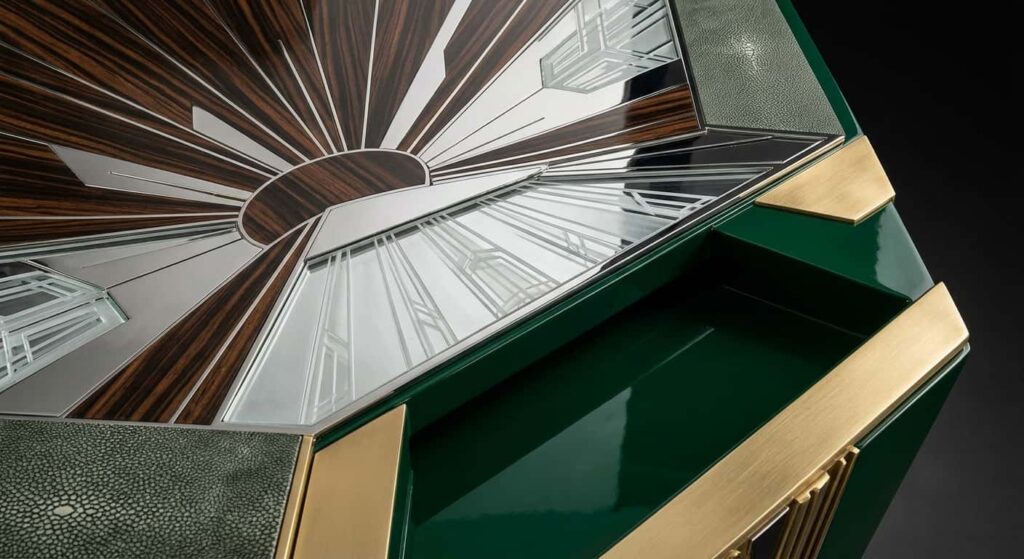
Art Deco (1920–1940) emerged from a desire to fuse art with industrial progress. The style celebrates geometry, symmetry, and opulent materials while rejecting the organic curves of its predecessor, Art Nouveau.
| Element | Art Deco Expression | Contemporary Interpretation |
| Geometry | Stepped forms, zigzags, sunburst motifs | Simplified geometric silhouettes |
| Symmetry | Perfect bilateral symmetry | Balanced but not rigid |
| Materials | Exotic woods, chrome, glass, lacquer | Sustainable woods, brushed brass, tempered glass |
| Color | Bold contrasts (black/gold, emerald/chrome) | Muted jewel tones with metallic accents |
| Surface | High-gloss lacquer, mirror, chrome | Matte lacquer, satin metals, textured glass |
Key Furniture Forms
Seating
| Form | Defining Features | Iconic Example | Modern Price Range |
| Barrel chair | Curved back forming partial cylinder | Émile-Jacques Ruhlmann designs | $1,500–$6,000 |
| Club chair | Deep-seated, upholstered, low profile | French Art Deco club chairs (1925) | $2,000–$8,000 |
| Chaise lounge | Asymmetric curve, one arm | Le Corbusier LC4 (1928) | $3,000–$12,000 |
| Settee | Tight back, scrolled arms, tapered legs | Ruhlmann and Sue et Mare | $4,000–$15,000 |
| Dining chair | Lacquered wood, geometric back, leather seat | Jules Leleu designs | $800–$4,000 |
Tables
| Form | Defining Features | Materials | Modern Price Range |
| Cocktail table | Stepped base, glass or lacquer top | Chrome, glass, lacquered wood | $1,500–$8,000 |
| Console table | Demi-lune or rectangular, slender legs | Marquetry, chrome, marble | $2,000–$10,000 |
| Dining table | Geometric pedestal, veneered top | Macassar ebony, walnut, glass | $3,000–$15,000 |
| Nesting tables | Graduated sizes, geometric legs | Chrome, glass, lacquer | $800–$4,000 |
Storage and Case Goods
| Form | Defining Features | Materials | Modern Price Range |
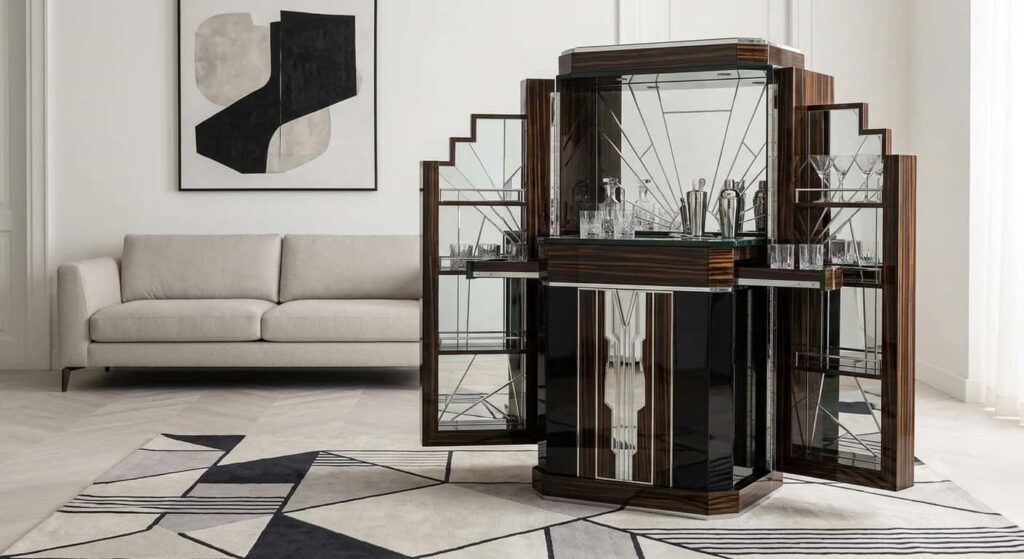
| Bar cabinet | Stepped silhouette, interior mirror | Veneer, chrome hardware, glass | $2,500–$12,000 |
| Dresser | Geometric drawer fronts, flush handles | Exotic wood veneer, metal inlay | $2,000–$8,000 |
| Bookcase | Asymmetric shelving, geometric divisions | Lacquer, chrome, glass | $3,000–$15,000 |
| Sideboard | Low profile, bold hardware | Veneer, marble top, metal accents | $2,500–$10,000 |
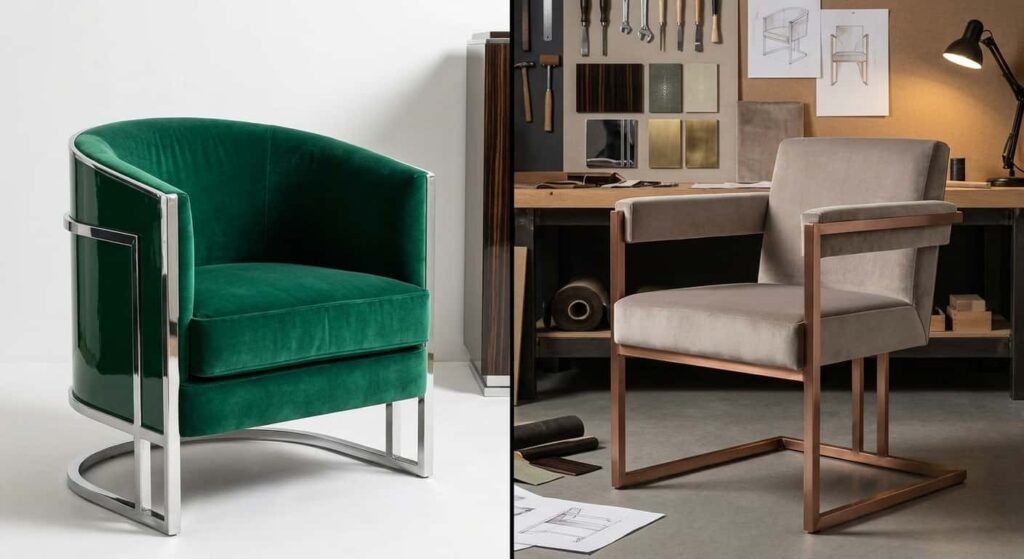
Material Palette
| Material | Art Deco Application | Modern Equivalent | Sustainability Note |
| Macassar ebony | Veneer on case goods | FSC-certified walnut with ebonized finish | Ebony is CITES-restricted; use alternatives |
| Shagreen (ray skin) | Drawer fronts, desktops | Faux shagreen (embossed leather) | Authentic shagreen is ethically controversial |
| Chrome plate | Table legs, hardware | Brushed stainless steel or brass | Chrome plating uses toxic hexavalent chromium |
| Lalique-style glass | Door panels, tabletops | Tempered glass with geometric etching | Modern glass is recyclable |
| Lacquer | High-gloss surfaces | Water-based high-gloss lacquer | Traditional lacquer contains VOCs |
| Marble | Tabletops, inlays | Sintered stone with marble veining | Engineered alternatives reduce quarrying impact |
Color Schemes
Classic Art Deco Palettes
| Palette | Colors | Application | Mood |
| Black + Gold | Onyx black, brushed gold, cream | Living rooms, bars | Dramatic, opulent |
| Emerald + Chrome | Deep emerald, silver chrome, white | Dining rooms, bathrooms | Sophisticated, cool |
| Burgundy + Brass | Wine red, unlacquered brass, ivory | Bedrooms, libraries | Warm, intimate |
| Navy + Nickel | Midnight blue, polished nickel, grey | Offices, entryways | Authoritative, modern |
Contemporary Adaptations
| Palette | Colors | Application | Mood |
| Blush + Brass | Soft pink, aged brass, cream | Bedrooms, living rooms | Feminine, warm |
| Charcoal + Copper | Dark grey, hammered copper, white | Dining rooms, kitchens | Industrial-luxe |
| Sage + Gold | Muted green, matte gold, cream | Living rooms, studies | Calm, refined |
| Taupe + Chrome | Warm grey, chrome, black accents | Offices, modern spaces | Minimalist Deco |
Integrating Art Deco into Modern Interiors
The Single Statement Approach
| Room | Statement Piece | Supporting Elements | Budget |
| Living room | Art Deco bar cabinet | Modern sofa, geometric rug, brass accents | $3,000–$8,000 |
| Dining room | Art Deco dining table | Modern chairs, chrome pendant, mirror | $5,000–$15,000 |
| Bedroom | Art Deco vanity | Contemporary bed, velvet bench, gold mirror | $2,500–$7,000 |
| Entryway | Art Deco console + mirror | Modern lighting, marble floor | $2,000–$6,000 |
The Full Room Approach
| Design Rule | Guideline | Example |
| 70/30 split | 70% Art Deco, 30% contemporary | Deco furniture + modern art |
| Repetition of geometry | Use 2–3 geometric motifs throughout | Sunburst + chevron + stepped form |
| Material consistency | Choose 2 metals and 2 woods | Brass + chrome; walnut + lacquer |
| Negative space | Let Deco pieces breathe | One bar cabinet, not four small tables |
| Lighting alignment | Geometric fixtures match furniture | Chrome sconces with chrome table legs |
Frequently Asked Questions
Q1: Is Art Deco furniture a good investment?
Original Art Deco pieces by recognized designers (Ruhlmann, Leleu, Chareau) have appreciated 150–400% over the past 20 years. Licensed reproductions from reputable manufacturers hold value well. Budget Art Deco-inspired pieces from mass retailers do not appreciate but provide the aesthetic at accessible price points.
Q2: Can Art Deco work in a small apartment?
Yes, with restraint. Choose one statement piece (a mirrored console, a geometric cocktail table, or a brass-accented bar cabinet) and keep everything else minimal. Art Deco’s bold geometry actually works well in small spaces because the strong forms create focal points without requiring many pieces.
Q3: What is the difference between Art Deco and Art Nouveau furniture?
Art Nouveau (1890–1910) features organic, flowing curves inspired by nature. Art Deco (1920–1940) features geometric, angular forms inspired by industrial progress. Art Nouveau uses natural motifs (flowers, vines); Art Deco uses abstract motifs (sunbursts, zigzags). They are philosophical opposites in design language.
Q4: How do I maintain lacquered Art Deco furniture?
Dust with a soft, dry microfiber cloth. For cleaning, use a barely damp cloth with mild soap — never spray water directly. Avoid wax or polish (they cloud lacquer). Protect from direct sunlight (causes yellowing). Use coasters for all drinks. For chips or scratches, consult a professional lacquer restorer — DIY repairs worsen the damage.
Q5: Where can I source authentic Art Deco furniture?Specialty dealers (1stDibs, Pamono, Vial), auction houses (Christie’s, Sotheby’s, Wright), and estate sales in Art Deco-rich cities (Miami Beach, New York, Shanghai). For reproductions, look at Baker Furniture, E.J. Victor, and Theodore Alexander. Always request provenance documentation for original pieces.