
This article is for homeowners, architects, and designers navigating the challenge of creating open, flowing spaces that maintain warmth and functionality in luxury villa settings.
The shift toward open concept living represents one of the most significant transformations in residential design over the past two decades. What began as an architectural response to mid-century housing has evolved into the defining characteristic of contemporary luxury homes.
But open concept living comes with its own set of challenges. Without walls to define spaces, how do you create zones? How do you manage acoustics when the microwave, conversation, and television compete for attention? This guide addresses these practical questions.
Understanding Open Concept Living
The Evolution of Open Floor Plans
Open concept living emerged as a response to several converging factors:
| Factor | Impact on Design |
| Smaller urban lots | More light penetration required |
| Casual entertaining | Hosts want to engage with guests while cooking |
| Family connectivity | Parents working while watching children |
| Technology integration | Home offices embedded in living spaces |
| Natural ventilation | Cross-ventilation without wall barriers |
When Open Concept Works Best
Open concept living excels in:
– New construction: Designed from the ground up with structural considerations
– Single-story villas: No stairs breaking up the visual flow
– South-facing orientations: Maximizes natural light benefits
– Entertaining-focused households: Ideal for hosts who cook while socializing
Defining Zones Within Open Spaces
The Art of Zoning Without Walls
The fundamental challenge of open concept living is creating distinct functional zones without physical barriers. The solution lies in understanding the five primary zoning tools:
| Zoning Tool | Application | Effect |
| Ceiling elevation | Vary ceiling heights between zones | Creates invisible boundaries |
| Floor treatment | Different materials or levels | Distinguishes spaces visually |
| Lighting layers | Varied light temperatures and intensities | Separates functions subtly |
| Furniture arrangement | Strategic placement as room dividers | Defines zones without walls |
| Rugs and textiles | Area rugs anchoring furniture groups | Creates visual territories |
Zone Hierarchy in Luxury Villas
| Zone | Function | Typical Size | Key Furniture |
| Living | Relaxation, entertainment | 400-600 sq ft | Sofa, armchairs, coffee table |
| Dining | Meals, gatherings | 250-400 sq ft | Dining table (6-10 seats) |
| Kitchen | Cooking, prep, casual eating | 300-500 sq ft | Island, cabinets, appliances |
| Transition | Flow, circulation | Variable | Console tables, plants |
Furniture Selection for Open Concept Spaces
Scale: The Critical Factor
In open concept living, furniture scale determines success or failure. Oversized furniture grounds the space; undersized pieces float aimlessly.
| Room Width | Sofa Length | Dining Table Width | Coffee Table Diameter |
| 15-18 ft | 84-96 inches | 36-42 inches | 48-54 inches |
| 18-22 ft | 96-108 inches | 42-48 inches | 54-60 inches |
| 22+ ft | 108-120 inches | 48-54+ inches | 60+ inches |
Furniture as Architectural Elements
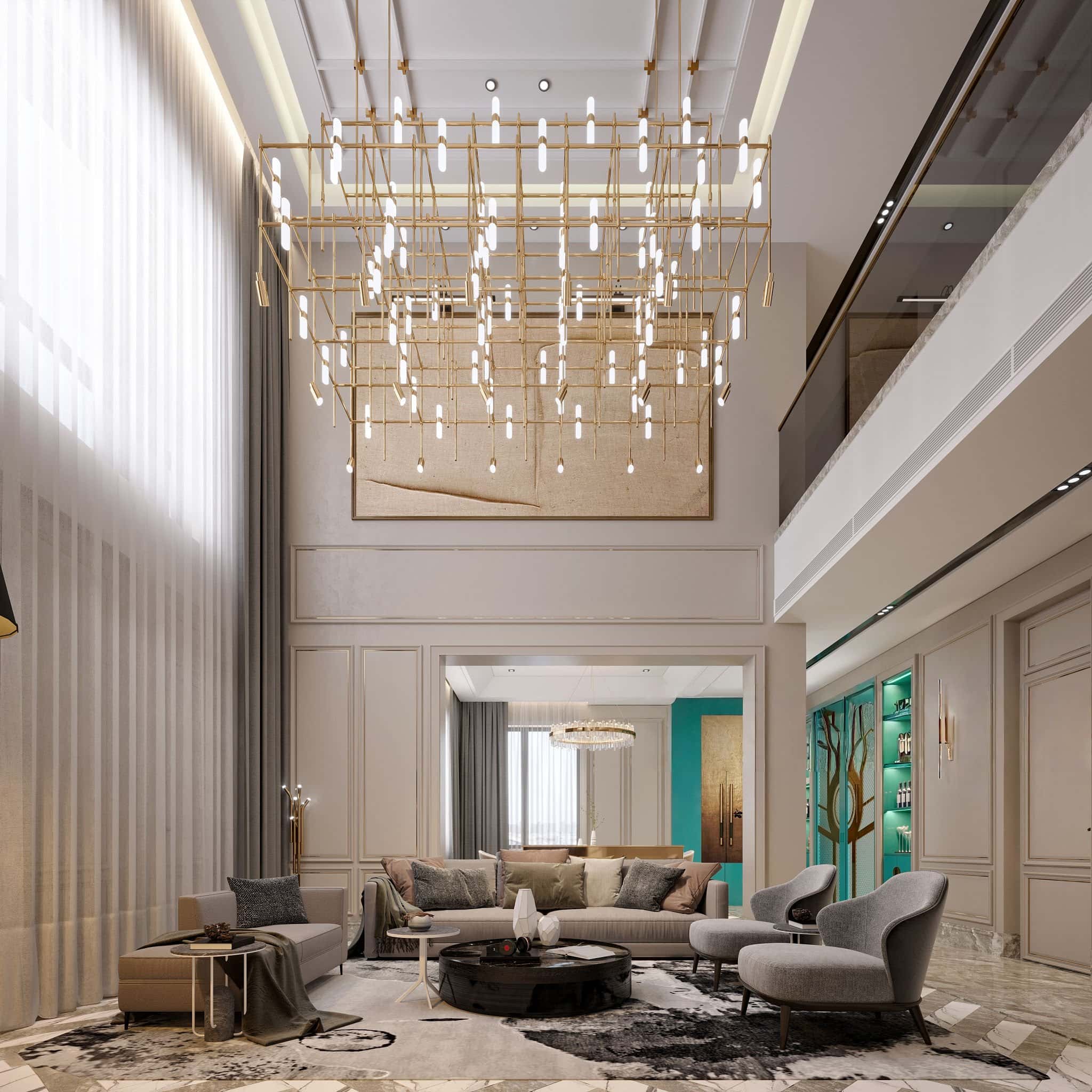
In open concept spaces, large furniture pieces serve double duty—as functional seating and as spatial definition.
Anchor pieces: Sectional sofas define living zones, kitchen islands create boundaries while maintaining openness, extended dining tables serve as room dividers.
Lighting Design for Open Concept Living
The Three-Layer System
| Layer | Purpose | Recommended Fixtures |
| Ambient | General illumination | Recessed cans, cove lighting, flush mounts |
| Task | Focused work areas | Pendant lights over island, under-cabinet lighting |
| Accent | Feature highlighting | Track lighting for art, wall washers |
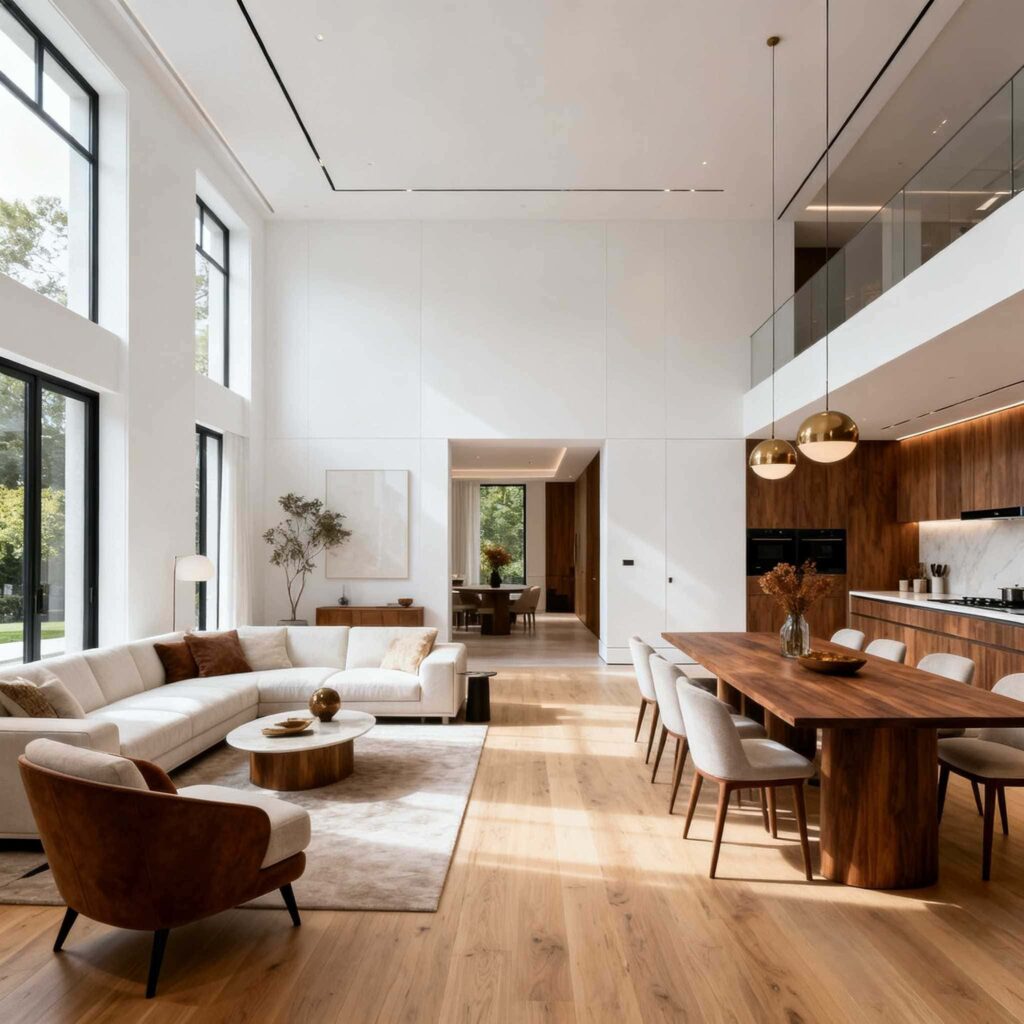
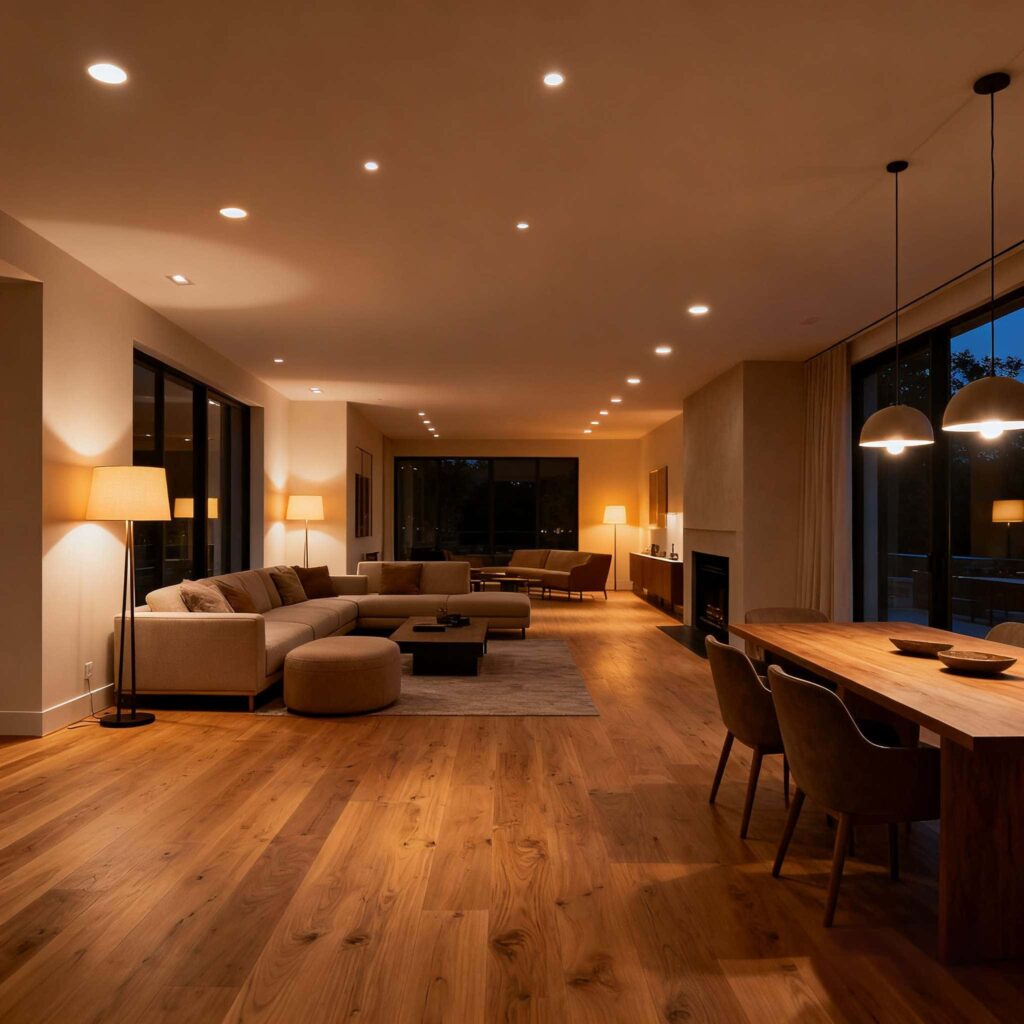
Zoning Through Lighting
Each functional zone should have independent lighting control:
| Scene | Living | Dining | Kitchen |
| Morning | Soft ambient | Gentle overhead | Bright task |
| Cooking | Low | Off | Full task |
| Entertaining | Medium ambient | Full dining | Medium ambient |
| Movie night | Accent only | Off | Night light |
Acoustic Considerations
The Primary Challenge: Without walls to absorb and contain sound, kitchens, entertainment systems, and conversations compete freely across the space.
| Solution | Cost Level | Effectiveness | Application |
| Textiles | Low | Moderate | Rugs, drapery, upholstered furniture |
| Acoustic panels | Medium | High | Walls, ceilings, freestanding |
| Window treatments | Low-Medium | Moderate | Heavy drapes, cellular shades |
| Furniture placement | Free | Low-Moderate | Strategic positioning |
| Acoustic ceiling clouds | Medium-High | High | Suspended above zones |
Color and Material Strategy
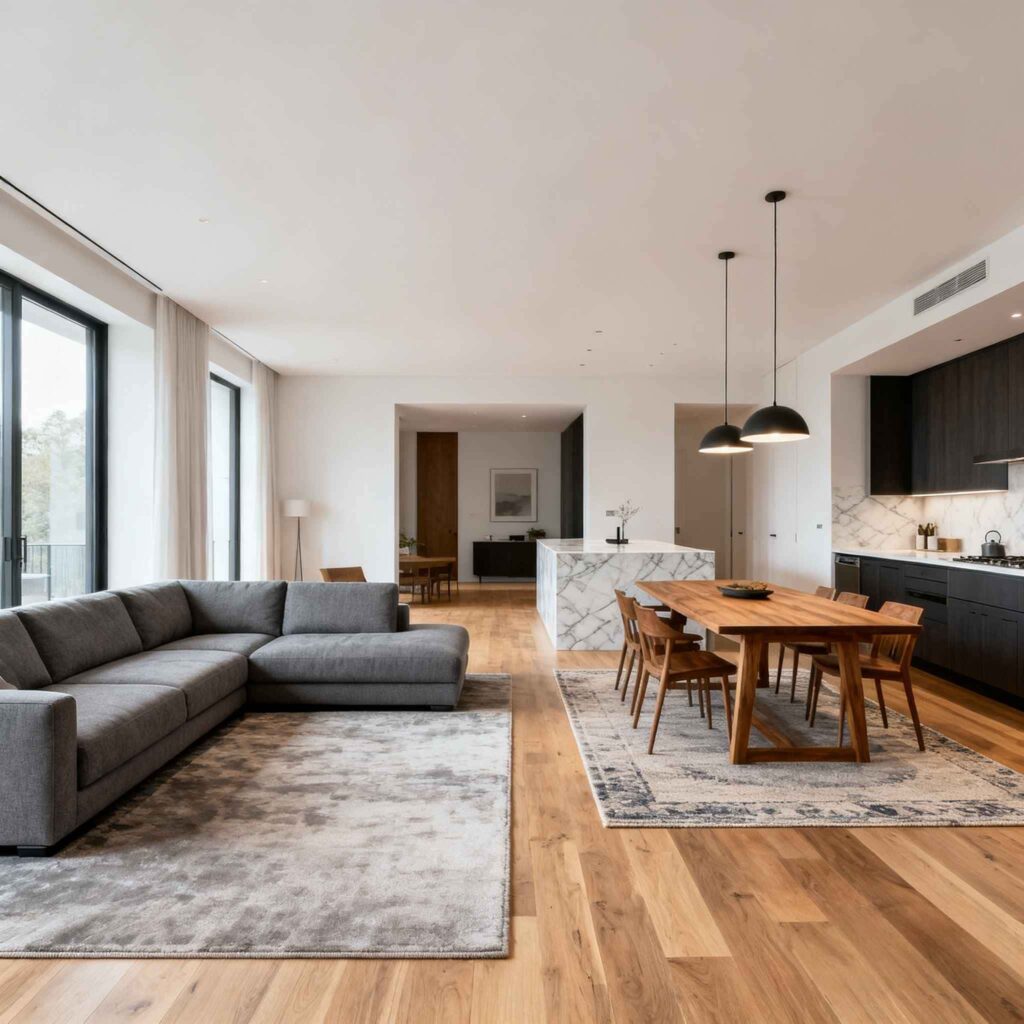
Creating Visual Cohesion
| Strategy | Application | Effect |
| Monochromatic palette | Single color family with varying values | Seamless flow |
| Tonal transition | Gradual shift across zones | Gentle progression |
| Material continuity | Same floor material throughout | Visual connector |
| Strategic contrast | Bold accent in defined zone | Creates visual anchor |
Open Concept Color Palette 2026
| Zone | Recommended Colors | Why It Works |
| Universal | Warm whites, light tans | Brightness and flow |
| Living | Blues, greens, warm grays | Calming retreat feel |
| Dining | Rich woods, deep tones | Anchors the table zone |
| Kitchen | Neutrals with metallic accents | Clean, functional focus |
The Kitchen in Open Concept Living
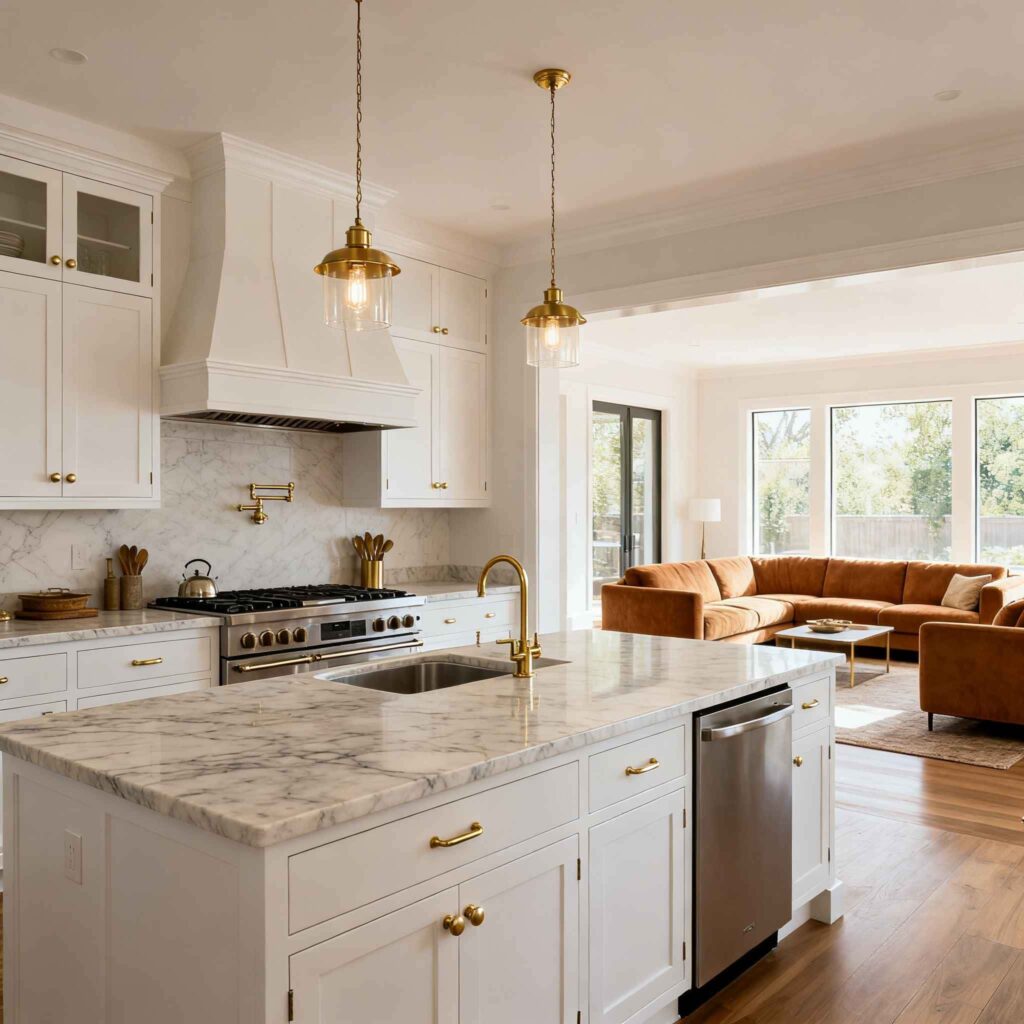
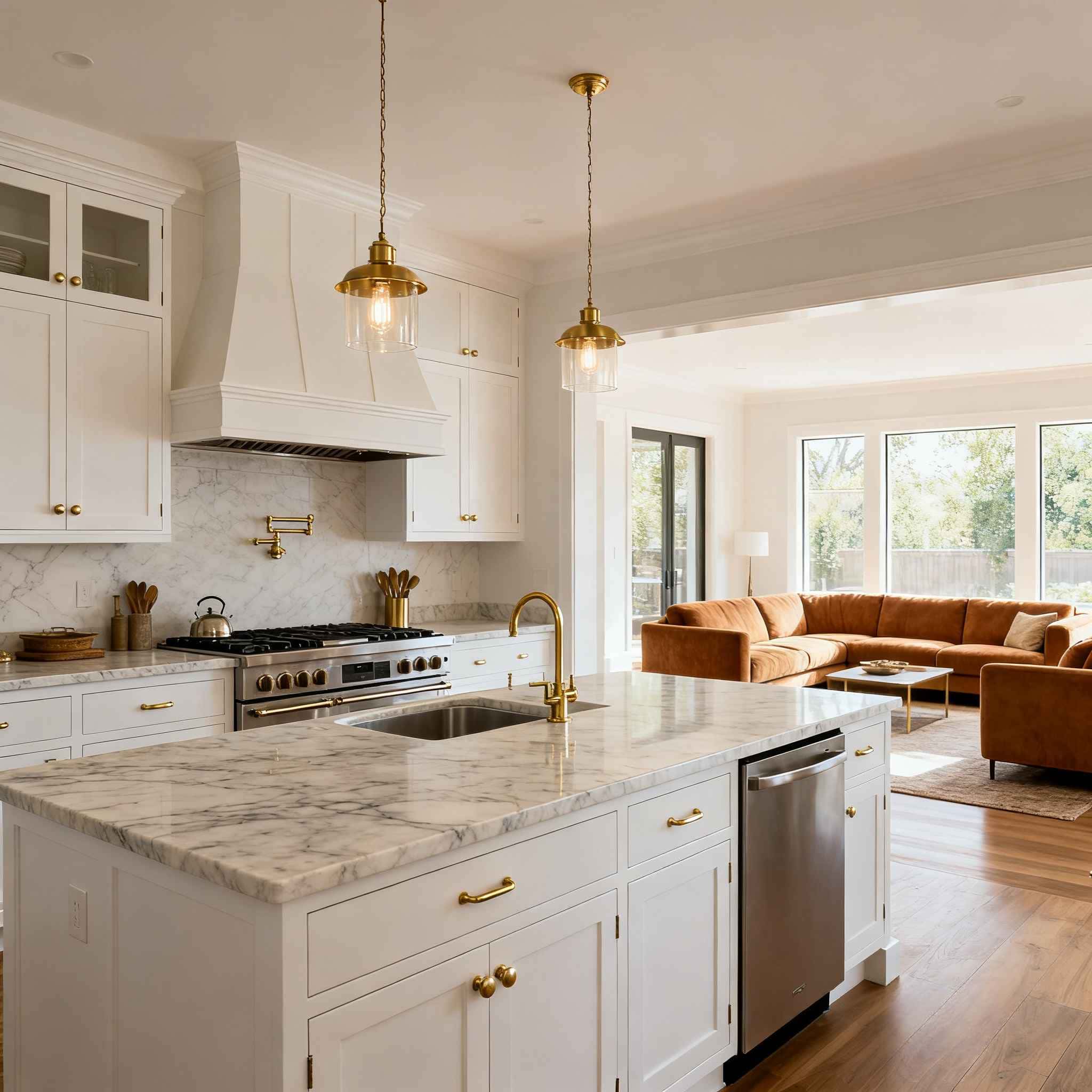
Island vs. Peninsula Design
| Factor | Island | Peninsula |
| Space required | 4+ ft clearance all sides | 3+ ft one side |
| Seating capacity | 4-6 stools | 2-3 stools |
| Traffic flow | Allows circulation around | Defines one edge |
| Visual impact | Strong central presence | Softer boundary |
Common Open Concept Mistakes
Mistake 1: Furniture Too Small
Problem: Under-scaled furniture makes rooms feel cavernous and unfinished.
Solution: Choose substantial pieces. In open concept, bigger often means more appropriate. A 96-inch sofa that feels enormous in a closed room may be perfect for an open plan space.
Mistake 2: Uniform Lighting
Problem: Single overhead fixtures provide flat, uninteresting illumination.
Solution: Layer multiple light sources with independent controls. Each zone needs its own lighting identity.
Mistake 3: Ignoring Acoustics
Problem: Acoustic problems become apparent only when living in the space.
Solution: Plan acoustic treatments during design phase. Consider rugs, drapery, and panel placement in initial drawings.
Mistake 4: Over-Zoning
Problem: Too many area rugs, lighting variations, or furniture groups create visual chaos.
Solution: Restraint. Two distinct zones with strong furniture groupings work better than four competing zones.
Frequently Asked Questions
What defines open concept living?
Open concept living is a residential design approach where traditional room divisions are removed or minimized, creating fluid, interconnected spaces typically combining kitchen, dining, and living areas. Key characteristics include expansive sightlines, shared visual space, minimal barriers, and unified lighting and flooring across zones.
How do you define spaces in an open concept home?
Spaces are defined through five primary techniques: ceiling height variation, different floor materials or levels, layered lighting with independent controls, furniture arrangement as room dividers, and area rugs anchoring furniture groupings. The most effective approach combines 2-3 of these techniques.
What are the disadvantages of open concept living?
Main disadvantages include: acoustic challenges (noise travels freely between zones), temperature consistency (kitchens generate heat that affects living areas), visual clutter visibility (everything is visible from everywhere), reduced privacy for different activities, and increased heating/cooling demands.
How do you manage acoustics in open concept living?
Acoustic management combines soft materials, strategic placement, and targeted treatments. Key strategies include layering rugs, upholstered furniture, and drapery; adding acoustic panels to walls and ceilings; incorporating plants with large leaves; selecting quiet appliances; and considering ceiling clouds.
What furniture works best in open concept spaces?
Best open concept furniture is proportionally scaled to the space, with clean lines and visible legs for visual lightness. Anchor pieces like substantial sectionals, extended dining tables, and kitchen islands serve double duty as functional furniture and spatial dividers.
Conclusion
Open concept living represents a fundamental shift in how we experience our homes—from a collection of discrete rooms to a fluid, interconnected environment. When executed well, it creates spaces that feel expansive, luminous, and perfectly suited to modern family life.
The keys to success are proportional furniture, layered lighting, acoustic planning, and visual cohesion across zones. Each decision multiplies across the entire space—making thoughtful design more critical than in traditional room-by-room planning.
At Fenmi Casa, we specialize in creating bespoke furniture pieces designed specifically for open concept living. Our custom kitchen islands, dining tables, and upholstered seating are crafted to serve as architectural elements that define zones while maintaining spatial flow.