
Luxury custom furniture isn’t about the name on the showroom plaque. It’s about the joinery that no one sees, the finish that survives 10 years of daily use, and the project manager who answers your WhatsApp at 9 PM on a Saturday.
From projects across Europe, North America, and the Middle East, the difference between a $80,000 custom furniture order that delights and one that generates a 14-email complaint thread comes down to 15 specific verification points.
This guide is written for interior designers, procurement directors, and private clients commissioning bespoke furniture where “close enough” isn’t acceptable.
—
The 15-Point Luxury Manufacturer Verification Checklist
A. Craftsmanship Verification (The “Hand” Test)
B. Project Management (The “Communication” Test)
C. Facility & Capability (The “Scale” Test)
| # | Verification Point | What to Look For | Red Flag |
| 1 | **Joinery Method** | Mortise & tenon, dovetail (visible on drawers) | Screwed + wood filler, no visible joinery |
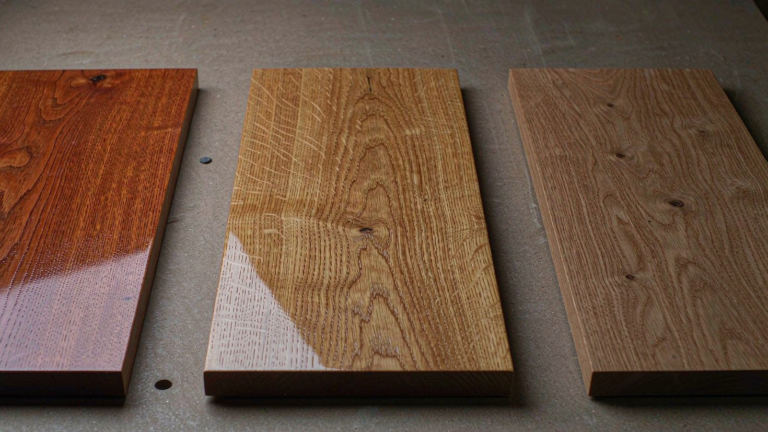
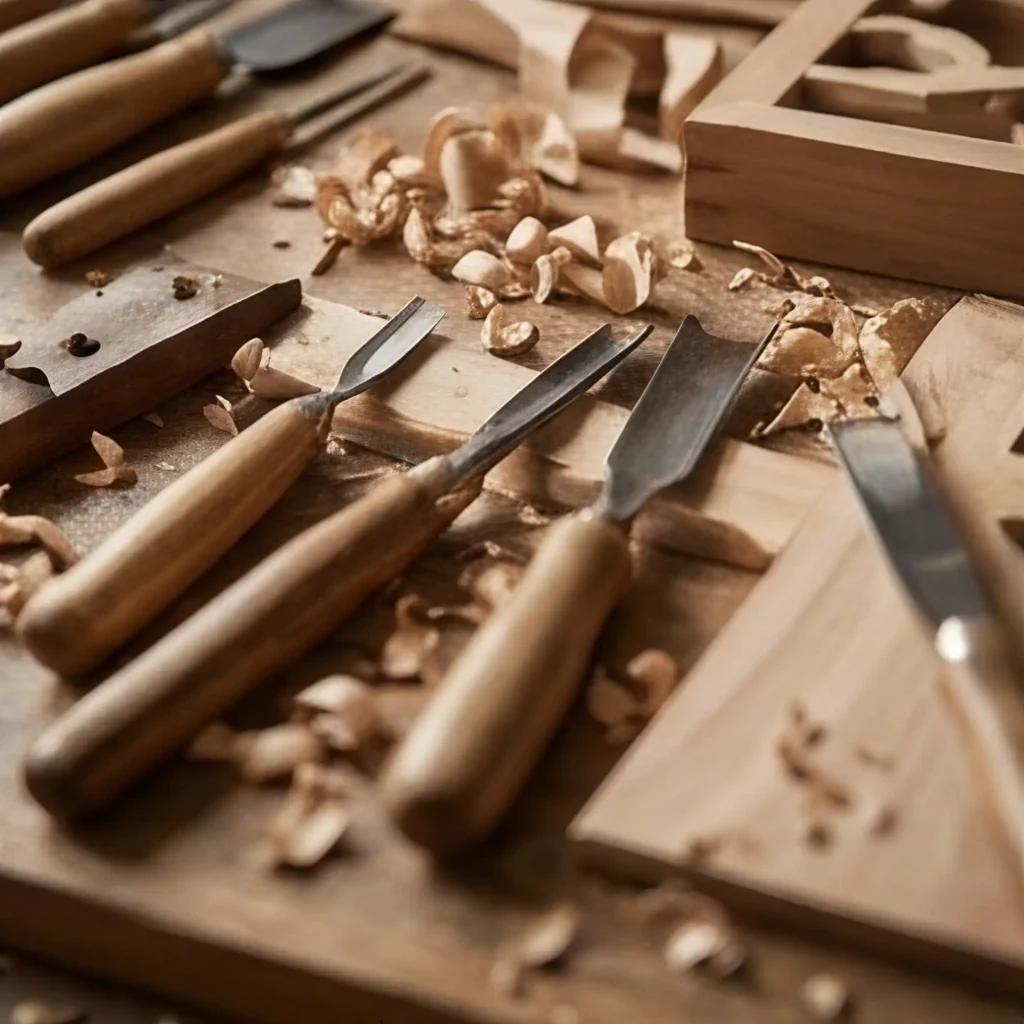
| 2 | **Finish Coats** | Minimum 7 coats hand-rubbed (not spray-only) | 3-coat spray finish, no rubbed layers |
| 3 | **Wood Matching** | Book-matched veneer with continuous grain across doors | Random veneer placement, visible grain jump |
| 4 | **Hardware** | Blum, Hettich, or Hafele specified by name | “Soft-close hinges” (no brand specified) |
| 5 | **Inlay/Marquetry** | Hand-cut (slight irregularities = authentic) | CNC-cut only (too perfect = lacks character) |
| # | Verification Point | What to Look For | Red Flag |
| 6 | **Dedicated PM** | Named individual with direct WhatsApp/email | “Sales will handle everything” |
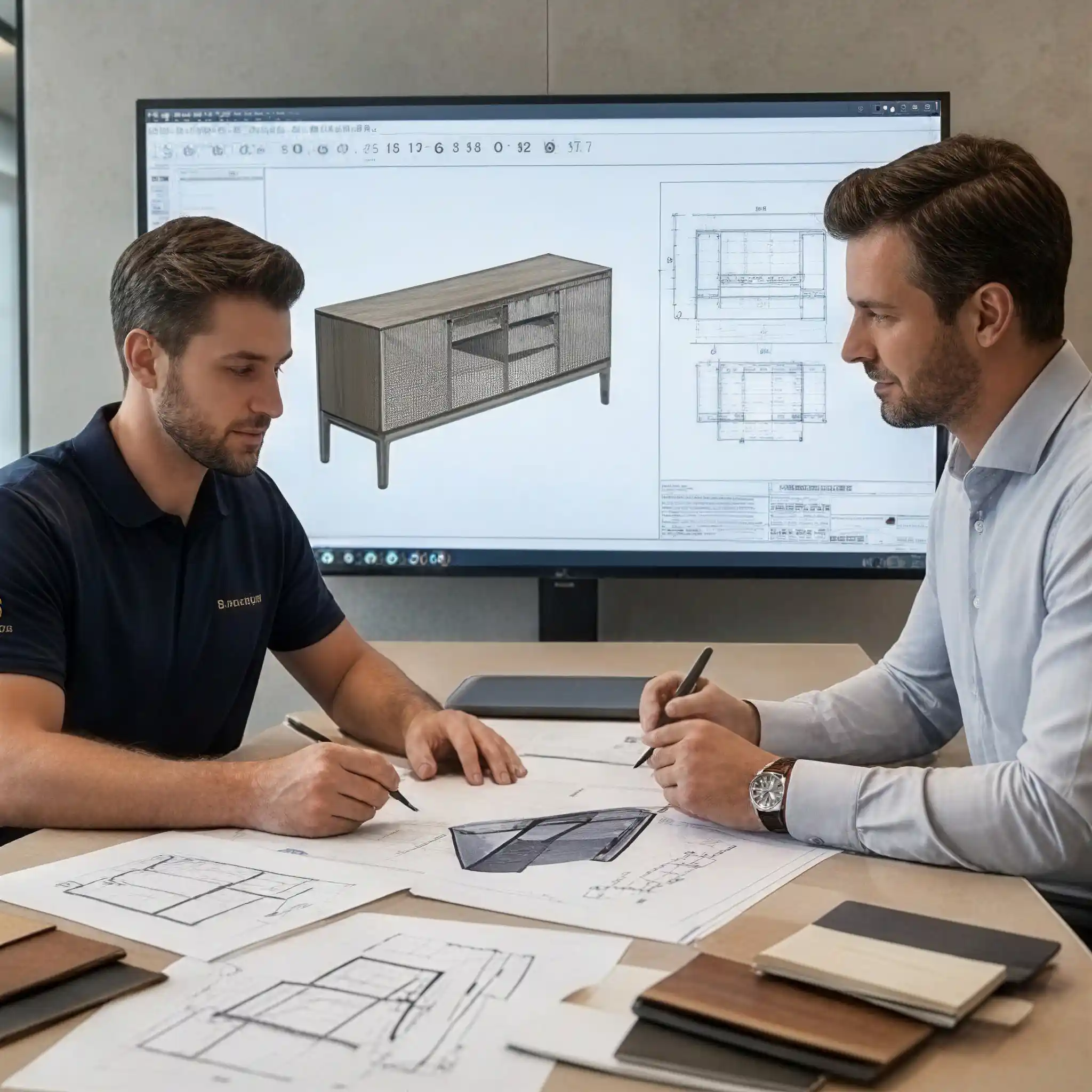
| 7 | **Shop Drawings** | 1:1 scale, client-approval required before cut | “We know what you need” (no drawings) |
| 8 | **Sample Approval** | Physical sample dispatched before production | Photos only, no physical sample |
| 9 | **Progress Updates** | Minimum 1 photo/week via client’s preferred channel | “Everything is on schedule” (no evidence) |
| 10 | **Change Order Process** | Written change-order form, 48-hour quote turnaround | Verbal changes accepted (no paper trail) |
| # | Verification Point | What to Look For | Red Flag |
| 11 | **Workshop Visit** | Willing to host (or live video tour) | “Our factory is too busy to visit” |
| 12 | **In-House Capabilities** | Wood, metal, upholstery all in-house | 70%+ sub-contracted (quality drift) |
| 13 | **Capacity Transparency** | Tells you exactly how many projects running | “We can handle anything” (no numbers) |
| 14 | **Reference Clients** | 3+ contactable references from similar projects | Only photos, no contacts |
| 15 | **Financial Stability** | 5+ years in business, audited financials for >$200K orders | New company (<3 years) for large project |
—
What “Luxury” Actually Means in Manufacturing
The “7-Coat” Rule
Luxury furniture finish isn’t about the brand of varnish. It’s about the process:
- Sealer coat (spray)
- Sand (hand, 320 grit)
- Color coat (spray or hand-rubbed)
- Sand (hand, 400 grit)
- Clear coat (spray)
- Sand (hand, 600 grit)
- Final clear coat (spray or hand-rubbed for sheen)
Total time: 14–18 days for a high-gloss sideboard. Factories that quote 7-day “luxury finish” are skipping coats 2, 4, and 6. The finish will fail (crack, peel) within 24–36 months.
The “Book-Match” Standard
For veneered surfaces wider than 200mm, luxury specification requires book-matching: adjacent veneer leaves opened like a book, creating symmetrical grain pattern.
What to ask: “Can you show me a photo of your veneer layout before pressing?”
Acceptable answer: Yes, with shop drawing showing veneer leaf layout.
Unacceptable answer: “We will match the color.” (Color match ≠ grain match.)
—
The Three Questions That Expose Fakery
Question 1: “Can I Visit the Workshop During Production?”
Luxury manufacturers who are confident in their craftsmanship want you to visit. They’ll schedule it, prepare a tour, and show you 3–4 projects in progress.
Red flag: “Our factory is too far from Guangzhou/Shenzhen.” (Translation: they’re sub-contracting 80% and don’t want you to see the actual workshop.)
Question 2: “How Many Pieces Are Currently in Production?”
A true custom furniture workshop runs 8–15 active projects simultaneously. Each project: 4–12 weeks production time.
Red flag: “We can start your project next week.” (True custom workshops are booked 4–8 weeks out. “Next week” means they have no work — or they’re not actually custom.)
Question 3: “Can You Show Me the Actual Hardware You Use?”
Luxury custom furniture uses Blum (Austria), Hettich (Germany), or Hafele (Germany). Not “soft-close hinges.”
What to do: Ask for a photo of the hinge/runner packaging before production starts. If they can’t provide it, they’re buying generic hardware from a local market.
—
Pricing: What “Luxury Custom” Actually Costs in 2026
Typcial Price Ranges (Ex-Works Guangdong, China)
| Item | Entry “Luxury” (¥) | True Luxury (¥) | Ultra-Luxury (¥) |
| Dining Table (seats 8, veneer + solid) | 18,000–28,000 | 35,000–55,000 | 65,000–120,000 |
| Sideboard (4-door, inlay) | 22,000–35,000 | 45,000–68,000 | 80,000–150,000 |
| Armchair (hardwood frame, hand-tied spring) | 8,500–12,000 | 15,000–22,000 | 28,000–45,000 |
| Sofa (3-seater, 8-way hand-tied) | 25,000–38,000 | 48,000–72,000 | 85,000–160,000 |
Does not include shipping, insurance, or white-glove delivery.
What You’re Paying For (True Luxury Tier)
| Cost Component | % of Total | What It Covers |
| Materials (wood, veneer, foam, fabric) | 32% | FAS-grade hardwood, A-grade veneer |
| Labor (joinery, finishing) | 41% | Master craftsman (15+ years) time |
| Hardware (Blum/Hettich) | 8% | Soft-close, synchronization mechanisms |
| Overhead (workshop, PM, QC) | 12% | Project management, 3-stage QC |
| Protit (ethical margin) | 7% | Sustainable business, not price-cutting |
Red flag: Any quote where “profit” is <5% or >15%. <5% = quality cutting imminent. >15% = you’re paying for a showroom you’ll never visit.
—
Common Luxury Custom Furniture Failures
Failure 1: “French Polish” That’s Actually Nitrocellulose Spray
True French polish uses shellac, applied by hand in 12–20 thin coats. It takes 5–7 days for a dining table. It can be repaired locally (shellac is re-soluble).
The fakery: Nitrocellulose lacquer sprayed in 3 coats. Looks glossy on Day 1. Cracks at 18 months. Cannot be repaired — must be stripped and re-done.
How to verify: Ask to watch the finisher work for 30 minutes. If they’re spraying and call it “French polish,” you’re being misled.
Failure 2: “Solid Wood” That’s Actually Veneered MDF
True solid wood furniture uses 18–25mm thick hardwood throughout. Veneered MDF uses 18mm MDF core with 0.6mm veneer.
How to verify: Ask for a cross-section photo of the material before production. Solid wood shows continuous grain. Veneered MDF shows a dense, uniform core.
Why it matters: Solid wood survives 20+ years and can be refinished. Veneered MDF lasts 8–12 years and cannot be refinished.
Failure 3: “Hand-Carved” That’s Actually CNC-Routed
True hand carving shows slight irregularities — the carver’s hand pressure varies. CNC routing is mathematically perfect.
How to verify: Look closely at the carving. Perfect symmetry = CNC. Slight asymmetry = hand. For luxury clients paying for “artisan,” CNC is a breach of specification.
—
Hongye’s Luxury Custom Capabilities
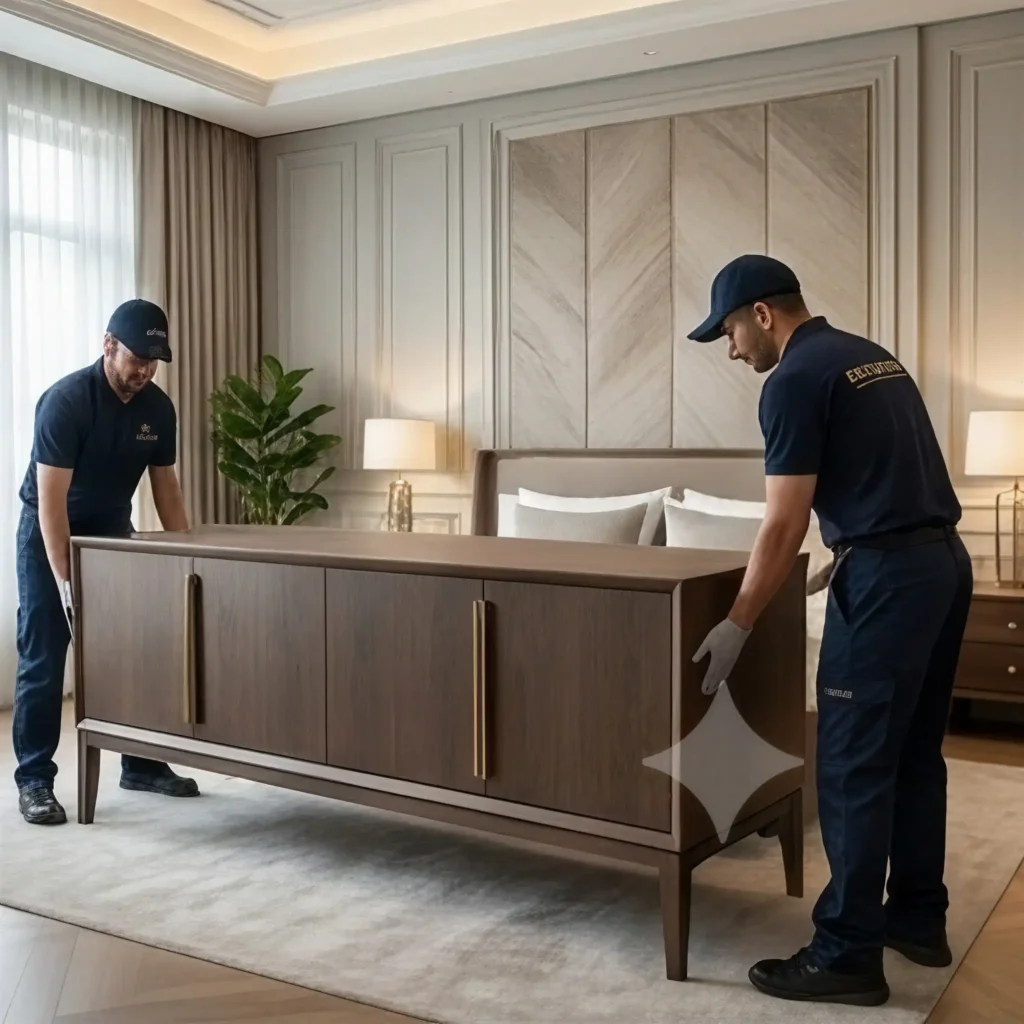
Hongye’s custom division (est. 2015) focuses on projects where specifications matter more than price. Three workshops in Guangdong: wood (32 craftsmen), metal (18 craftsmen), and upholstery (24 craftsmen).
What’s different:
- Shop drawings: 1:1 scale, client approval required before cutting. Average revision cycles: 2–3 per project.
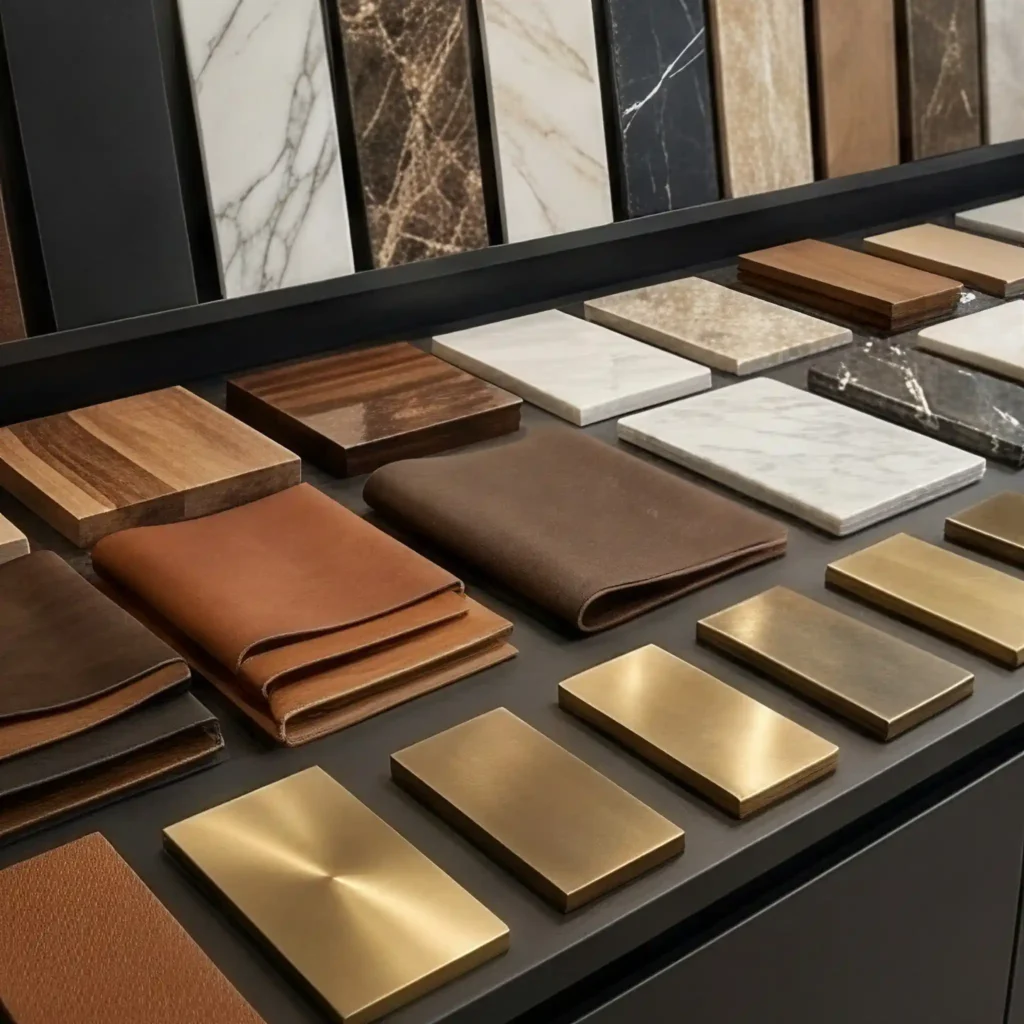
- Material transparency: Every custom project includes a material sample kit (wood, veneer, fabric, hardware) dispatched via courier before production.
- Finishing: Minimum 7 coats for all custom casegoods. Hand-rubbed final coat standard, not upgrade.
- Hardware: Blum or Hettich specified by name in every custom quotation. Substitution only with written client approval.
- Reference projects: 40+ luxury custom projects completed (2020–2026), including a 28-room villa in Riyadh (2024) and a 5,200 sq ft penthouse in Shenzhen (2025).
—
FAQ
Q1: How long does a typical luxury custom furniture project take?
A: 14–18 weeks from specification approval to delivery. Rushed in 10–12 weeks is possible with overtime (adds 15–20% to cost). Anything under 10 weeks is not “custom” — it’s modified in-stock.
Q2: What’s the minimum budget for a luxury custom furniture project?
A: ¥280,000 ex-works (approximately $38,500 USD). Below this, the economics of true craftsmanship don’t work — you’re better off buying high-end production furniture.
Q3: Can I visit the workshop during production?
A: Yes. Hongye encourages mid-production visits (typically Week 6–8, after joinery is complete and before finishing starts). Video calls available for international clients.
Q4: What happens if I don’t like the finish during production?
A: Two revision cycles included in the quotation. Additional revisions: ¥800–1,500 per piece. The goal is “yes, perfect” before shipping, not “well, it’s okay” after delivery.
Q5: Is shipping luxury custom furniture internationally safe?
A: With proper crating: yes. Hongye uses 12mm plywood crates (not cardboard), foam-in-place (not bubble wrap), and all-risk insurance. Damage rate: <0.8% over 120+ international custom shipments (2023–2026).