
A well-designed walk-in closet is not a storage room — it is a private boutique. This checklist walks architects, interior designers, and homeowners through the 12 decisions that separate a functional closet from a true dressing experience.
The numbers back up the investment. According to the National Association of Home Builders’ 2025 “What Home Buyers Really Want” report, a walk-in closet ranks as the number-one most-wanted feature among luxury home buyers, with 83% rating it essential or desirable. From our experience producing over 300 custom closet projects for villas across Southeast Asia and the Middle East, the gap between a $15,000 closet and an $80,000 closet almost always comes down to planning, not materials.
Why Closet Design Needs a Structured Approach
Most homeowners lose hours every week searching through poorly organized closets. The problem compounds when clothes, shoes, and accessories compete for the same space without dedicated zones.
| Problem | Typical Result | Checklist Solution |
| Mixed hanging heights | Creased dresses, wasted vertical space | Zone-mapped hanging with exact height specs |
| Insufficient shoe display | Shoes buried in boxes or floor piles | Angled shelves at eye level with pull-out racks |
| Jewelry and accessory chaos | Tangled chains, missing earrings | Velvet-lined drawer inserts with dedicated compartments |
| Poor lighting | Mismatched outfits, hard-to-find items | Three-layer lighting: ambient, task, and accent |
| Static layout | Can’t adapt to seasonal wardrobe shifts | Peg-based adjustable shelving with swappable drawer depths |
12-Point Luxury Walk-in Closet Design Checklist
1. Space Assessment and Zone Allocation
Start with your floor plan dimensions and map each zone before choosing finishes. The splits below come from a review of 120 luxury closet projects our team has delivered since 2020.
| Zone | % of Total | Purpose | Key Spec |
| Long hang | 20–25% | Dresses, coats, robes | 60–68 inch rod height |
| Double hang | 30–35% | Shirts, blouses, trousers | Upper 36–42 inch, lower 40–48 inch |
| Shelving | 15–20% | Folded sweaters, bags, hats | 12–14 inch depth, adjustable pegs |
| Drawers | 10–15% | Undergarments, accessories | Velvet lining, removable dividers |
| Shoe display | 10–15% | Heels, flats, boots | Angled shelves or pull-out racks |
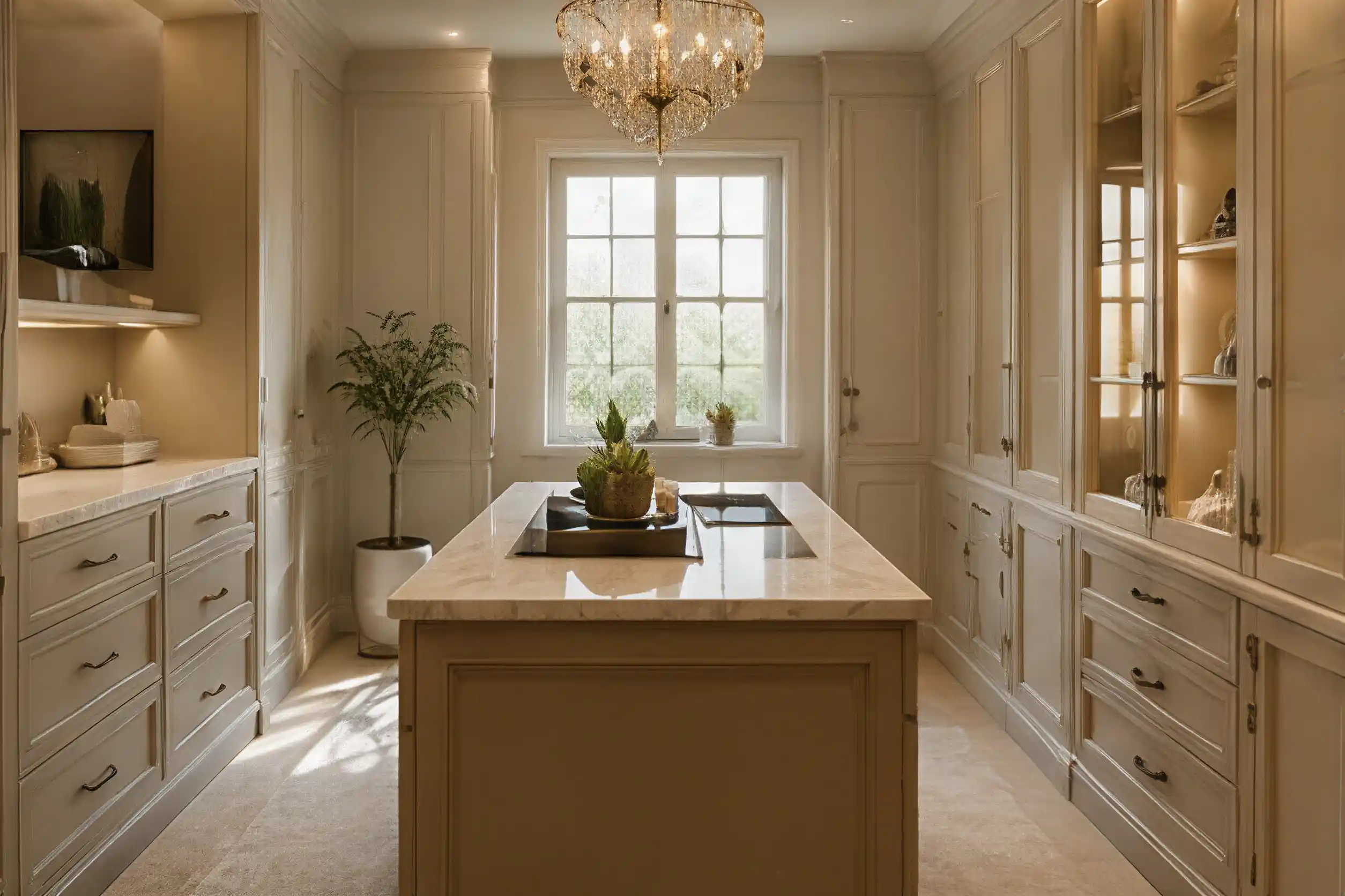
| Island/center | Optional | Folding, layout, accessory staging | 36–42 inch height, 30 inch walkway clearance |
If your space is under 80 square feet, skip the island and focus on an L-shaped or U-shaped perimeter layout. For rooms above 150 square feet, a center island becomes the visual anchor that transforms the room from storage into a dressing suite.
2. Custom Cabinetry Materials
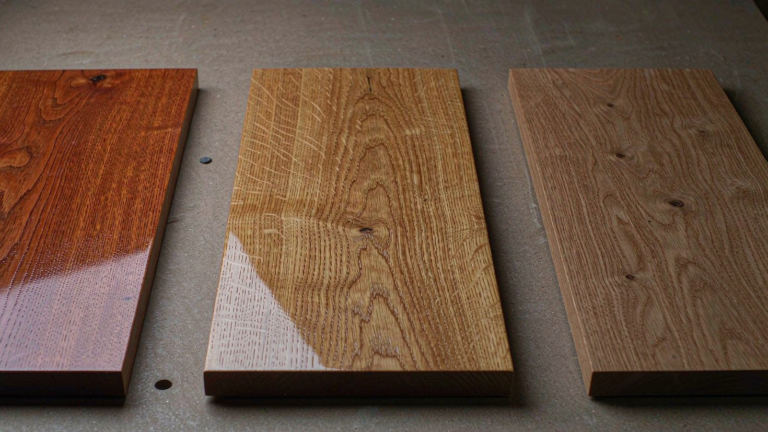
Material selection shapes both the look and the lifespan of a custom closet cabinetry project. Each option carries different trade-offs.
| Material | Look | Expected Lifespan | Cost ($/linear ft) | Best Fit |
| Solid walnut | Warm, traditional | 20+ years | $400–$800 | His-and-hers master closets |
| White oak | Clean, contemporary | 15–20 years | $300–$600 | Modern minimalist interiors |
| Lacquered MDF | High-gloss or matte | 10–15 years | $200–$450 | Glam and contemporary styles |
| Glass + metal frame | Industrial-chic | 15+ years | $350–$700 | Urban luxury apartments |
| Melamine laminate | Budget-conscious | 7–10 years | $80–$200 | Guest or secondary closets |
In humid climates, something we deal with regularly in Southeast Asian villa projects, solid wood moves with moisture changes. Melamine and lacquered MDF hold their dimensions better in those conditions. For temperature-controlled interiors, wood wins on feel and longevity.
3. Lighting: The Most Underinvested Element
Walk into most $50,000 closets and you will find a single ceiling fixture. That fixture alone cannot show you what a navy blazer actually looks like versus a black one.
| Layer | Fixture Type | Placement | Color Temp | Purpose |
| Ambient | Recessed LED downlights | Ceiling, 4 ft spacing | 3000–3500K | General visibility |
| Task | LED strip or linear bar | Under every shelf, inside cabinets | 3500–4000K | True clothing color |
| Accent | Adjustable puck or spot | Above shoe wall, jewelry case | 2700–3000K | Showcase drama |
| Mirror | Backlit panel or wall sconces | Flanking vanity or full-length mirror | 3500K | Grooming accuracy |
| Motion | Occupancy sensor switch | Entry point | N/A | Hands-free on/off |
CRI matters more than color temperature for a closet. Look for LED strips rated CRI 90+. Anything below 80 flattens fabric tones and makes color matching unreliable.
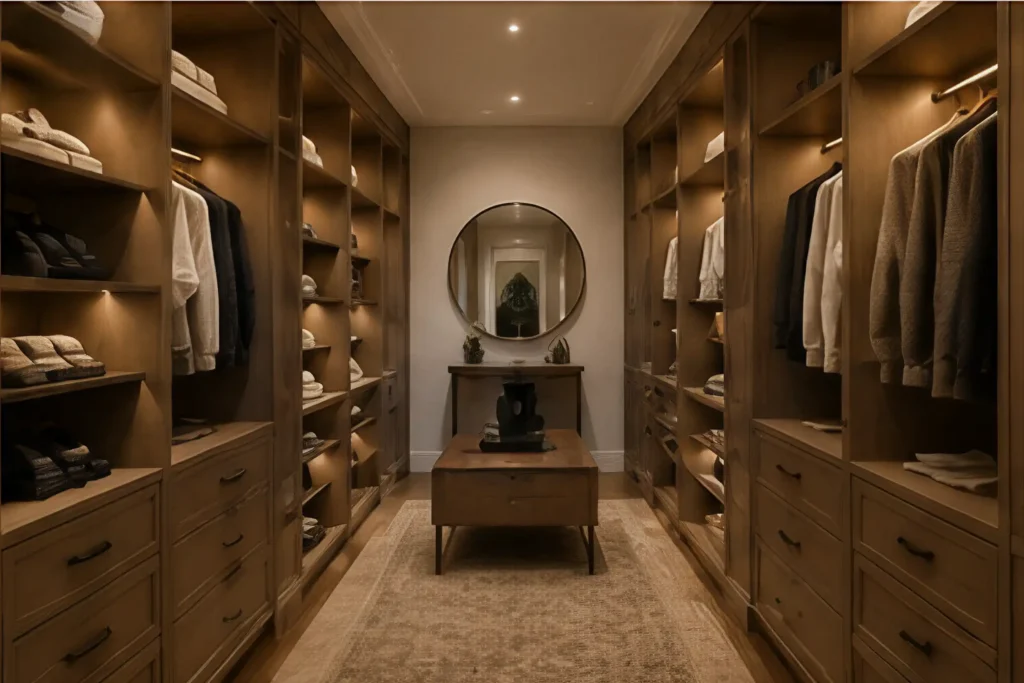
![Layered LED lighting illuminating a luxury walk-in closet with walnut cabinetry and illuminated shoe display shelves]
4. Hanging Systems
| System | Strength | Weakness | Cost |
| Fixed rod | Simple, zero maintenance | No height flexibility | $10–$30/ft |
| Adjustable rod | Seasonal reconfiguration | Visible bracket hardware | $25–$60/ft |
| Pull-down rod | Uses high ceiling dead space | Mechanical parts wear over 5–7 years | $150–$400/unit |
| Valet rod | Outfit staging before events | 15 lb weight limit | $20–$50/unit |
| Pull-out pant rack | Eliminates crease lines | Needs 4 inches of depth | $40–$100/unit |
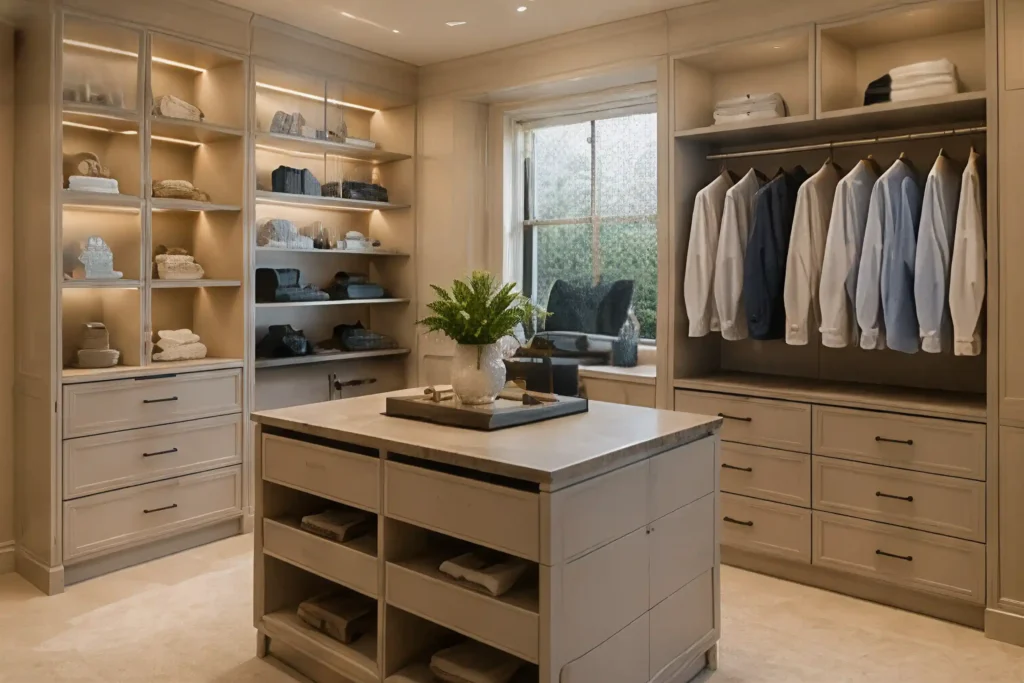
5. Drawer Configuration
| Drawer Type | Depth | Interior Treatment | Use Case |
| Shallow | 4 inch | Velvet lining, ring rolls, earring slots | Jewelry and watches |
| Medium | 6 inch | Bamboo dividers, mesh base | Daily essentials |
| Deep | 9 inch | Cedar lining, adjustable partitions | Sweaters, handbags |
| Pull-out hamper | 12 inch | Removable canvas liner | Laundry sorting |
| Tie/belt | 3 inch | Roll slots or hook rack | Men’s accessories |
6. Shoe Storage
| Solution | Pairs per Linear Foot | Visibility | Protection | Cost per Pair Slot |
| Flat shelves | 3–4 | Moderate | Moderate | $15–$30 |
| Angled shelves | 2–3 | High | Good | $25–$50 |
| Pull-out racks | 4–5 | Good | Good | $35–$60 |
| Clear display boxes | 2–3 | High | High | $5–$15 |
| Boot stands | 0.5–1 | Good | High | $20–$40 |
For a 200-pair collection, angled shelves occupy roughly 70 linear feet. Pull-out racks compress the same count into about 45 feet. The trade-off is access speed: angled shelves let you scan everything at a glance, while pull-outs require opening each rack.
![Angled shoe display shelves with LED accent lighting in a custom walk-in closet]
7. Accessory Organization
Accessories need their own real estate or they will consume drawer space meant for clothing. Five dedicated solutions we specify in every project:
A jewelry drawer with velvet-lined ring rolls, earring slots, and necklace hooks keeps fine pieces tangle-free and visible. Built-in watch winders hold 2–8 automatic timepieces and maintain movement accuracy between wears. Pull-out tie and belt racks with cedar or felt lining protect leather and silk from creasing. Multi-slot scarf hangers with non-slip padding let you flip through options without unfolding stacks. Glass-front handbag shelves at 14–16 inches deep display collections while guarding against dust.
8. Mirror and Vanity Zone
| Element | Minimum Spec | Why It Counts |
| Mirror size | Floor-to-ceiling, or 60 inch tall minimum | Full outfit check without stepping back |
| Mirror features | Backlit LED, anti-fog coating | No shadows, works after a shower |
| Vanity surface | 36 inch height, 18 inch depth | Comfortable seated makeup application |
| Seating | Upholstered bench, 17 inch seat height | Try-on comfort, storage inside |
| Power | 2–3 outlets plus USB-C at vanity | Hair tools, phone, steamer |
9. Climate Control
Closets holding natural fibers, leather, and fur need environmental management. A 2024 study by the Textile Conservation Centre found that relative humidity swings above 10% within 24 hours accelerate fiber degradation in wool and silk by up to 40%.
| Factor | Target Range | Method |
| Temperature | 65–72°F (18–22°C) | Dedicated mini-split or HVAC zone damper |
| Humidity | 40–55% RH | Standalone dehumidifier or integrated HVAC |
| Air exchange | 4–6 changes per hour | Return vent plus louvered doors or door transom |
| Pest deterrent | Passive only | Aromatic cedar lining in wool and cashmere drawers |
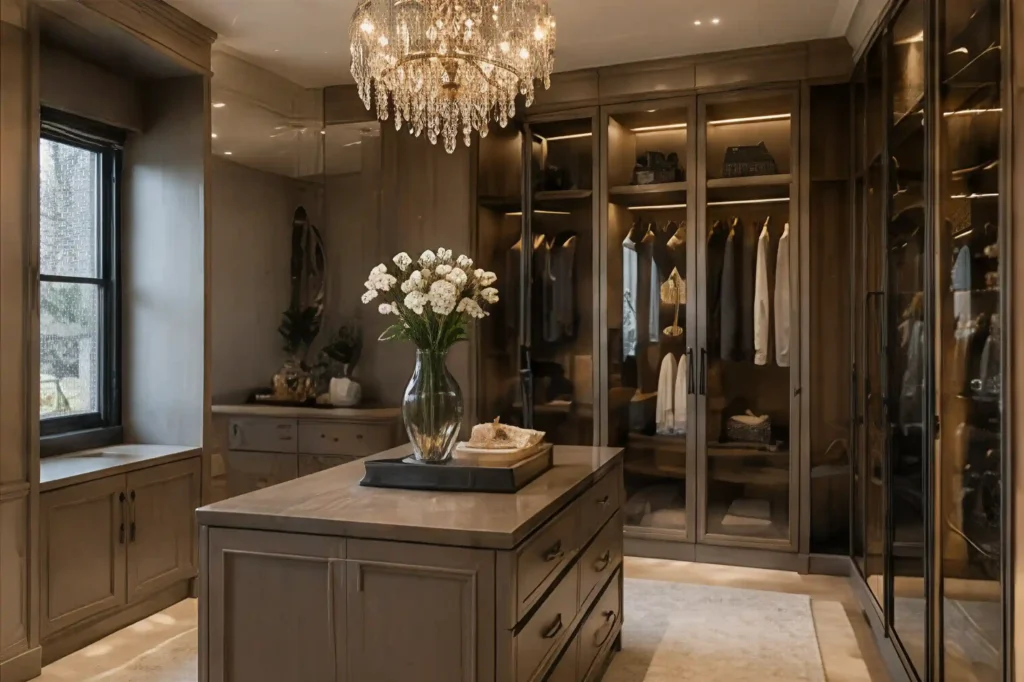
10. Smart Technology That Earns Its Cost
Most closet tech is novelty. Two features that actually change daily use:
RFID garment tracking tags every item so you can search your wardrobe from a phone app. This is useful when you have 150+ pieces and travel between residences. Motion-activated lighting scenes switch from daytime task brightness to evening accent mode automatically, saving the fumbling-for-switches moment.
| Feature | What It Does | Budget Range |
| RFID inventory system | Tag and search garments by category, color, season | $2,000–$5,000 |
| Smart mirror display | Outfit suggestions, weather sync, calendar overlay | $1,500–$3,000 |
| Motorized hanging racks | Push-button rotation to bring back rows forward | $3,000–$8,000 |
| Scene-based lighting | Motion + time-of-day preset switching | $500–$1,500 |
| Mobile wardrobe app | Remote catalog access, packing lists | Included with RFID |
11. Hardware and Finishes
| Element | Premium Choice | Standard Choice |
| Drawer pulls | Unlacquered brass, leather-wrapped bar | Chrome, brushed nickel |
| Hinges | Soft-close concealed, Blum or Grass | Exposed standard hinge |
| Countertop surface | Honed marble, quartz, or leather-wrapped | Laminate, butcher block |
| Cabinet backing | Mirrored panels, wallpaper, or suede | Painted MDF |
| Flooring | Heated stone tile or solid hardwood | Carpet or basic tile |
12. Future-Proofing the Layout
Good closet design should let the space evolve with the owner’s wardrobe. Peg-based adjustable shelving enables height reconfiguration without disassembling the cabinet box. Swappable shallow and deep drawers accommodate seasonal shifts: heavy sweaters in winter, light linens in summer. Pre-wired conduit behind walls supports future smart tech without opening drywall. Reinforced island framing allows a stone countertop upgrade later without structural work. Modular add-on sections extend storage capacity while matching the original finish.
Budget Tiers for a Custom Closet Organization System
| Tier | Square Footage | Materials | Included Features | Price Range |
| Builder-grade | 50–80 sq ft | Melamine, wire shelving | Basic single-fixture lighting | $3,000–$8,000 |
| Semi-custom | 80–150 sq ft | MDF with wood veneer, LED strips | Drawer organizers, shoe shelves, two light layers | $10,000–$25,000 |
| Fully custom | 150–300 sq ft | Solid wood, lacquer, glass panels | Center island, smart tech, climate control, three light layers | $30,000–$80,000 |
| Ultra-luxury | 300+ sq ft | Rare woods, artisan metalwork | Motorized systems, RFID inventory, full home automation integration | $80,000–$250,000+ |
Frequently Asked Questions
Q1: What is the minimum size for a luxury walk-in closet?
Eighty square feet is the practical minimum for a functional luxury closet with hanging, shelving, drawers, and shoe storage. This fits an L-shaped or U-shaped perimeter layout with a narrow center aisle. Under 50 square feet, the space works better as a reach-in closet with optimized internal configuration rather than a true walk-in.
Q2: Should the closet design match the bedroom design?
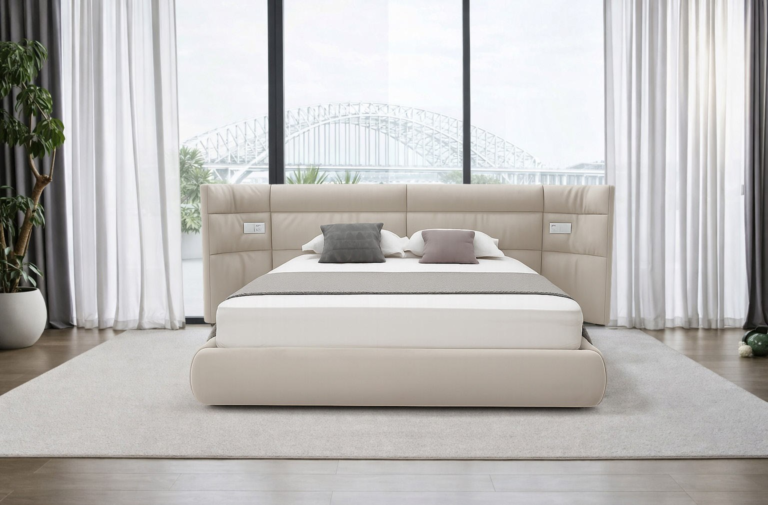
The closet should complement, not replicate. Use consistent hardware finish and flooring material for visual flow between rooms, but choose lighter interior colors and mirrored surfaces inside the closet to maximize the sense of space and improve garment visibility in the morning.
Q3: How deep should closet shelves be?
For folded clothing, 12–14 inches is the sweet spot. Deeper shelves (16+ inches) cause items to disappear in the back. Shoe shelves also work best at 12–14 inches. Handbag display shelves with glass doors need 14–16 inches to fit larger bags without crowding.
Q4: Is a center island worth the floor space?
In closets over 120 square feet, yes. A center island provides a folding surface, accessory drawer storage, and a design anchor. The key number is clearance: you need 36 inches of walking space on all four sides, so an island only works when the room is at least 10 feet wide in the shorter dimension.
Q5: What lighting shows true clothing color in a closet?
LED strips rated 3500K–4000K with a CRI of 90 or above. This temperature range mimics natural daylight without the harsh blue of 5000K or the warm amber of 2700K. Place LED strips under every shelf and inside every cabinet for shadow-free viewing. Surface-mounted ceiling fixtures alone will not do the job.
Internal Links for Publishing
- Link to: /custom-cabinetry-guide/ to see our Custom Cabinetry Materials & Finishes Overview
- Link to: /luxury-bedroom-furniture-collection/ — Luxury Bedroom Furniture Collection
- Link to: /project-gallery/ to see completed villa projects
Fenmi Casa manufactures custom walk-in closet cabinetry with solid wood, lacquer, and glass finishes at our 50,000-square-meter facility in Foshan, China. Send your floor plan and a list of wardrobe requirements to contact@fenmicasa.com. We return a zone-mapped layout and material quotation within three business days.