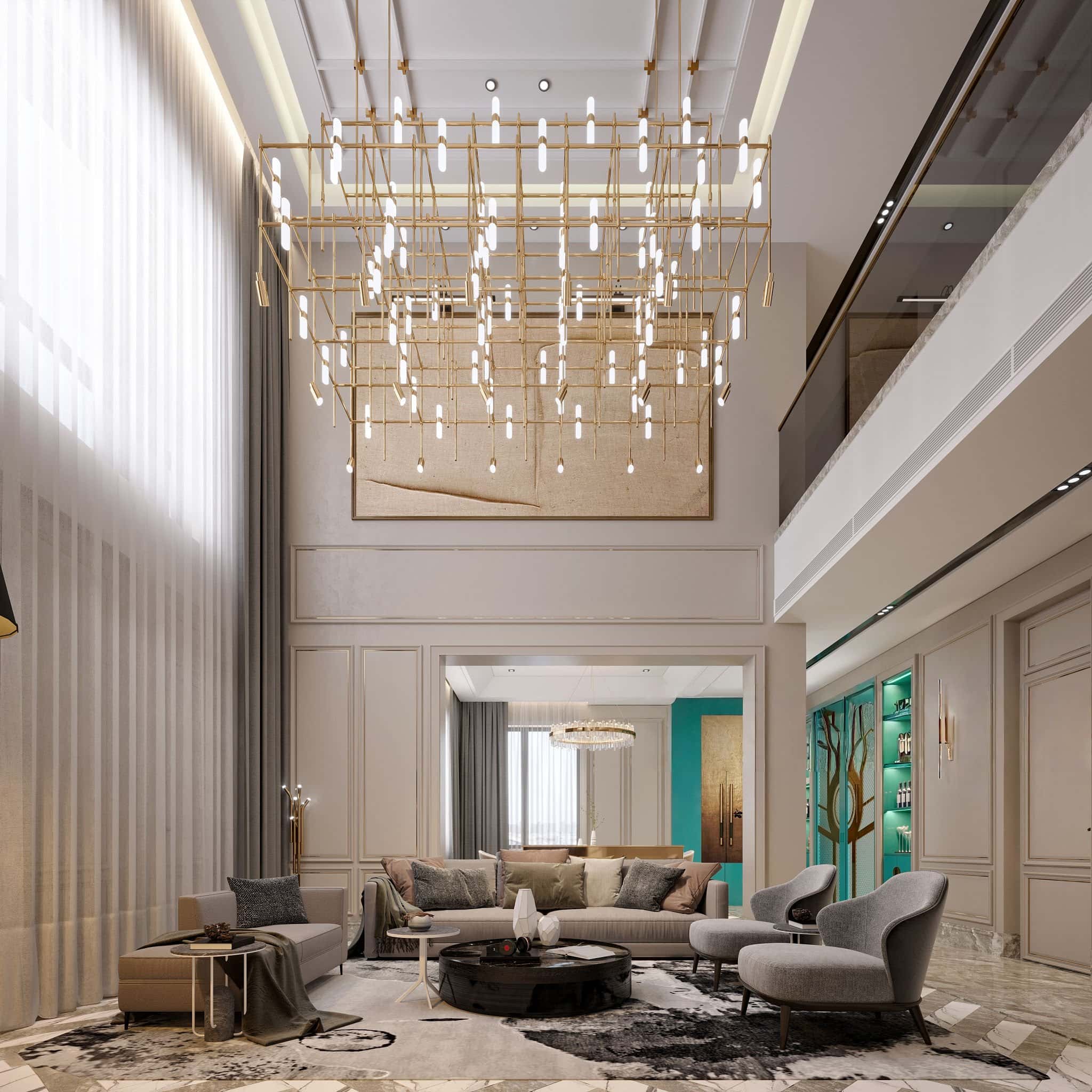

The living room is the public face of a private home — the space where design conviction meets social function, where first impressions form and daily life unfolds. Selecting luxury living room furniture is not simply a purchasing exercise; it is a design decision that establishes the room’s character, defines how people interact within it, and sets the standard for the home’s overall aesthetic ambition. A well-chosen sofa, coffee table, and accent chair trio creates a compositional anchor from which the entire room radiates coherence and intentionality.
This guide addresses the core questions that luxury homeowners and interior designers face when composing a living room: how to evaluate sofa types, what material and structural criteria separate investment-worthy coffee tables from decorative objects, how accent chairs contribute to spatial and social dynamics, and how these three elements combine into a unified room composition.
How to Choose Luxury Living Room Furniture
Choosing luxury living room furniture begins with understanding the room as an environment rather than a container. The room’s proportions, natural light, architectural features, and the lifestyle it must support all shape what furniture belongs there. A living room in a penthouse with floor-to-ceiling windows calls for different furniture than a living room in a restored colonial with original moldings and moderate ceiling height. The furniture must respond to the room, not impose upon it.
The selection process follows three sequential principles. First, establish the spatial architecture: determine the room’s primary axis (the line from entry to focal point), identify conversation zones, and map traffic patterns. Second, define the design language: choose a stylistic direction that connects to the home’s broader aesthetic while allowing the living room its own identity. Third, select individual pieces that serve the spatial architecture and express the design language simultaneously. When these three principles align, the result is a room that feels inevitable — as if no other arrangement could be right.
Investment allocation should follow the principle of proportional impact. The sofa dominates the living room’s visual and functional field; it deserves the largest share of budget and the most deliberate selection effort. The coffee table occupies the room’s geometric center and the social center of every gathering; it requires the second-highest investment attention. Accent chairs complete the composition and introduce secondary design elements; they should be chosen with care but allocated proportionally less budget than the sofa and coffee table.
Sofa Selection: The Dominant Element
The sofa is the living room’s defining piece. Its size establishes the room’s scale perception, its style sets the aesthetic tone, and its comfort determines how the room functions socially. Selecting a luxury sofa requires evaluation across multiple dimensions — type, construction, material, proportion, and contextual fit.
| Sofa Type | Seating Capacity | Visual Weight | Conversation Suitability | Typical Dimensions (W×D×H) | Best Room Context |
| Three-Seat Standard | 3 adults | Medium — balanced presence | Good — linear arrangement | 84″×36″×34″ | Medium-sized rooms; paired with two accent chairs |
| L-Sectional | 4–5 adults | Heavy — dominates space | Excellent — corner creates intimacy | 110″×80″×34″ | Large open-plan rooms; family-oriented spaces |
| U-Sectional | 5–7 adults | Very heavy — room-defining | Outstanding — enclosed conversation zone | 120″×100″×34″ | Very large rooms; entertainment-focused layouts |
| Loveseat + Chairs | 2 adults + chairs | Light — distributed composition | Good — flexible arrangement | 60″×36″×34″ | Smaller rooms; formal or eclectic layouts |
| Curved/Sculptural | 3–4 adults | Distinctive — organic form | Excellent — curved form promotes interaction | 96″×52″×34″ | Contemporary rooms; design-forward interiors |
| Modular System | Variable — configurable | Variable — adaptable to layout | Good — adjusts to occasion | Per module: 30″×36″×34″ | Versatile rooms; multi-use living spaces |
Sofa construction quality separates luxury from premium. At the luxury tier, frames are built from kiln-dried hardwood (European walnut, ash, or beech), joined with dowels and corner blocks rather than staples or nails. Suspension systems use eight-way hand-tied coils or serpentine springs with robust wire gauge. Cushion fill combines high-resilience foam cores with down or feather wraps for structured comfort with soft surface feel. These construction details are invisible in showroom photographs but determine how the sofa performs over years of daily use.
Upholstery selection for a luxury sofa involves more than choosing an attractive fabric. The fabric must suit the room’s traffic level, light exposure, and the homeowner’s maintenance expectations. Performance velvet offers the visual depth of traditional velvet with enhanced durability and stain resistance — a practical choice for high-use sofas. Full-grain leather develops character over time but requires conditioning and tolerates less casual use. Linen provides relaxed texture but shows wear more quickly. The fabric decision should be informed by how the sofa will actually be lived with, not only how it photographs.
Coffee Table Selection: The Social Center
The coffee table occupies the room’s geometric and social center. Every seating position relates to it. Every gathering arranges around it. Every visual scan of the room passes through it. Selecting a coffee table for a luxury living room demands attention to material, proportion, height, and the functional role it serves beyond surface area.
| Coffee Table Material | Visual Character | Durability | Maintenance | Weight & Stability | Cost Range |
| Solid Walnut | Warm, rich; grain pattern creates visual depth | Excellent — hard, stable, ages beautifully | Low — periodic oiling | Heavy — stable, grounded | $2,000 – $6,000 |
| Marble (Calacatta/Carrara) | Luxurious; veining creates natural art | Moderate — porous, can stain; chips on edges | High — sealing required; blot spills immediately | Very heavy — extremely stable | $3,000 – $8,000 |
| Sintered Stone | Contemporary; uniform surface, wide color range | Excellent — non-porous, scratch-resistant, heat-proof | Low — wipe clean; no sealing needed | Heavy — stable | $2,500 – $7,000 |
| Brass/Metal | Warm metallic; industrial or refined depending on finish | Excellent — develops patina or maintains polish | Moderate — polish or embrace patina | Medium — depends on base design | $1,800 – $5,000 |
| Glass (Tempered) | Transparent; light-preserving; minimal visual weight | Good — tempered for safety; scratches over time | Low — clean with glass product | Light — may feel less grounded | $800 – $3,000 |
| Mixed Material | Highest visual complexity; layered character | Variable — depends on material combination | Variable — multiple maintenance regimes | Variable — depends on composition | $3,000 – $10,000 |
Coffee table proportion must relate precisely to the sofa dimensions. The table should be approximately two-thirds the sofa’s length — a 84-inch sofa pairs with a 54-to-56-inch table, a 96-inch sofa with a 60-to-64-inch table. Depth should allow 18 inches of clearance between the table edge and the sofa front for leg comfort. Height should fall within one to two inches of the sofa seat height, creating a visual plane that connects the two elements and a functional height that accommodates drinks, books, and reaching from seated positions.
The functional role of the coffee table extends beyond surface area. Storage integration — lower shelves, concealed drawers, or lift-top mechanisms — adds practicality without compromising appearance. Nested table sets provide surface flexibility: a single large table for formal arrangements, multiple smaller surfaces distributed for casual gatherings. Brands like Fenmi Casa offer coffee table designs that incorporate these functional options within luxury material executions, ensuring that practicality does not compromise the room’s design standard.
Accent Chair Selection: Composition Completion
Accent chairs serve two essential roles: they complete the seating arrangement by providing additional positions around the coffee table, and they introduce a secondary design element that adds depth and interest to the room composition. A living room with only a sofa and coffee table is functional but incomplete — accent chairs transform it into a fully resolved spatial arrangement.
| Accent Chair Style | Visual Contribution | Comfort Level | Scale Impact | Conversation Role | Typical Cost Range |
| Wingback | Classic anchor; vertical presence; traditional gravitas | High — enveloping back; reading-friendly | Heavy — tall, commanding | Positions beside sofa; formal pairing | $1,500 – $4,500 |
| Barrel/Swivel | Curved enclosure; contemporary comfort; sociable orientation | High — wrap-around comfort; swivel adds flexibility | Medium — rounded, moderate height | Flexible positioning; rotates to engage | $1,800 – $5,000 |
| Club Chair | Deeply comfortable; European leisure; relaxed authority | Very high — deep seat; down cushions | Heavy — broad, deep | Positioned as secondary anchor | $2,000 – $6,000 |
| Sculptural/Designer | Art-level visual impact; unique form; design statement | Variable — form may prioritize visual over comfort | Light to medium — depends on design | Draws attention; conversation catalyst | $2,500 – $8,000 |
| Slipper/Low-Profile | Clean, minimal; low visual weight; modernist restraint | Moderate — upright; limited lounging | Light — low, unobtrusive | Fills seating without dominating composition | $800 – $3,000 |
| Occasional/Lounge | Relaxed posture; elongated form; leisure-oriented | High — reclined angle; deep comfort | Medium — elongated footprint | Secondary position; leisure-oriented seating | $1,200 – $4,000 |
Accent chair selection should follow the principle of complement, not match. The chairs should share the room’s design language with the sofa — compatible proportions, related material warmth — but introduce a distinct secondary note. If the sofa is upholstered in velvet, the accent chairs might use leather or a complementary woven textile. If the sofa has clean linear lines, one accent chair might introduce gentle curvature. This complementary approach creates visual depth without the monotony of exact matching or the chaos of unrelated selections.
Placement follows conversation geometry. Accent chairs should create a conversational arc with the sofa — angled at 90 to 120 degrees relative to the sofa’s long axis, positioned so that seated occupants face each other rather than facing parallel directions. The distance between seating elements should allow comfortable voice levels without requiring projection — approximately 6 to 8 feet between sofa and accent chair positions. This spacing creates intimate social zones within the room’s overall layout.
Layout Planning: Arranging the Trio in Space
The arrangement of sofa, coffee table, and accent chairs determines how the room functions socially and how it reads visually. Three primary layout approaches address different room shapes and lifestyle priorities.
| Layout Approach | Best Room Shape | Social Dynamic | Visual Character | Furniture Requirements | Design Risk |
| Centered Symmetrical | Rectangular; formal proportions | Formal; balanced; ceremonial | Classical; orderly; authoritative | Matching or coordinated accent chairs; centered table | Over-formality; stiffness; lack of casual warmth |
| Asymmetric Balanced | Irregular; open-plan; contemporary | Dynamic; flexible; casual-contemporary | Modern; layered; intentionally informal | Varied accent chairs; offset table placement | Incoherence if asymmetry lacks intentionality |
| Floating Dual-Zone | Large; open-plan; multi-function | Two social zones; adaptable to gathering size | Spacious; generous; contemporary luxury | Two seating groups with shared visual vocabulary | Disconnection if zones lack linking element |
| Wall-Anchored | Narrow; limited floor area | Intimate; linear; efficient | Grounded; stable; traditional | Sofa against wall; chairs opposite or flanking | Flat layout; limited spatial depth |
| L-Conversation | Square or wide rooms | Corner intimacy; excellent group dynamics | Warm; enclosed; inviting | L-sectional or sofa + perpendicular chairs | Overcrowding if room scale is insufficient |
The centered symmetrical layout places the sofa facing the room’s primary focal point (fireplace, window wall, or media element), with matching accent chairs flanking the sofa at equal angles and the coffee table centered between all seating positions. This arrangement produces a room that reads as deliberate and composed — appropriate for formal living rooms where visual order matters as much as comfort.
The asymmetric balanced layout relaxes symmetry without abandoning coherence. The sofa remains the dominant element, but accent chairs vary in style and position. The coffee table may be offset rather than centered. This arrangement produces a room that feels lived-in and designed simultaneously — the look of curated casualness that distinguishes contemporary luxury interiors. It requires more design skill to execute successfully, as each element must relate to the others through subtler connections than symmetrical positioning provides.
The floating dual-zone layout divides the room into two related seating groups — one anchored by the sofa, another by a secondary seating arrangement (two chairs with a smaller table, or a sectional with an integrated surface). This approach suits large rooms where a single seating group would leave too much empty space, and it accommodates gatherings of different sizes — intimate conversations in one zone, larger groups spanning both. The two zones must share a visual connection: related material palettes, compatible proportions, or a linking element such as a rug that spans both areas.
Color Coordination: Unifying the Furniture Palette
Color coordination in luxury living rooms is not about matching — it is about creating a palette where every piece belongs to a shared tonal narrative while maintaining enough variation to produce visual depth.
| Color Strategy | Palette Structure | Visual Effect | Complexity Level | Maintenance Risk | Recommended Context |
| Monochromatic | Single hue in varying depths and textures | Unified; serene; sophisticated restraint | Low — easiest to execute | Low — consistent aging behavior | Minimalist interiors; rooms seeking calm authority |
| Analogous | Two or three adjacent hues (e.g., cream, gold, warm tan) | Warm; harmonious; natural flow | Moderate — requires tonal balance | Low — related hues age similarly | Traditional and transitional interiors; warm atmospheres |
| Complementary Accent | Dominant neutral with one contrasting accent color | Dynamic; focal interest; designed intentionality | Moderate — accent must be proportioned correctly | Moderate — accent pieces may date faster | Contemporary interiors; design-forward rooms |
| Textural Neutral | Multiple neutral tones differentiated by material texture | Deep; rich without color complexity; material-led | High — relies on material quality differences | Low — neutrals age gracefully | Luxury interiors where material quality is the statement |
| Bold Foundation | One bold color anchor (sofa) with neutral supporting pieces | Dramatic; confident; personality-driven | High — bold choice must suit long-term taste | High — bold colors may limit future flexibility | Expressive interiors; rooms designed around a strong vision |
The most successful luxury living rooms tend toward textural neutral or analogous color strategies. These approaches create visual richness through material quality and tonal variation rather than through color contrast, producing rooms that feel sophisticated without requiring bold color commitment. A sofa in warm oatmeal velvet, a coffee table in natural walnut, and accent chairs in honey-toned leather create a cohesive warm-neutral palette where each piece’s material character provides the visual interest that color variation would supply in a more chromatic approach.
For homeowners who desire bolder expression, the complementary accent strategy introduces one deliberate contrast within the neutral field. A navy velvet sofa against warm neutral walls and brass-accented coffee table creates a room with clear design conviction — the bold choice signals intentionality, and the neutral context prevents the bold color from overwhelming the room. Fenmi Casa’s design consultants often recommend this strategy as the entry point for homeowners moving beyond neutral interiors while maintaining luxury-level visual coherence.
When coordinating color across the sofa, coffee table, and accent chairs, evaluate all pieces together in the actual room lighting. Fabric and material samples viewed under showroom lighting may appear dramatically different under residential conditions. Request large material swatches, place them in the living room at different times of day, and evaluate how natural and artificial light affects each material’s color and texture. This real-condition evaluation prevents the common mistake of selecting pieces that appear coordinated in a showroom but disconnect under actual residential lighting.
Frequently Asked Questions
Q1: How to choose luxury living room furniture for an open-plan space?
Open-plan living rooms require furniture that defines zones without erecting visual barriers. The sofa should be positioned to create a living zone boundary — its back facing the dining or kitchen area, its orientation establishing a distinct social zone within the larger space. A floating layout (furniture arranged away from walls) is essential in open-plan rooms, as wall-anchored arrangements fail to create the spatial intimacy that makes a living zone feel distinct. The coffee table and accent chairs should be arranged to complete this zone, creating a conversational enclosure that reads as a room-within-a-room. A large rug grounding the seating group reinforces the zone definition. Modular sofa systems are particularly effective in open-plan contexts because they can be reconfigured for different gathering sizes while maintaining a coherent visual presence.
Q2: What size coffee table works best with a luxury sofa?
The coffee table should measure approximately two-thirds the sofa’s length. For a standard three-seat sofa at 84 inches, a coffee table of 54 to 56 inches creates proportional harmony. For a 96-inch sofa, a 60 to 64-inch table is appropriate. The table should leave 18 inches of clearance between its edge and the sofa seat front for leg room and ease of movement. Height should fall within one to two inches of the sofa seat height. These proportional relationships ensure the coffee table reads as an intentional companion rather than an undersized accessory or an oversized obstruction. In rooms with L-sectional sofas, a rectangular or oval table that bridges the sectional’s corner works better than a square table that only addresses one section.
Q3: Should accent chairs match the sofa in a luxury living room?
Accent chairs should complement the sofa, not match it. Matching produces a catalog-like appearance — coordinated but flat. Complementary chairs share the room’s design language (compatible proportions, related material warmth) but introduce a secondary note that adds visual depth. A velvet sofa paired with leather accent chairs, or a linear sofa with one curved accent chair, creates a layered composition where each element contributes distinct character while maintaining overall coherence. The chairs should relate to the sofa through shared design vocabulary — similar scale, analogous tonal position, compatible form language — rather than through identical material and color. This complementary approach is standard practice among luxury interior designers and produces rooms with more visual sophistication than matched sets achieve.
Q4: How do I evaluate construction quality in a luxury sofa?
Construction quality evaluation focuses on three invisible systems: frame, suspension, and cushion. The frame should be kiln-dried hardwood (walnut, ash, or beech) with dowel-reinforced joints and corner blocks at stress points — not plywood or particleboard with staples. The suspension should be eight-way hand-tied coils or heavy-gauge serpentine springs — not webbing or lightweight springs. Cushion cores should be high-resilience foam (2.5+ density) with down or feather wraps — not standard foam without comfort layers. Beyond these structural elements, examine the upholstery tailoring: seams should be straight with consistent stitch count, corners should be reinforced, and fabric patterns should align across panels. A luxury sofa’s quality is revealed in the details that are felt during use rather than seen during purchase — how the cushions retain their shape over years, how the frame resists creaking, and how the upholstery wears gracefully.
Q5: What is the recommended investment split between sofa, coffee table, and accent chairs?
A common and effective investment allocation places approximately 50% of the living room furniture budget on the sofa, 25% on the coffee table, and 25% on accent chairs (divided between two chairs). This allocation reflects the proportional impact each element has on the room’s visual and functional performance. The sofa dominates the room’s visual field and receives the most daily use — it warrants the highest investment. The coffee table occupies the room’s social center and must withstand constant interaction — it warrants the second-highest investment. Accent chairs complete the composition and introduce secondary design character — they warrant thoughtful selection at a proportionally lower investment. This 50/25/25 split can be adjusted for specific contexts: rooms where the coffee table serves as a design statement might shift toward 45/30/25, while rooms where accent chairs carry significant design weight might shift toward 45/25/30. The principle remains: invest proportionally to impact.