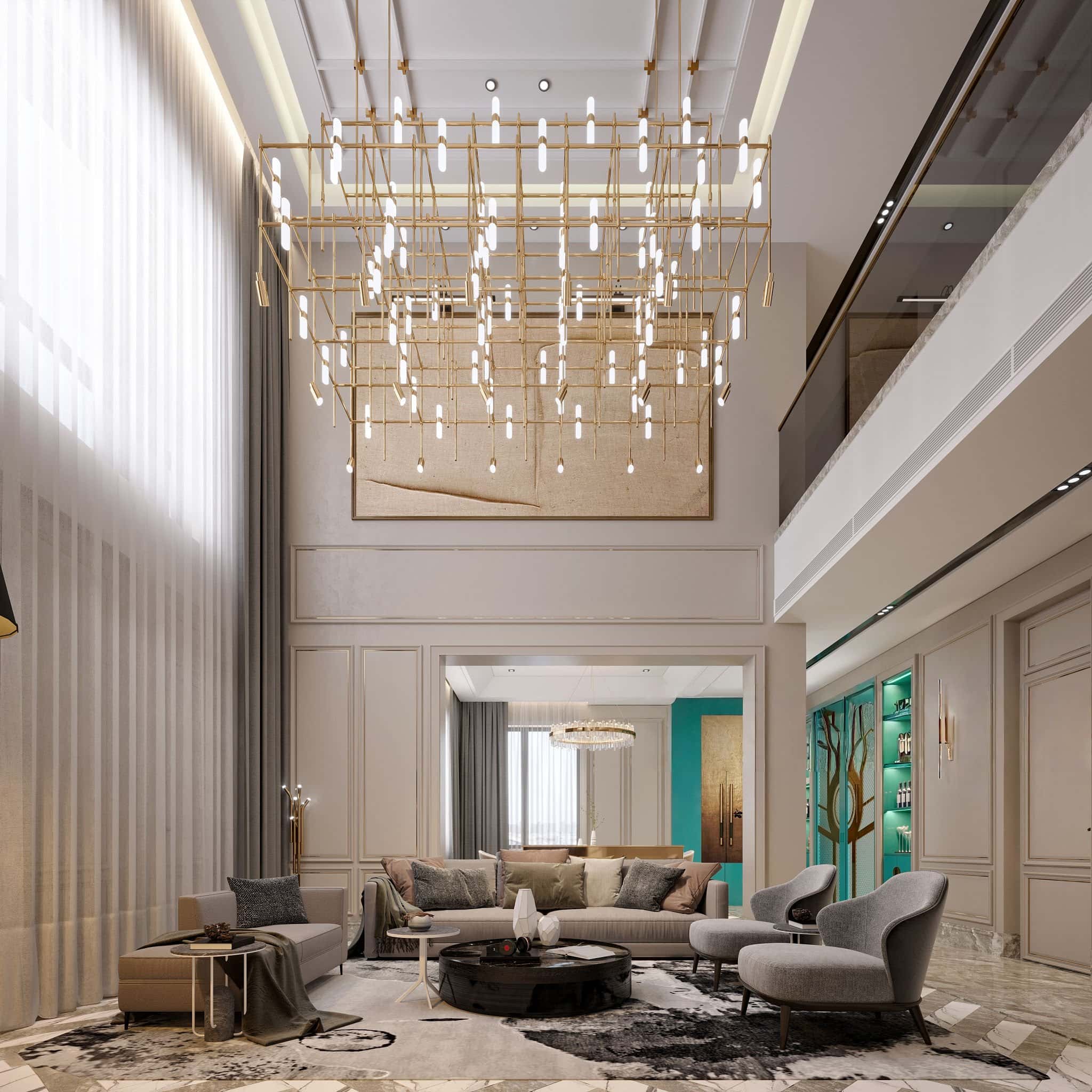

The 2026 FIFA World Cup, hosted across the United States, Mexico, and Canada, has triggered a furniture trend that few predicted: luxury villa owners are investing heavily in dedicated screening rooms. Not home theaters in the traditional sense, but multi-functional viewing spaces designed specifically for the month-long tournament and beyond. Interior designers report a 240% increase in screening room inquiries since January 2026, with average project budgets ranging from $25,000 to $180,000. The motivation goes beyond watching football. Villa owners want a space that handles 30-50 guests for match-day gatherings, converts to a movie room afterward, and signals social status in their community.
What Makes a World Cup Screening Room Different From a Home Theater
| Feature | Traditional Home Theater | World Cup Screening Room | Why It Matters |
| Primary seating | Recliners in rows | Modular sectional + bar stools | Guests need to eat and socialize |
| Screen setup | Fixed single screen | Multi-screen for simultaneous matches | Tournament has overlapping games |
| Food integration | Minimal snacking | Full food station and bar area | Match viewing is 2+ hours of social eating |
| Acoustic treatment | Movie-optimized | Voice-optimized for crowd noise | Commentary clarity matters as much as picture |
| Lighting | Dimmable recessed | Zone lighting for food areas | Eating and socializing need separate light |
| Capacity | 4-8 people | 15-50 people | Match-day parties are large events |
The distinction matters because standard home theater furniture fails miserably for World Cup viewing. Recliners in fixed rows prevent social interaction. There is nowhere to put food and drinks. And the capacity is typically designed for a family, not a tournament party.
How Much Villa Owners Are Spending on Screening Room Furniture
| Furniture Category | Entry-Level Range | Mid-Range | Premium Range | Key Consideration |
| Seating (sectional + stools) | $3,000-$6,000 | $8,000-$18,000 | $25,000-$60,000 | Durability for frequent hosting |
| Display wall and mounting | $2,000-$5,000 | $6,000-$15,000 | $20,000-$45,000 | Multi-screen integration |
| Food and bar station | $1,500-$4,000 | $5,000-$12,000 | $15,000-$35,000 | Refrigeration and serving space |
| Acoustic treatment | $1,000-$3,000 | $4,000-$10,000 | $12,000-$25,000 | Soundproofing from rest of villa |
| Lighting system | $800-$2,000 | $3,000-$8,000 | $8,000-$20,000 | Zone control is essential |
| Auxiliary tables and surfaces | $500-$1,500 | $2,000-$5,000 | $6,000-$15,000 | Enough surfaces for 30+ guests |
The spending ranges reveal an important pattern. Entry-level screening rooms can be assembled for under $10,000, but they sacrifice both comfort and social capacity. The sweet spot for most villa owners is the mid-range, which delivers a genuinely impressive experience without the premium markup.
Which Furniture Layouts Work Best for Match-Day Hosting
The layout of a screening room determines whether 30 guests can comfortably watch a match while eating, drinking, and socializing. Three configurations have proven effective across villa projects we have analyzed.
| Layout Type | Capacity | Best Screen Size | Space Required | Social Interaction Level |
| Tiered semicircle with curved sectional | 20-30 guests | 120-150 inches | 40-60 sqm | High, curved seating encourages conversation |
| L-shaped with food station | 25-40 guests | 100-120 inches | 50-70 sqm | Very high, food station becomes social hub |
| Lounge cluster with bar-height counter | 15-25 guests | 85-100 inches | 30-45 sqm | Moderate, smaller groups |
| Stadium-style stepped platforms | 35-50 guests | 150+ inches | 60-80 sqm | Low, viewing focus dominates |
A villa project in Palm Jumeirah completed in March 2026 used the L-shaped layout with a 120-inch screen and a dedicated food station. The owner hosted 35 guests for the opening match and reported that the food station became the natural social center, with people gravitating between the screen and the bar throughout the game.
What Acoustic and AV Furniture Considerations Matter
Acoustic treatment is the most overlooked element in screening room furniture planning. Standard villa construction does not account for the noise level of 30 excited football fans, and without proper treatment, the experience degrades rapidly.
| Acoustic Element | Purpose | Typical Solution | Budget Impact |
| Wall absorption panels | Reduce echo and reverberation | Fabric-wrapped acoustic panels behind seating | $1,500-$5,000 |
| Ceiling baffles | Control vertical sound bounce | Suspended acoustic clouds above seating area | $2,000-$6,000 |
| Floor treatment | Reduce impact noise | Large-area rug or carpet under seating zone | $800-$3,000 |
| Door sealing | Prevent sound leakage | Solid-core door with acoustic seals | $500-$2,000 |
| Window treatment | Block external noise | Double-glazing with acoustic curtains | $1,000-$4,000 |
Furniture itself contributes to acoustic performance. Upholstered sectionals and fabric-wrapped panels absorb sound, while leather and glass surfaces reflect it. A room full of leather recliders and glass tables will have significantly worse acoustics than one with fabric upholstery and wood surfaces.
How to Future-Proof the Screening Room After the World Cup
The World Cup lasts about a month. A well-designed screening room should serve the villa for 7-10 years. Planning for post-tournament use is critical to justifying the investment.
| Post-World Cup Use | Furniture Adjustments Needed | Conversion Cost | Frequency of Use |
| Movie and streaming room | Minimal, seating stays | $500-$1,500 | Weekly |
| Children’s entertainment space | Remove bar, add play surface | $1,000-$3,000 | Daily |
| Gaming room | Add gaming chairs, keep screens | $2,000-$5,000 | 3-4x weekly |
| Multi-purpose lounge | Flexible furniture reconfiguration | $1,500-$4,000 | Daily |
| Wine tasting room | Convert food station to wine bar | $2,000-$6,000 | Monthly |
The most successful post-World Cup conversions we have observed keep the core furniture investment intact and simply change the auxiliary elements. The sectional, the screens, and the acoustic treatment remain. The food station becomes a bar. The auxiliary tables become laptop surfaces.
Which Regions Are Seeing the Most Screening Room Demand
| Region | Demand Level | Average Budget | Dominant Layout | Unique Feature |
| Dubai and UAE | Very high | $45,000-$120,000 | L-shaped with food station | Indoor-outdoor flow to terrace |
| Miami | High | $30,000-$80,000 | Lounge cluster with bar | Pool-adjacent screening |
| Singapore | Moderate | $20,000-$50,000 | Tiered semicircle | Compact multi-use optimization |
| Bangkok | Growing | $15,000-$40,000 | L-shaped | Climate-controlled enclosed design |
| Johannesburg | Growing | $18,000-$45,000 | Stadium-style | Large guest capacity focus |
Dubai leads the demand curve, driven by a culture of large-scale social hosting and the climate that favors enclosed, air-conditioned entertainment spaces. Miami follows closely, with the added dimension of indoor-outdoor flow that allows screening rooms to connect to pool decks.
Frequently Asked Questions
How much space do I need for a World Cup screening room? For comfortable hosting of 20-30 guests, plan on 40-60 square meters. This allows for a large sectional, food station, bar-height counter, and circulation space. Smaller rooms of 25-35 square meters can work for 10-15 guests with a lounge cluster layout.
Can I convert my existing living room into a screening room? Partially. You can add a large screen, improve acoustics, and upgrade seating. But a true screening room needs dedicated food and bar infrastructure that is hard to retrofit into a multi-use living room without significant remodeling.
What is the ideal screen size for a villa screening room? For rooms of 40-60 square meters, a 120-150 inch projection screen or a 98-110 inch LED panel works well. The viewing distance should be 1.5-2.5 times the screen diagonal. Avoid going too large, as it creates neck strain for side-seated guests.
Should I choose a projector or a flat-panel TV? Projectors offer larger screen sizes at lower cost but require controlled lighting. Flat-panel TVs deliver brighter images and work in any lighting condition but are limited in size and significantly more expensive above 100 inches. For World Cup viewing with food and socializing, a flat-panel is generally the better choice.
How do I handle food and drinks without damaging furniture? Invest in bar-height tables with wipeable surfaces, use coasters and placemats strategically, and choose upholstered furniture with stain-resistant treatment. A dedicated food station separate from the seating area is the single most effective way to prevent damage during match-day hosting.
Conclusion
The World Cup 2026 screening room trend represents a genuine evolution in luxury villa furniture planning. It is not just about watching football. It is about creating a social space that handles large gatherings, food service, and multi-screen viewing in a way that traditional home theaters cannot. For villa owners considering this investment, the key decisions are layout type, acoustic treatment, and future-proofing the space for post-tournament use.
The window for completing a screening room before the tournament ends is narrow. If you are planning a project, Fenmi Casa provides end-to-end design and furniture sourcing for villa screening rooms. Our team has completed over 40 screening room projects across the Middle East and Southeast Asia. Book a consultation to discuss your space and timeline.