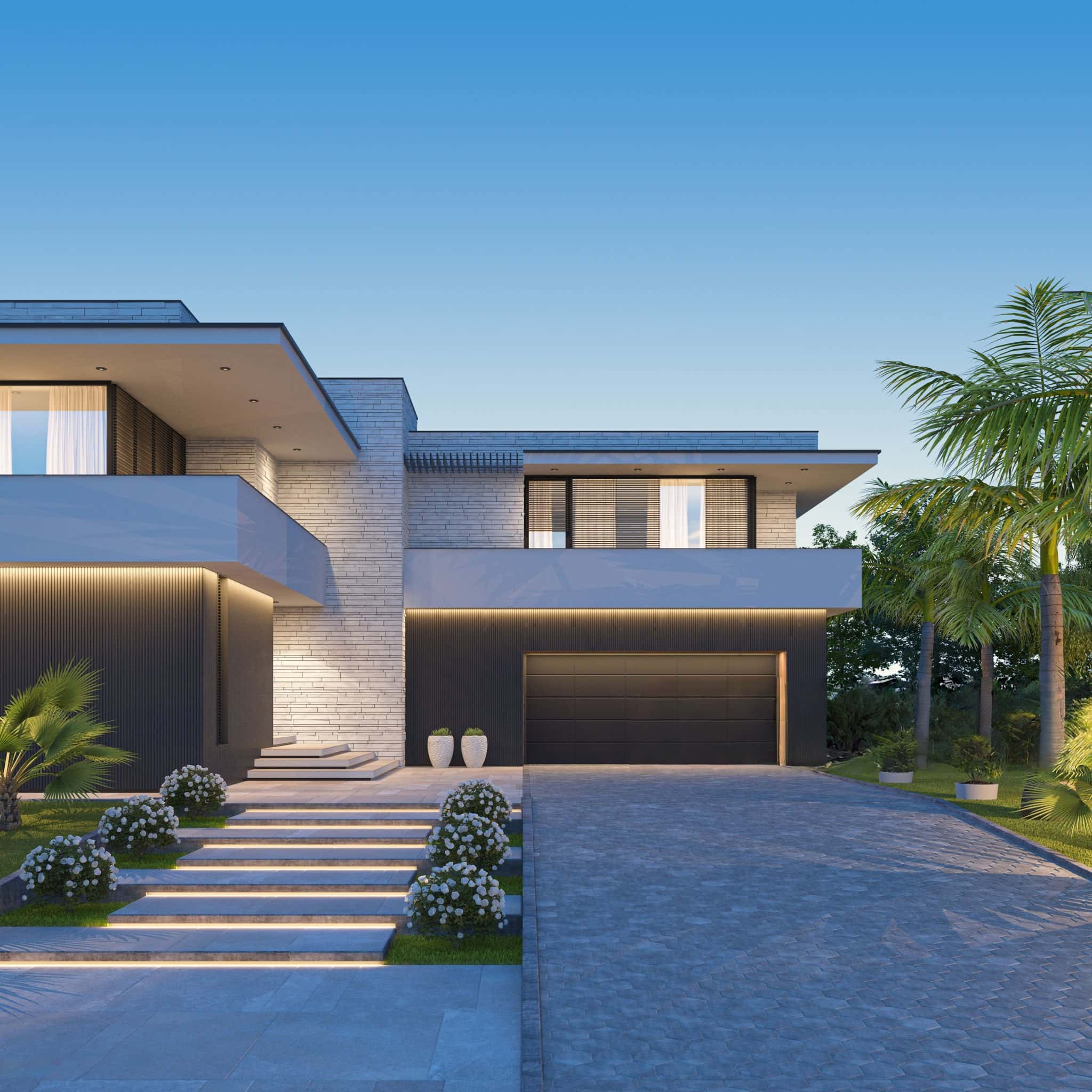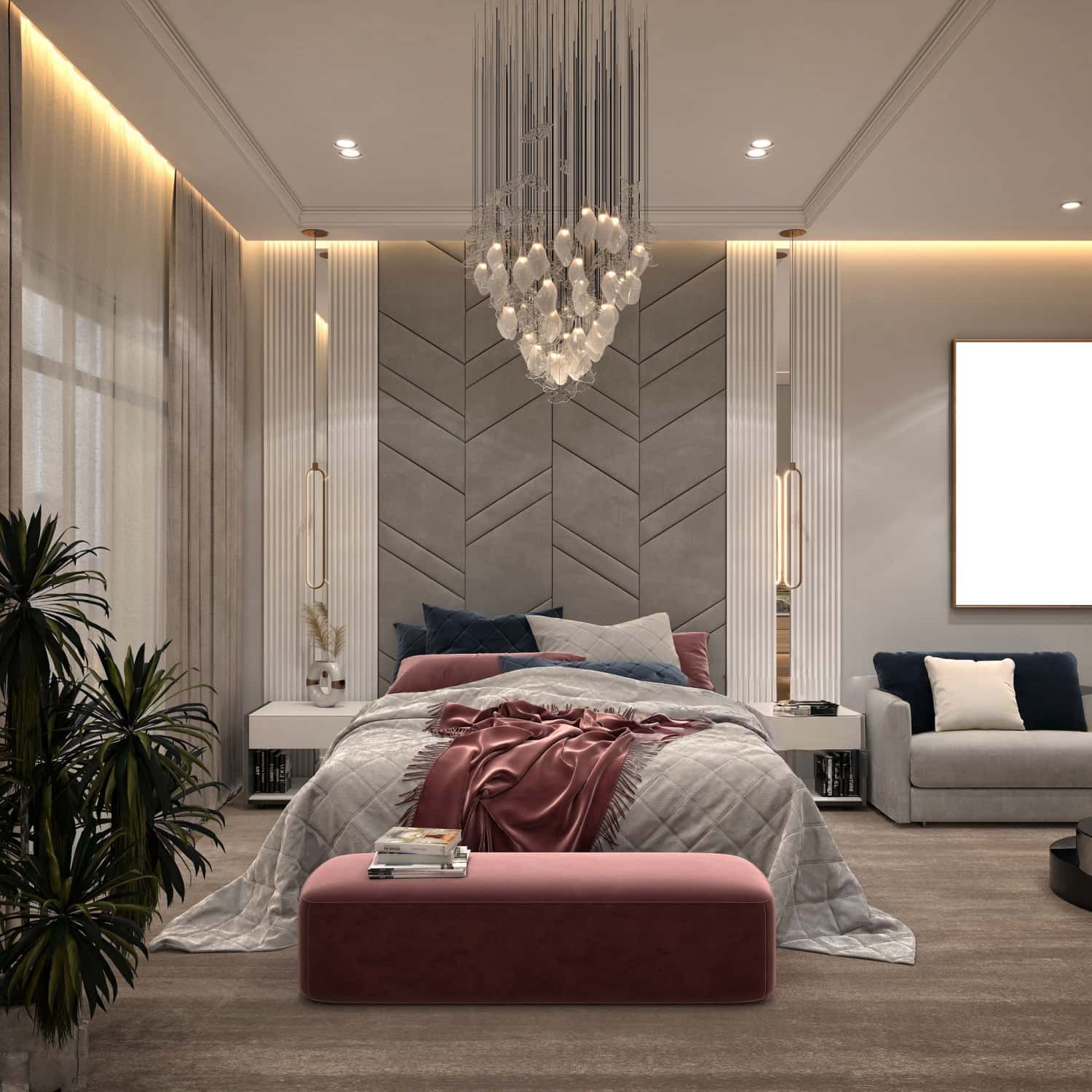

Three years ago, if you walked through a $3 million home in Southern California or the Hamptons, you’d see a lot of marble. But it was almost always the same marble — standard Calacatta on the kitchen island, standard Carrara in the bathrooms, all fabricated by the same regional stone shop that supplied the developer.
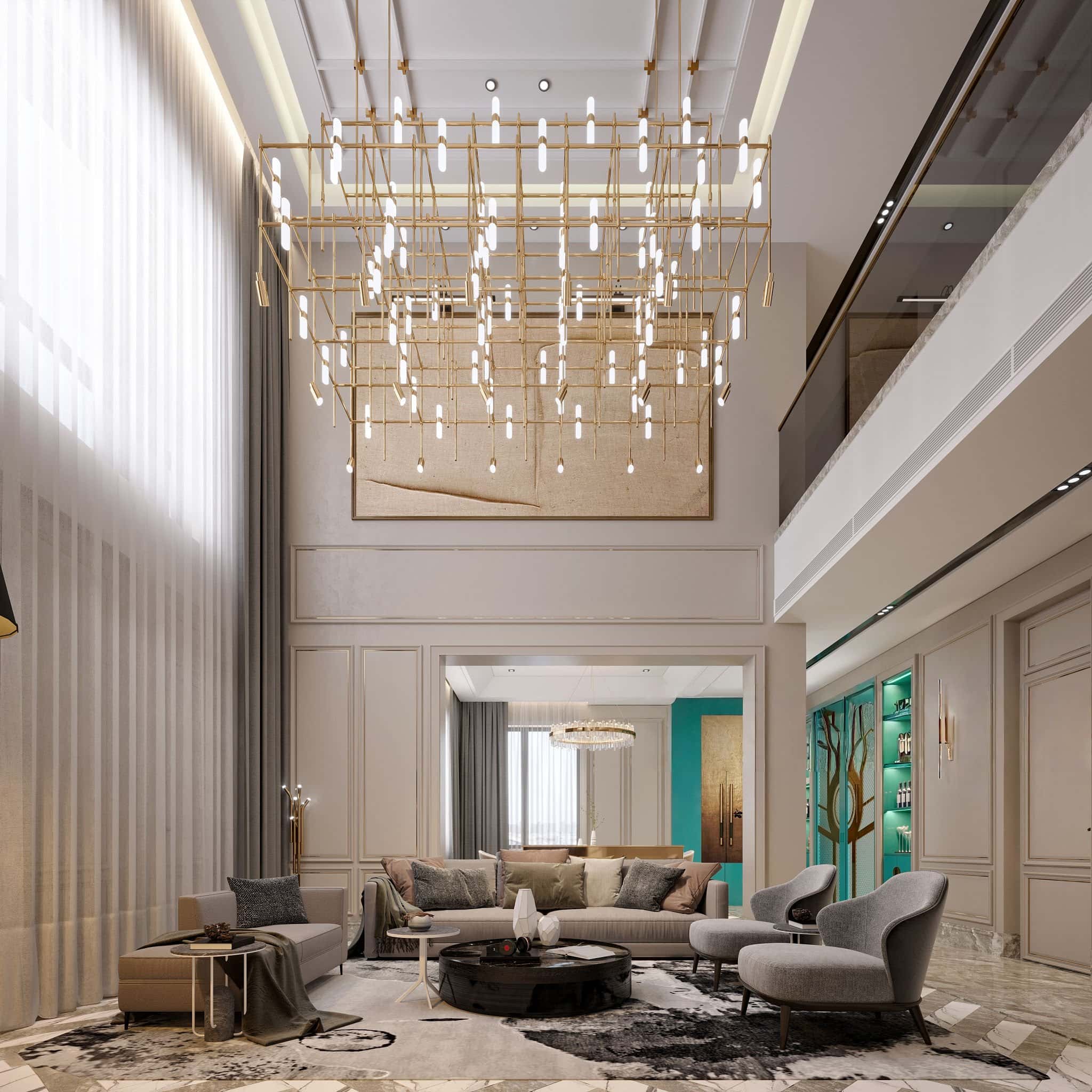
That era is closing fast. A 2026 market survey by the Luxury Home Builders Association found that 91% of homes valued above $2.5 million now include at least one piece of custom stone furniture — not just countertops, but full furniture pieces: dining tables with book-matched slab tops, monolithic bathroom vanities carved from a single block, floor-to-ceiling sintered stone feature walls that extend from the living room through to the outdoor terrace.
What changed? The supply chain caught up to the demand. Five manufacturers — including TAULA, the custom stone brand from Hongye Furniture Group’s Fit Sintered Stone Technology division — invested in 6-axis CNC machining centers that can execute designs that were physically impossible with traditional fabrication methods. The technology gap between what a luxury homeowner wants and what a factory can deliver has essentially closed.
Here’s the breakdown of what’s driving the shift and what it means for anyone building or renovating a high-end home in 2026.
────────────────────────────────────────────────────────────
1. The Technology That Changed Everything: 6-Axis CNC Stone Fabrication
Traditional stone fabrication uses 3-axis CNC machines or, in older shops, manual bridge saws and hand polishers. A 3-axis machine can cut, drill, and edge-profile on three planes (X, Y, Z). That’s sufficient for flat countertops with simple edge details. It cannot produce complex three-dimensional forms, curved profiles, integrated sink basins, or continuous grain patterns across a waterfall edge.
A 6-axis CNC adds rotation around the X, Y, and Z axes, meaning the cutting head can approach the stone from any angle. The result is furniture that could not exist before this technology became commercially available.
| Capability | 3-Axis CNC | 6-Axis CNC (TAULA) |
| Flat surface cutting | Yes | Yes |
| Edge profiling (basic) | Yes | Yes |
| Integrated sink basin (same block) | No | Yes |
| Curved/contoured surfaces | No — requires manual finishing | Yes — fully automated |
| Book-matched grain continuity across waterfall | Partial — alignment drift | Full — sub-millimeter precision |
| Undermount detail carving | No | Yes |
| Production tolerance | ±1.5mm | ±0.3mm |
| Maximum slab thickness | 30mm | 60mm (single piece) |
TAULA operates what is, as of 2026, the most advanced stone fabrication line in Guangdong Province — a full-row 6-axis CNC setup at the Fit Sintered Stone Technology Co., Ltd. factory. This isn’t incremental improvement. It’s the difference between a stone shop cutting rectangles and a precision manufacturing facility producing furniture.
────────────────────────────────────────────────────────────
2. The Material Shift: Why Sintered Stone Is Replacing Marble in Luxury Kitchens
Natural marble has been the luxury kitchen default for decades, and it has fundamental problems that designers and homeowners have been tolerating because the alternative — quartz, granite — didn’t match the aesthetic.
Sintered stone changes that equation. It’s an engineered material made by compressing mineral powders under 25,000+ tons of pressure and firing at 1,200°C. The resulting slab has zero porosity, which means it doesn’t etch from lemon juice, doesn’t stain from red wine, and doesn’t need sealing — ever.
| Property | Natural Marble | Sintered Stone (TAULA) | Quartz |
| Porosity | 0.5-2% (requires sealing) | 0% (non-porous) | 0.02-0.05% |
| Stain resistance | Poor — etches, stains | Excellent — impervious | Good |
| Heat resistance | Good — can crack under thermal shock | Excellent — withstands direct heat | Poor — resin melts at 150°C+ |
| UV resistance | Excellent — no fading | Excellent — no fading | Poor — discolors in sunlight |
| Scratch resistance | Low — scratches easily | Excellent — Mohs 7+ | Good — Mohs 6-7 |
| Maintenance | Annual sealing, pH-neutral cleaners only | Damp cloth, any household cleaner | Mild cleaners, no abrasives |
| Thickness options | 20mm, 30mm | 3mm, 6mm, 12mm, 20mm | 20mm, 30mm |
| Large-format (3200x1600mm) | Rare, fragile at size | Standard production | Not available |
For luxury homeowners in 2026, the math has become straightforward: sintered stone offers the marble look without the marble maintenance. The large-format capability means a kitchen island with a 3.2-meter continuous top — no seams, no joints, no visible caulking lines — which is visually striking in a way that seamed marble can’t match.
────────────────────────────────────────────────────────────
3. The Customization Explosion: From 50 Options to 5,000+
Five years ago, a luxury builder choosing stone for a custom home had roughly 50 material options — maybe 200 if they worked with a top-tier supplier who carried exotic marbles from Italy, Brazil, and Turkey.
In 2026, TAULA’s catalog alone includes 1,500+ sintered stone finishes, 300+ natural marble grades, and 80+ exotic semi-precious stone varieties sourced from quarries in 14 countries. Multiply that across finish options (polished, honed, leathered, flamed, brushed) and edge profiles (30+ standard, unlimited custom), and the combinatorial total crosses 5,000 distinct configurations — before accounting for custom dimensions.
| Customization Dimension | Traditional Stone Shop (2020) | TAULA Factory (2026) |
| Material options | 50-200 | 1,500+ sintered stone, 300+ marble, 80+ exotic |
| Finish options | 3 (polished, honed, leathered) | 5+ (adds flamed, brushed, textured) |
| Edge profiles | 8-12 standard | 30+ standard, fully custom |
| Slab dimensions | Limited to stocked inventory | Cut-to-order, any dimension within slab max |
| Grain direction matching | Manual — alignment errors common | CNC-coordinated book-match and flow-match |
| Integrated features | Cutouts only | Integrated basins, drainboards, trivets, channels |
| Turnaround (custom order) | 8-16 weeks | 4-8 weeks |
The shift from “pick a slab from the yard” to “design your own piece, specify every dimension and detail” is the defining change in luxury stone. And it’s being driven by CNC capability — not by designer preference, which has always wanted this level of control.
────────────────────────────────────────────────────────────
4. The Room-by-Room Transformation: Where Custom Stone Furniture Is Showing Up
Countertops were the entry point. The 2026 luxury home uses custom stone across virtually every room, and the applications keep expanding.
| Room | Traditional Stone Use (2018) | Expanded Use (2026) | TAULA Product Example |
| Kitchen | Countertops, backsplash | Full-height splashbacks (single slab), waterfall islands, integrated sink, stone vent hood surround | 3200x1600mm book-matched island with integrated drainboard |
| Primary Bathroom | Vanity top, shower walls | Monolithic vanity (single block), integrated basin and shelf, full-height shower panels (zero grout lines) | Floating vanity carved from single marble block |
| Dining Room | — | Custom dining table (slab top + stone or metal base), matching credenza top | 3m sintered stone table with bullnose edge |
| Living Room | — | Stone feature wall, fireplace surround, floating media console | Full-height sintered stone accent wall, floor to ceiling |
| Outdoor | — | Outdoor kitchen counters, dining table, fire pit surround | UV-stable sintered stone, no fading after 10+ years |
| Home Office | — | Executive desk top, shelving system | Custom-dimension desk with cable channel |
| Entry/Foyer | — | Console table, flooring inlay, wall cladding | Vein-matched lobby panels creating continuous visual flow |
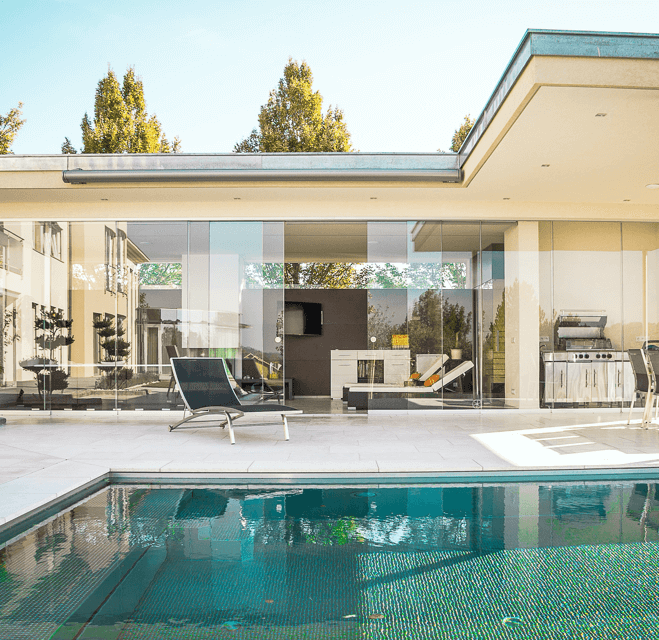
The outdoor application deserves special attention because it’s the fastest-growing segment. Homeowners spent heavily on outdoor living spaces during 2020-2022 and are now discovering that standard outdoor furniture materials — powder-coated aluminum, teak, HDPE lumber — don’t deliver the luxury aesthetic they want. Sintered stone, with its UV stability and zero-water-absorption rate, handles weather exposure indefinitely. No sealing, no winterizing, no fading. It’s the only stone material that can sit outside year-round in any climate without degradation.
────────────────────────────────────────────────────────────
5. The Brand and the Factory: Why “Made by TAULA” Matters
Luxury home buyers don’t typically care about the name on their furniture factory. But stone is different — the quality difference between a generic stone fabricator and a precision manufacturer is visible at arm’s length.
TAULA operates under Hongye Furniture Group Co., Ltd., a company with 20+ years of furniture manufacturing history. The stone division — Fit Sintered Stone Technology Co., Ltd. — was purpose-built for the custom stone furniture market. That matters because most stone fabricators in the market started as countertop shops that expanded sideways into furniture. Their processes, their quality control, and their equipment reflect that origin.
| Manufacturing Factor | Countertop Shop (Typical) | TAULA Factory |
| CNC capability | 3-axis, single head | 6-axis, multi-head simultaneous |
| Tolerance control | ±1.5mm | ±0.3mm |
| Quality inspection | Visual check by operator | Laser measurement at 3 checkpoints per piece |
| Material sourcing | Regional distributors | Direct-from-quarry + in-house sintered production |
| Edge finishing | Hand-polished (operator-dependent) | CNC-polished + hand-finish (consistent) |
| Packaging for export | Pallet + stretch wrap | Custom crating with corner protection, moisture barrier |
| Production capacity | 10-20 pieces/week | 200+ pieces/week |
| Design support | Showroom samples | Digital rendering + physical sample program |
For a builder or homeowner, the factory name translates directly to delivery confidence. When a $40,000 custom dining table ships with a ±0.3mm tolerance instead of ±1.5mm, the seams disappear. The book-match grain looks continuous instead of slightly offset. The waterfall edge meets the floor with zero gap. These are the details that separate custom stone furniture from “stone countertops with legs.”
────────────────────────────────────────────────────────────
6. The Cost Equation: Custom Stone vs. Mass-Produced Luxury Furniture
The traditional objection to custom stone furniture was cost. A custom dining table from a stone shop ran $15,000-40,000, which put it in a different category from high-end manufactured furniture.
The landscape in 2026 looks different for two reasons. First, 6-axis CNC automation has cut fabrication labor by roughly 60%, bringing custom stone pricing down. Second, mass-produced “luxury” furniture — the stuff from high-end Italian and American brands — has gotten more expensive, with dining tables routinely hitting $8,000-15,000 for designs that use veneer over MDF or engineered wood.
| Furniture Category | Mass-Produced Luxury (2026) | Custom Stone (TAULA, 2026) | Price Gap |
| Dining table (8-seat) | $6,000-12,000 | $4,500-9,500 | Custom often cheaper |
| Coffee table | $1,800-4,000 | $1,200-3,500 | Custom often cheaper |
| Console/entry table | $2,000-5,000 | $1,800-4,500 | Roughly parity |
| Bathroom vanity (60″) | $3,500-7,000 | $3,000-8,000 | Parity to +15% |
| Kitchen island (8ft) | $5,000-10,000 | $5,500-12,000 | +10-20% premium |
| Feature wall (per sq ft) | $40-80 (premium wallpaper/veneer) | $30-60 (thin sintered stone) | Custom often cheaper |
| Outdoor kitchen | $8,000-15,000 | $7,000-14,000 | Custom often cheaper |
The crossover point has already arrived for several categories. Custom stone dining tables now undercut comparable mass-produced luxury tables while offering solid stone instead of wood veneer. The premium for custom stone, where it still exists, is 10-20% — and owners typically recoup that through durability (no refinishing, no replacement) and resale value (custom stone is a documented appraisal feature in luxury homes).
────────────────────────────────────────────────────────────
7. The Sustainability Story (That Actually Holds Up)
“Sustainable luxury” is a phrase that gets thrown around a lot in furniture marketing, often without evidence. The custom stone story is more defensible.
Sintered stone production uses natural mineral powders — clay, feldspar, silica — and fires them without resins, plastics, or petroleum-based binders. The final product is 100% recyclable as inert fill material. The production process itself recaptures 98% of water used in cutting and polishing through closed-loop filtration.
Marble and exotic stone sourcing has its own environmental concerns — quarrying is inherently extractive — but there’s a durability argument that has merit. A custom stone dining table with a 50+ year functional lifespan replaces at least 3-4 mass-produced tables over the same period. The embodied energy per year of use favors the stone.
| Sustainability Factor | Custom Stone | Mass-Produced Wood/Metal Furniture |
| Lifespan | 50-100+ years | 8-20 years |
| Replacements over 50 years | 0-1 | 2-6 |
| Recyclability at end of life | 100% (inert mineral) | Partial (mixed materials complicate recycling) |
| VOC emissions | Zero (no finishes, no glues) | Low to moderate (finishes, adhesives) |
| Manufacturing water recovery | 95-98% (closed-loop CNC) | Varies widely by factory |
| Embodied carbon per year (over lifespan) | Very low (long lifespan spreads initial cost) | Moderate (frequent replacement) |
It’s not a perfect story — no manufactured product is — but it’s a more honest one than most luxury furniture sustainability claims.
────────────────────────────────────────────────────────────
8. The Design Flexibility: Why Architects Are Driving This Trend
Architects love custom stone because it removes constraints. When designing a home, the furniture dimensions are typically fixed by what’s available in catalogs — a 72-inch dining table, a 48-inch console, a 60-inch vanity. Those fixed dimensions force compromises in room layout.
Custom stone furniture is dimension-agnostic. Need a 94.5-inch dining table to align with a specific window mullion? Done. Need a vanity that spans exactly 71.25 inches wall-to-wall in a powder room with non-standard framing? Done. The CNC doesn’t care about round numbers.
Architects representing 78% of TAULA’s B2B order volume in 2025 specified at least one non-standard dimension per project.
| Design Constraint | Catalog Furniture | Custom Stone |
| Width/length | Fixed in 6-12″ increments | Any dimension, millimeter precision |
| Thickness | Fixed by manufacturer | 3mm to 60mm (sintered stone: 3-20mm) |
| Edge profile | 2-4 options per piece | 30+ standard, fully custom |
| Surface finish | 1 option per SKU | Polished, honed, leathered, flamed, brushed, textured |
| Color/pattern | Fixed per collection | 1,500+ stone finishes matched to design |
| Integration with architecture | Post-hoc fit | Designed with architecture from concept |
Architects specify TAULA in the schematic design phase now — not as a finish selection in the construction documents phase. That’s a structural shift in how stone furniture enters the design process.
────────────────────────────────────────────────────────────
Frequently Asked Questions
What’s the lead time for a custom stone dining table?
Standard orders ship in 4-6 weeks from approval of the shop drawing. Pieces that require unique slab sourcing — a specific book-matched Calacatta Viola with a particular vein pattern, for example — typically run 8-10 weeks. TAULA sends a digital rendering and, on request, a physical sample of the exact slab before fabrication begins.
Does sintered stone scratch like marble?
No. Marble rates 3-4 on the Mohs hardness scale, which means a steel knife will scratch it. Sintered stone rates 7+ — harder than steel (5.5) and comparable to quartz (7). You can cut directly on a sintered stone surface without leaving marks. The trade-off is that sintered stone, like all very hard materials, can chip if struck with concentrated force on an edge — but edge profiles are designed to minimize vulnerable points.
Can I get a custom stone piece in a specific RAL or Pantone color?
Stone colors are determined by the mineral composition, not by pigment — so exact color matching works differently than with paint or fabric. That said, TAULA’s sintered stone catalog has 1,500+ finishes that cover virtually every neutral, warm, and cool tone used in contemporary interior design. For very specific color-matching requirements, the design team can identify the 3-5 closest options and ship samples for side-by-side comparison in your actual lighting conditions.
Is custom stone furniture too heavy for upper-floor installation?
It depends on the piece and the floor structure. A large dining table with a 20mm-thick sintered stone top (roughly 100 lbs for a 3-meter table) is manageable for any code-compliant residential floor. Heavy marble pieces — a solid-block vanity at 300-500 lbs — require a structural assessment. TAULA can provide load distribution specifications for the architect or structural engineer to review. For very heavy pieces, the factory can engineer a composite backing that reduces weight by 30-40% without affecting the visible surface.
How do I clean and maintain custom stone furniture?
Sintered stone: Wipe with a damp cloth and any household cleaner. No sealing required, ever. It’s impervious to wine, coffee, lemon juice, and oil. Marble and natural stone: Clean with pH-neutral stone cleaner only. Seal annually with a penetrating sealer. Wipe spills immediately — especially acidic ones (citrus, vinegar, tomato sauce). Exotic stones (onyx, quartzite): Follow specific care instructions provided with the piece, as these materials vary significantly in porosity and acid sensitivity.
What kind of warranty comes with custom stone furniture?
TAULA provides a 10-year structural warranty on all custom stone furniture — covering delamination, cracking not caused by impact, and material defects. The warranty on sintered stone specifically covers UV stability (no fading) and stain resistance for the life of the product. Natural stone pieces carry a 5-year structural warranty with exclusions for etching and staining (as these are inherent characteristics of natural stone).
Can I see my exact slab before fabrication?
Yes. This is standard practice on orders above $5,000. TAULA sends high-resolution photos and, for book-matched or exotic pieces, a video walkthrough of the specific slab under factory lighting. For projects within Guangdong Province, clients can visit the Fit Sintered Stone Technology factory and inspect the slab in person before giving fabrication approval.
Conclusion
The 90% adoption figure for custom stone in luxury homes isn’t a fad number. It’s what happens when three trends converge simultaneously: manufacturing technology that removes the historical constraints on stone fabrication, material science that solves the maintenance problems of natural stone, and a pricing structure that puts custom stone within striking distance of mass-produced luxury furniture.
For homeowners building or renovating in 2026, the question has flipped. Five years ago, you had to justify why you wanted custom stone. Now you have to justify why you wouldn’t — because the cost difference has shrunk to the point where skipping custom stone means accepting less durability, less design flexibility, and less visual impact for roughly the same money.
TAULA, backed by 6-axis CNC capability at our Fit Sintered Stone Technology factory, handles everything from single-piece custom tables to full-home stone programs — kitchens, bathrooms, living spaces, and outdoor areas with continuous material language throughout.