
Choosing between solid wood, veneer, and engineered wood is one of the first decisions you will face when commissioning custom furniture, and it quietly shapes everything that follows: the budget, the weight, the finish options, even how the piece behaves after a decade of daily use. Each material has a genuine role to play, and none of them is automatically the premium choice. What matters is matching the material to the piece, the room, and the climate it will live in.
At Fenmi Casa, we build full-house custom furniture — wardrobes, kitchen cabinets, beds, and dining sets — in our own factory in Foshan, Guangdong, and we work with all three material families every week. In this guide we break down how each one is made, where it performs best, and what it typically costs, so you can brief your designer with confidence instead of guessing.
What Is the Difference Between Solid Wood, Veneer, and Engineered Wood?
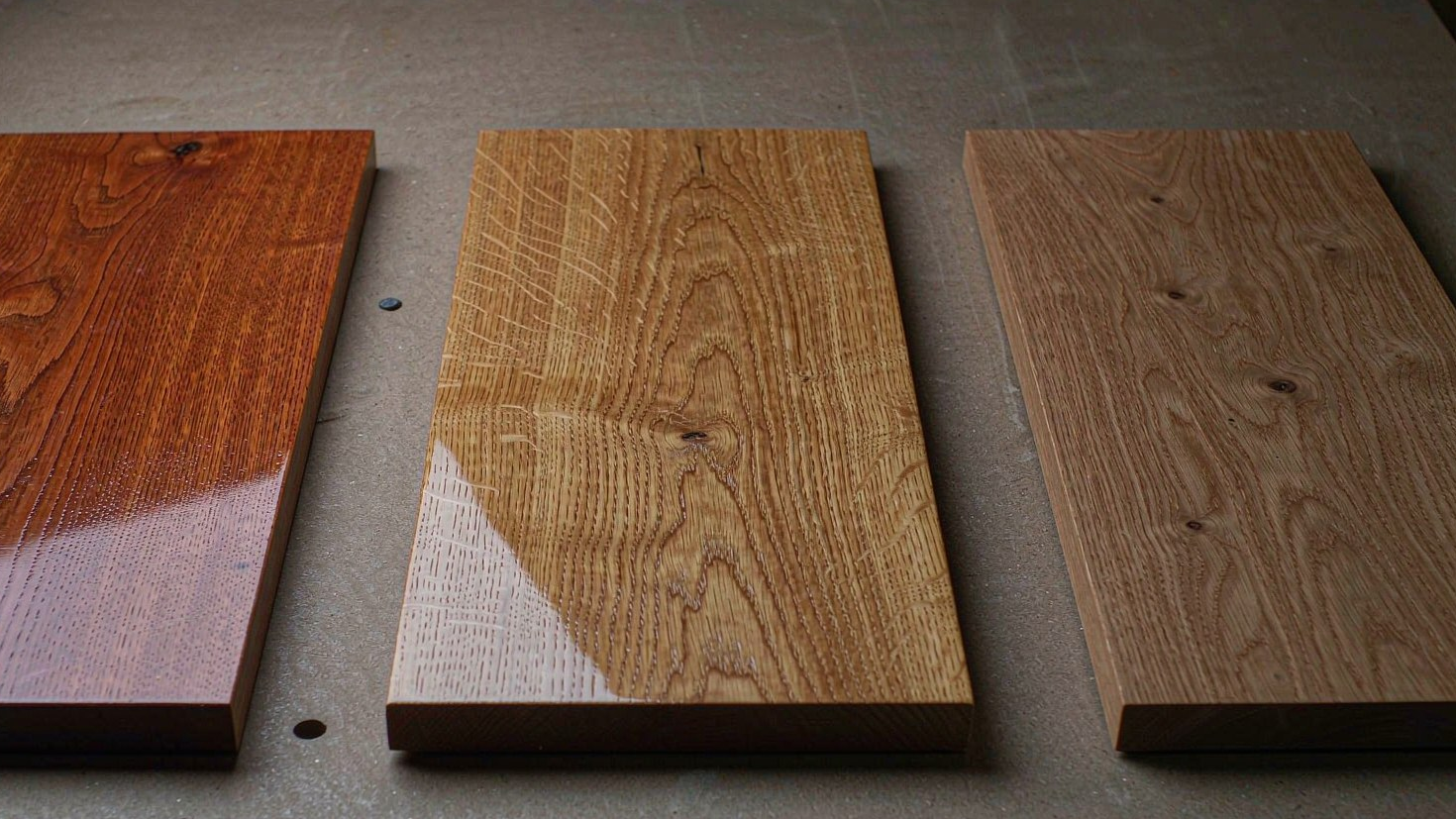
The three terms describe how a panel or board is actually built. Solid wood is lumber cut straight from the trunk — oak, ash, walnut, elm — with the grain running through the full thickness of the board. Veneer is a thin slice of real hardwood, typically 0.3 to 0.6 mm thick, bonded onto a stable core such as plywood or MDF. Engineered wood is the core itself: layered panels like plywood, MDF, or particleboard, usually built on a eucalyptus or poplar core in furniture-grade boards.
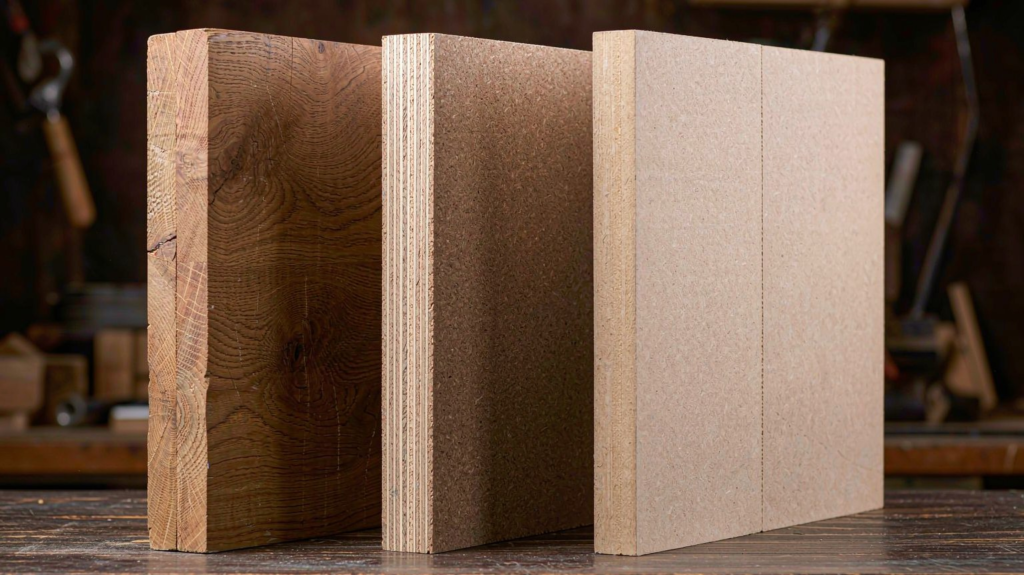
Because the construction differs, so does the behavior. Solid boards expand and contract across the grain with seasonal humidity, which is why wide solid tabletops are built with breadboard ends or floating mounts. Veneered and all-engineered panels are far more dimensionally stable, which is why they are the default choice for large wardrobe doors in most factories. Neither approach is wrong; they simply solve different problems, and well-designed custom furniture often mixes all three within a single room.
Here is a quick snapshot before we look at each material in depth. Keep in mind that quality varies widely within every category: a well-built plywood cabinet finished with a hardwood veneer can outperform a cheap solid-pine piece in both stability and lifespan. The table below summarizes where each material typically shines, and the sections that follow explain the reasoning behind every row in plain language.
| Material | What It Is | Best Used For |
| Solid wood | Boards cut from the trunk; grain runs the full thickness | Tabletops, bed frames, drawer fronts, visible structural parts |
| Wood veneer | 0.3–0.6 mm hardwood slice bonded to a stable core | Large flat panels, wardrobe doors, matched grain across a suite |
| Engineered wood | Plywood, MDF, or particleboard core | Carcasses, shelving, internal fittings, stable door cores |
Solid Wood: Strength, Character, and Long-Term Value
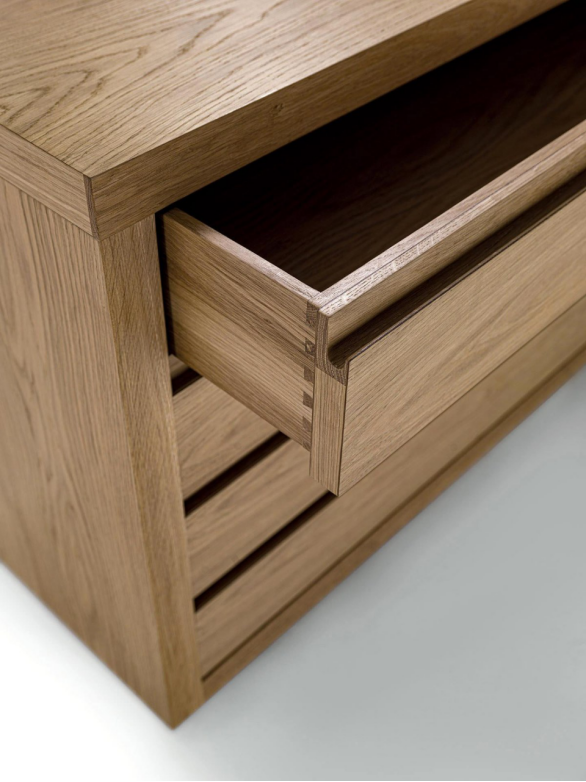
Solid wood is what most buyers picture when they imagine a heirloom dining table. The grain runs through the board, dents and scratches can be sanded out and refinished, and the surface slowly develops a patina that many owners grow genuinely attached to. Hardwoods such as oak, ash, and walnut are strong enough for structural use, and a damaged joint can usually be repaired rather than replaced. For pieces that take daily impact — dining tables, bed frames, drawer fronts — solid wood remains very hard to beat.
The trade-off is movement. Wood is hygroscopic, so it gains and loses moisture with the seasons and swells across the grain as it does. Quality factories manage this with proper kiln drying (targeting roughly 8–12% moisture content for furniture), with narrower staves glued into wider panels, and with frame-and-panel door construction that lets the wood move without cracking. Skip those steps and even expensive solid furniture will eventually show splits, which is why drying quality matters as much as the species name on the invoice.
Cost is the other honest consideration. Hardwood lumber prices have climbed steadily over recent years, and a wide solid-walnut wardrobe door both wastes material and risks warping over time. That is why experienced makers reserve solid stock for the parts where it earns its keep — tops, frames, legs, and fronts — and rely on engineered panels for the large, flat, closed surfaces where stability matters more than raw thickness.
There is also a regional angle worth raising with your supplier. Furniture shipped to humid coastal climates or dry, heated interiors lives under very different conditions, and a specification that works in one market can misbehave in another. A factory that exports regularly will adjust drying targets, panel widths, and finish thickness to suit the destination — ask about this early, because it is far easier to design for the climate than to repair for it later.
Is Engineered Wood Real Wood?
Yes — and the confusion is understandable. Engineered wood is manufactured, but it is still made of wood: plywood is layers of peeled veneer glued together with the grains crossed, and furniture-grade MDF is wood fiber pressed with resin. In custom furniture the core is usually eucalyptus or poplar plywood. Nothing synthetic is pretending to be lumber; the panels simply reorganize real wood into a form that is flatter, wider, and far more predictable than a sawn board.
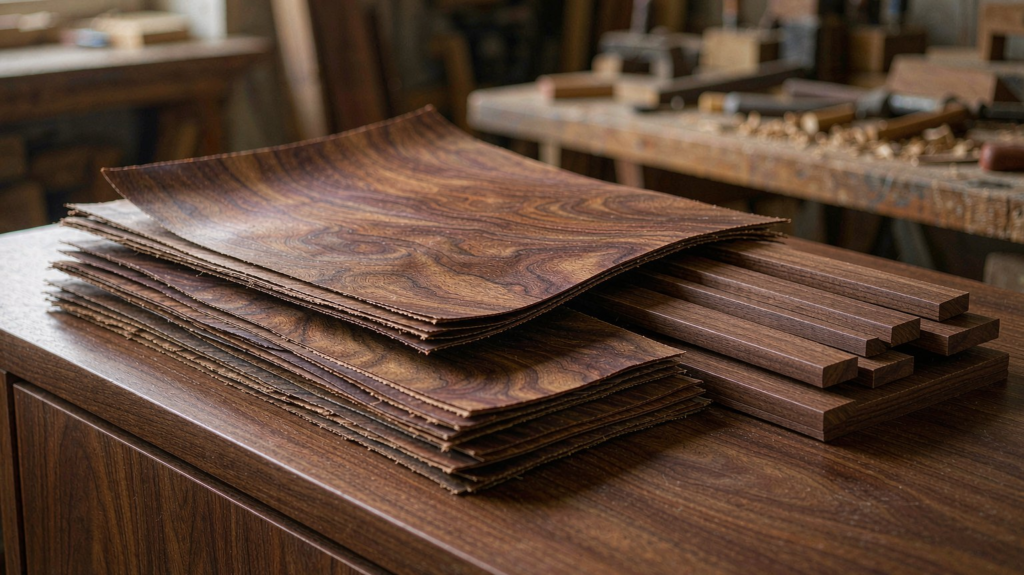
The engineering is the point. Because the grain direction alternates between layers, plywood resists warping and splitting far better than a single board, and MDF offers a perfectly uniform surface that takes paint and lacquer beautifully. This is why high-end kitchen and wardrobe systems around the world are built on engineered cores — the doors stay flat, the shelves stay level under load, and the applied finish stays intact for years instead of checking and cracking with the seasons.
What engineered panels cannot do is behave like solid lumber at the edges and in repairs. Edges need banding or solid lipping, a deep chip is difficult to fix invisibly, and screws hold less well in particleboard than in hardwood. Good design accounts for this with solid edge details and proper hardware, but it is worth understanding before you commit to an all-engineered specification, especially for pieces you hope to keep and refurbish decades from now.
| Core Type | Construction | Typical Role in Custom Furniture |
| Plywood (eucalyptus/poplar) | Crossed veneer layers glued under heat and pressure | Carcasses, shelves, door cores — strong and stable |
| MDF | Pressed wood fiber with resin; uniform, dense surface | Painted and lacquered doors, curved or routed shapes |
| Particleboard | Coarse wood chips bonded with resin | Budget carcasses and lighter-duty shelving |
Does Veneer Furniture Last?
It can, and often does. A veneer is real hardwood — the same walnut or oak you would pay far more for in solid form — simply sliced thin and laid onto a stable core. Protect that thin face and the panel underneath lasts for decades; in fact, a great deal of museum furniture from the 1700s is veneered and still intact. The modern risks are more specific: water penetrating an unsealed edge can cause peeling, and a deep gouge can cut through the 0.3–0.6 mm face entirely.
Longevity therefore comes down to construction details rather than the veneer itself. Look for edges sealed with solid wood lipping or quality banding, finishes applied on all six sides of every panel, and veneer pressed under heat and pressure rather than casually glued. With those safeguards in place, veneered wardrobe and kitchen fronts routinely outlast several decorating trends, because the surface is far more stable against humidity swings than a wide solid panel — it neither cups nor splits.
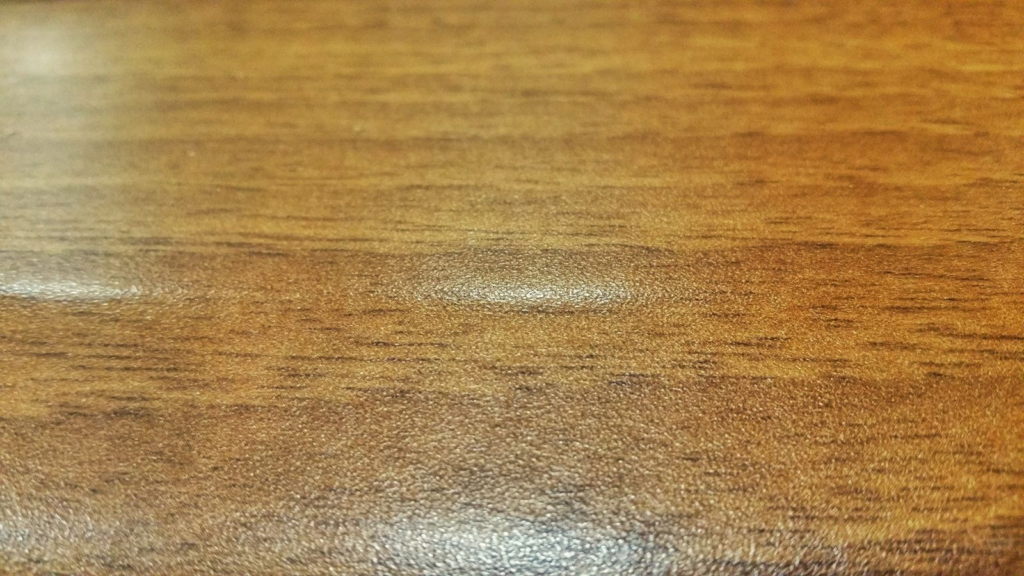
There is an aesthetic argument for veneer as well, not just a practical one. Slicing lets a maker sequence the grain so the figure mirrors across a pair of doors or flows continuously along a whole wall of cabinetry — a matched, book-matched look that solid lumber simply cannot offer, because no two boards from the same trunk grow identically. For homeowners who want that calm, uniform surface, veneer is not a compromise at all.
Cost, Stability, and Maintenance: How the Three Compare
Budget expectations should be honest from the start. Solid hardwood furniture typically costs the most, driven by lumber yield and drying time — kiln schedules run from days to weeks depending on thickness and species, while air drying the same 25 mm oak board takes roughly six to twelve months. Veneer-on-engineered construction sits in the middle: you pay for a stable core and skilled pressing, but consume only a fraction of the hardwood. All-engineered pieces are usually the most affordable, especially in painted finishes.
On stability, engineered cores win for large flat panels, while solid wood wins for impact resistance and refinishing. Maintenance differs just as clearly. Solid wood can be sanded back and recoated many times over its life, so a badly scratched tabletop can genuinely return to new. A veneered panel cannot be sanded down far, though minor scratches can often be blended and the finish renewed. Painted or film-faced engineered boards are wipe-clean, but a damaged surface usually means replacing the panel rather than repairing it.
None of this makes one material the correct answer. A sensible specification for a family home often looks like a solid oak dining table that takes daily knocks, veneered wardrobe doors that stay flat and match grain for grain, and engineered carcasses that keep the whole project within budget. The comparison table below puts the trade-offs side by side so you can weigh them against your own priorities.
| Factor | Solid Wood | Veneer on Core | All-Engineered |
| Typical cost | Highest | Mid to high | Lowest |
| Dimensional stability | Moves with humidity | Very stable | Very stable |
| Repairability | Sand and refinish repeatedly | Local touch-up; limited sanding | Usually panel replacement |
| Best fit | Tops, frames, high-impact parts | Large doors, matched grain walls | Carcasses and painted designs |
Which Should You Choose for Your Custom Furniture?
Start from the piece, not the material name. Ask three questions: how hard will this piece be used, how large are the visible surfaces, and how important is a matched, uniform grain? A bedside table that gets knocked every morning wants solid wood. A two-and-a-half-meter wardrobe door wants a veneered or engineered core, because a solid panel that wide will fight you for its whole life. Most rooms end up needing a mix, not a single verdict.
Then bring the climate into the conversation early. Homes in tropical or coastal regions push safe moisture targets up — furniture wood is often dried to 10–14% there rather than 8–12% — while dry, heated interiors pull the numbers down. A factory that ships regularly to Latin America, North America, or the Middle East will already know how to tune drying, panel construction, and finishing to the destination, and it should volunteer this information without being asked twice.
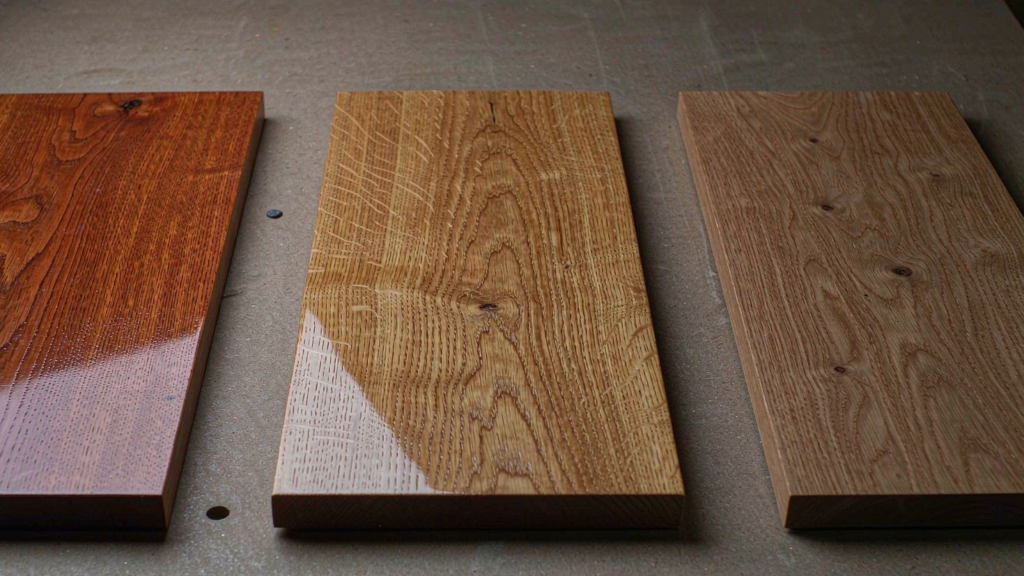
Finally, weigh honesty in the quote against the specification itself. A quote built on vague material names is a warning sign; a good one states species, core type, veneer thickness, edge treatment, and finish system in writing. When those details are on paper, the solid-wood-versus-veneer-versus-engineered debate mostly disappears — you simply get the right material in the right place, at a price you can verify.
The quick reference below maps common rooms and components to a sensible starting specification. Treat it as a conversation starter with your designer rather than a rulebook, since usage habits and local humidity will always refine the final call.
| Application | Recommended Starting Point | Why |
| Dining tabletop | Solid hardwood | Takes daily impact; can be sanded and refinished |
| Wardrobe and kitchen doors | Veneer on engineered core | Stays flat at large sizes; grain can be matched |
| Cabinet carcasses and shelves | Plywood or MDF core | Stable under load; keeps budget in check |
| Bed frames and legs | Solid hardwood | Structural strength and repairable joints |
Frequently Asked Questions (FAQ)
Is engineered wood real wood?
Yes. Engineered wood is manufactured from actual wood — plywood is made of peeled veneer layers glued with crossed grain, while MDF is pressed wood fiber with resin. Furniture-grade cores are typically eucalyptus or poplar. The panels are reorganized wood rather than fake material, engineered to be flatter and more stable than a sawn board.
Does veneer furniture last?
Well-built veneer furniture lasts for decades. The veneer face is real hardwood, usually 0.3–0.6 mm thick, so longevity depends on the details: sealed edges, finish applied on all six sides, and pressing under heat and pressure. Avoid standing water at exposed edges and repair deep gouges promptly, and a veneered panel will serve reliably for many years.
Which is better for humid climates: solid wood or engineered wood?
Engineered panels are generally more stable in humid conditions because their crossed layers resist swelling, while wide solid boards move across the grain with the seasons. Solid wood still works well in humid homes when it is properly dried — often to 10–14% moisture content in tropical regions — and used in narrower panels with room to move.
Can veneer furniture be repaired if it gets scratched?
Minor scratches can usually be blended with touch-up markers, wax filler sticks, or a renewed topcoat, and small lifts can be re-bonded by a workshop. Deep gouges that cut through the thin hardwood face are harder to hide; in serious cases the affected panel is re-veneered or replaced, which is a straightforward job on door-style construction.
Is solid wood furniture worth the higher price?
For high-impact pieces, usually yes. A solid hardwood table or bed frame can be sanded and refinished repeatedly, its joints can be repaired, and it carries a longevity that justifies the cost over decades. For large flat panels such as wardrobe doors, veneered or engineered construction is often the smarter spend, because stability matters more there than solid thickness.
How long does custom furniture take to make?
Full-house custom projects typically run 12–16 weeks from confirmed drawings to shipment, depending on the number of rooms, the finishing system, and the destination port. Complex grain matching or special finishes can add time. A manufacturer with in-house production and export experience will give you a written schedule and coordinate shipping arrangements for you.