
A practical comparison of the three main wood finish systems, written for owners planning luxury custom furniture.
Run your hand across a finished dining table and you are touching the most important decision most buyers never think about. The finish is what stands between raw wood and daily life: spilled coffee, hot plates, sunlight, humidity, cleaning sprays. It decides how the surface looks today and, just as importantly, how it can be repaired in five years. In luxury custom furniture, the choice between lacquer, oil and wax is not cosmetic trivia. It shapes the whole ownership experience of the piece.
At Fenmi Casa, our workshop in Foshan finishes wardrobes, kitchen cabinets, beds and dining sets for villas and high-end apartments across Latin America, North America and the Middle East. Clients often arrive asking simply for a nice natural look, without realising that three very different finish systems can deliver that phrase. This guide walks through how lacquer, oil and wax actually behave, what maintenance each one demands, and where each one makes sense in a real home.
What Is a Wood Finish, and Why Does It Matter So Much?
A wood finish is any treatment applied to the surface of timber to protect it and control its appearance. Finishes fall into two broad families. Film-forming finishes, such as lacquer and polyurethane, dry into a clear layer that sits on top of the wood like a thin sheet of glass. Penetrating finishes, such as oils and waxes, soak into the outer fibres and harden there, leaving the surface feeling like wood rather than plastic.
Both routes protect the wood; they simply fail and recover in different ways. A film hides scratches inside its own layer, so the timber beneath stays untouched, but if the film chips or cracks the whole area usually needs professional refinishing. A penetrating finish lets the wood wear honestly, and small marks can be sanded back and re-oiled by hand in an afternoon. Neither approach is better in the abstract. The right answer depends on how the furniture will be used, cleaned and repaired.
Climate matters too. Furniture shipped to coastal apartments in the Gulf or humid cities in Latin America lives with wider swings in moisture than a piece that never leaves a temperate workshop. Sealed film finishes slow moisture exchange through the surface, which helps panels stay flatter over time. Penetrating finishes breathe more, which some owners prefer, but they need good wood preparation and sensible indoor humidity to perform well for decades.
Lacquer Finishes: A Tough, Tunable Film
Lacquer, and its heavier-duty cousin polyurethane, is the workhorse of factory-finished furniture. The liquid is sprayed on in several thin coats, each one levelling out before the next, and the result is a continuous clear film with a thickness measured in fractions of a millimetre. Modern systems cure hard and stay clear, so they do not yellow noticeably the way older varnishes sometimes did. Gloss level is fully tunable, from a deep matte to a near-mirror polish.
The practical strengths are chemical resistance and cleanability. Wine, tomato sauce, hand cream and household cleaners sit on the film instead of soaking into the grain, so a damp cloth handles most accidents. That is why lacquer dominates on kitchen cabinets, bathroom vanities, children’s furniture and hotel casegoods, where surfaces are wiped many times a day and nobody wants to think about re-application. Colour work is easier too, since pigmented lacquers can produce painted looks with the same protective film.
The trade-off is repairability. Because the protection lives in a film, a deep gouge or a chipped edge usually means sanding and re-spraying that panel or component, ideally in a workshop with proper dust control. Touch-up pens can hide small damage on dark colours, but large repairs rarely blend invisibly on site. For clients who want a surface that looks identical for a decade and accepts occasional professional repair, lacquer is usually the honest recommendation.
| Property | Lacquer / PU film finish | What it means for you |
| Protection type | Clear film on the surface | Spills and cleaners stay on top; grain fully sealed |
| Chemical and heat resistance | Good to very good | Handles kitchens, bathrooms and daily wiping |
| Look and sheen | Matte to high gloss, uniform | The most control over final appearance |
| Repairability | Professional refinishing needed | Chips require re-spraying, not quick fixes |
| Typical maintenance | Wipe with a damp cloth | No re-coating schedule to remember |
Oil Finishes: Is Oiled Wood Hard to Maintain?
Oil finishes penetrate the outer layer of the wood and cure inside it, hardening the fibres rather than covering them. The surface keeps its natural texture, so an oiled walnut or oak door feels like polished timber, not coated timber. Sheen is naturally low and satin. Grain tends to look slightly deeper and warmer than it does under a film, which is why so many Scandinavian and Japanese-influenced designs specify oil by default.
So is oiled wood hard to maintain? It is different rather than difficult. Daily care is a soft, slightly damp cloth, and standing water should be wiped up promptly because the finish is less waterproof than lacquer. The real habit is re-oiling: a thin coat worked in with a cloth, typically every 6 to 12 months on busy surfaces like dining tables, and much less often on wardrobes or headboards. The job takes minutes and needs no special skill.
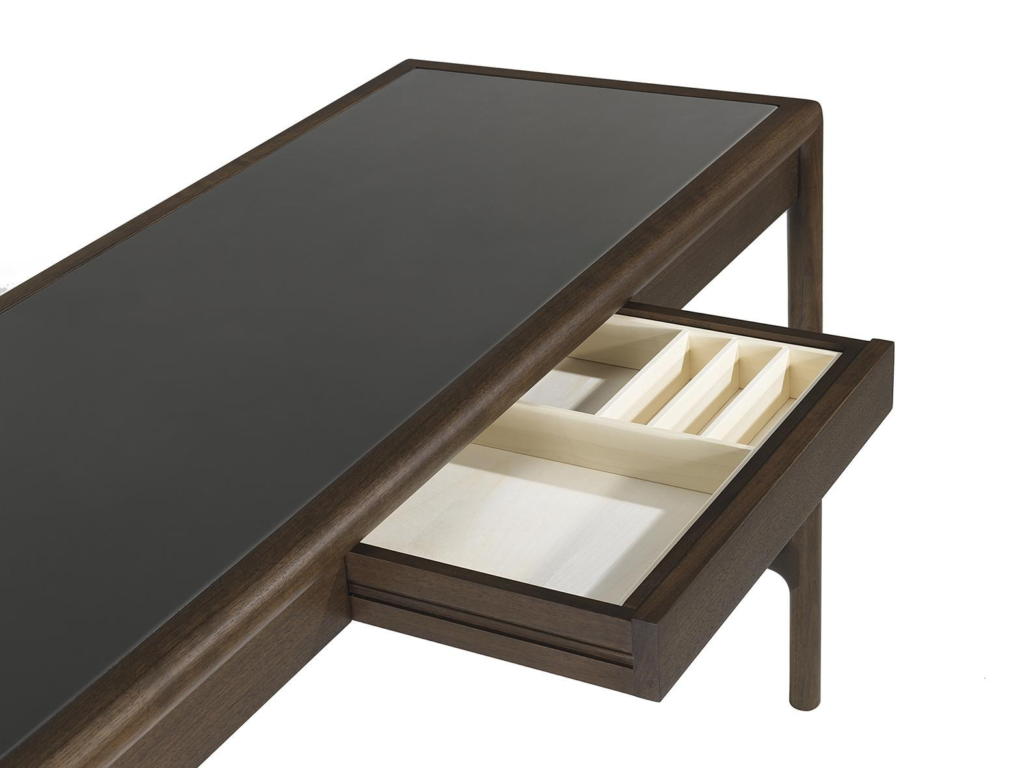
The reward for that habit is the best repair story of the three systems. A ring from a wet cup, a shallow scratch from a belt buckle, a dried-out patch near a window: each one can be sanded lightly with a fine pad and re-oiled locally, and the area usually disappears within a day. Oil also tolerates partial refinishing, so a table can be refreshed after years of use without stripping the whole piece. For owners who enjoy their furniture ageing gracefully, oil is deeply satisfying.
Wax Finishes: Subtle Protection with a Traditional Feel
Wax is the oldest and gentlest of the three systems. Applied as a soft paste or cream, it sits partly in the pores and partly as an extremely thin layer on the surface, polishing to a low, soft sheen. Nothing else looks or feels quite like a properly waxed panel: the tactile quality is warm and slightly silky, and the wood keeps almost all of its natural matte character. Antique restoration and heritage-style furniture rely on it for good reason.
The honest limitation is protection. Wax offers the least resistance to water, heat and alcohol of the three, so a waxed tabletop is a lifestyle choice rather than a practical one. It suits wardrobes, decorative pieces, headboards and low-contact surfaces where the finish is admired more than challenged. Wax also needs the most frequent attention, often a re-buffing or re-application every few months on pieces that are handled daily. In a well-run household, that short ritual can become part of the pleasure of owning the piece rather than a burden.
Application quality decides most of the outcome with wax. A thin, even coat worked along the grain, left to flash off, then buffed firmly with a clean cloth produces a far better surface than one heavy, lazy coat, which tends to stay tacky and attract dust. Thin coats also matter on carved or profiled edges, where surplus wax collects and dulls the detail. Good workshops apply wax in two or three light passes rather than one, and a client maintaining the piece at home should copy the same discipline for consistent results.
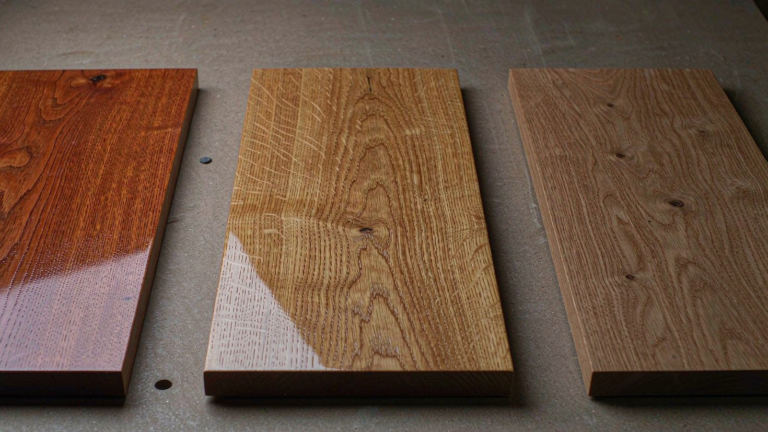
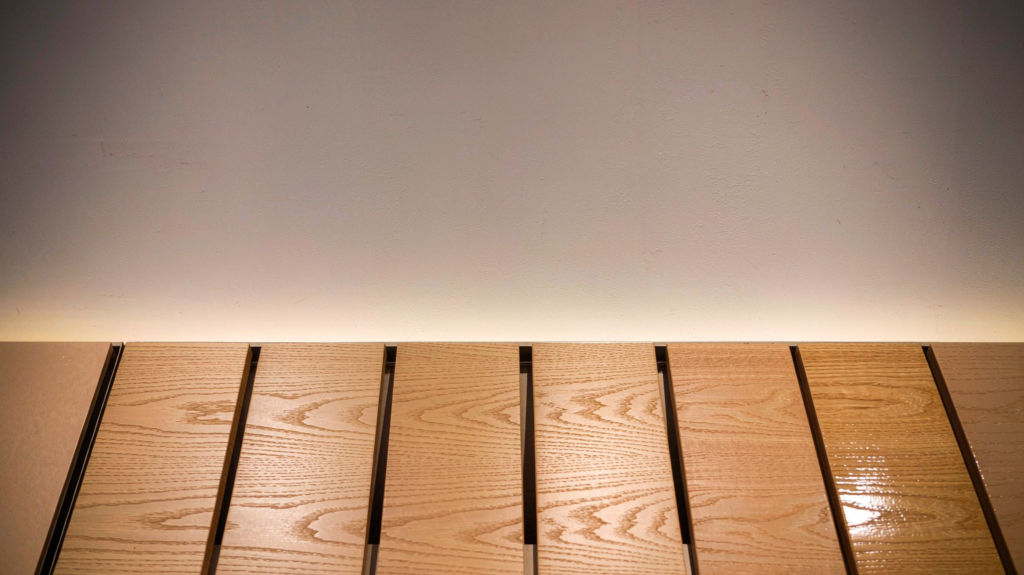
Wood species interacts with each finish differently, and it is worth testing before committing. Open-grained timbers such as oak and ash drink up oil and wax, so they reward the penetrating systems with deep, tactile grain. Fine, closed-grain timbers such as maple show off lacquer’s flawlessness better, since there is less grain texture to lose under the film. Dark species like walnut can sit under any system, but a matte lacquer versus a natural oil gives noticeably different characters on the same board, which is why we always finish sample boards first.
Which Wood Finish Is Most Durable?
Which wood finish is most durable? For pure resistance to chemicals, heat and moisture, a properly applied lacquer or polyurethane film wins, and it is not close. That is why it is specified for kitchen cabinets and vanities almost everywhere in the world. Durability, however, is not only about surviving spills. A lacquered surface that chips badly in year six may look worse than an oiled surface that has been refreshed every year and still reads as beautiful, honest timber.
| Criterion | Lacquer | Oil | Wax |
| Water and stain resistance | High | Moderate | Low |
| Heat resistance | Good, use mats | Moderate, use mats | Low |
| Repair of scratches | Professional spray repair | Local sand and re-oil | Re-buff or re-apply |
| Upkeep rhythm | Cleaning only | Re-oil every 6-12 months | Re-wax every few months |
| Best surfaces | Cabinets, vanities, tables | Tables, shelves, bed frames | Decorative, low-touch pieces |
A useful way to decide is to ask who will live with the piece. Busy family kitchens and rental properties favour lacquer precisely because it forgives neglect. Design-led homes where the owner enjoys maintenance rituals often prefer oil, accepting a small yearly task in exchange for a surface that heals itself. Wax suits the collector mindset: beautiful, protected lightly, and maintained with affection rather than necessity.
There is also a cost angle worth naming. Lacquer equipment and spray booths make it the most process-heavy option at the factory, but it is nearly free to live with. Oil shifts the budget the other way, costing less at the workshop and asking for a bottle of oil in your cupboard instead. Wax sits somewhere between, though the labour of regular buffing is real and should be priced into your time, not just your invoice.
How Fenmi Casa Chooses Finishes for Custom Projects
In our Foshan workshop the decision is made per component, not per project. Wardrobe interiors typically stay in matte lacquer for cleanability, while a client’s dining table might be finished in a hardwearing oil for feel and repairability. Mixing systems inside one home is normal and sensible; the mistake is assuming one finish must rule every surface. We discuss spill habits, cleaning routines, sunlight exposure and the destination climate before recommending anything.
Export logistics shape the choice too. Furniture bound for long sea freight is conditioned to a stable moisture content and packed with export-grade protection, and film finishes add an extra margin of safety during weeks inside a container. Once installed, though, the owner’s daily routine matters more than the journey ever did. That is why our quotations describe not just the finish applied but the simple care steps that keep it looking new for years.
If you are weighing lacquer vs oil vs wax for a villa, apartment or hospitality project, send us your room list and a few reference images. Our team will map every cabinet, table and bed to the finish system that matches both the design intent and the way the space is actually used, then quote the complete package including export-grade packing and shipping coordination.
| Room / use | Recommended finish | Why it fits |
| Kitchen cabinets and vanities | Lacquer | Resists water, grease and daily cleaning |
| Dining tables and desks | Hardwearing oil | Warm feel, easy local repairs |
| Wardrobes and closets | Matte lacquer or wax | Low spill risk, tactile interiors |
| Bed frames and headboards | Oil or wax | Comfortable skin contact, quiet upkeep |
| Decorative and accent pieces | Wax | Heritage character, gentle daily use |
Frequently Asked Questions (FAQ)
Which wood finish is most durable?
A properly applied lacquer or polyurethane film is the most durable option against water, heat and household chemicals, which is why it is standard on kitchen cabinets and vanities. Oil is more vulnerable to spills but far easier to repair locally, and wax offers the least protection. For most homes, lacquer is the durability choice while oil is the longevity-through-maintenance choice.
Is oiled wood hard to maintain?
Not really; it is a different routine rather than a hard one. Wipe with a slightly damp cloth, avoid leaving standing water, and re-oil busy surfaces every 6 to 12 months with a thin coat worked in by hand. The process takes minutes, and small scratches or water rings can be sanded and re-oiled locally so they usually disappear within a day.
Can you switch a table from lacquer to oil later?
Yes, but it is a workshop job rather than a weekend one. The old film must be sanded or stripped back to bare wood before oil can penetrate properly, so the piece is usually returned to the factory for refinishing. Many owners do this when they want a more natural feel after years with a coated surface, and the result can look brand new.
How often should wood furniture be oiled or waxed?
Oiled surfaces that see daily use, such as dining tables and desktops, typically need a fresh thin coat every 6 to 12 months; wardrobes and headboards can go a year or more. Waxed pieces handled often benefit from re-buffing or re-application every few months. Always follow the grain with a soft cloth and remove any excess after a short waiting period.
Does lacquer change the colour of natural wood?
It can, slightly. A clear lacquer film adds depth and often a touch of warmth or darkening to the grain, similar to the look of wet wood, and older systems could yellow with age. Modern water-clear lacquers minimise this. If keeping the palest possible tone matters, ask for samples: a matte water-clear lacquer or a natural oil will usually read lighter than a high-gloss build.
Which finish is best for furniture shipped overseas?
Lacquer offers the safest journey because its sealed film buffers the humidity swings inside a sea container for weeks at a time. That said, oiled furniture ships successfully every month when the wood is properly kiln-dried to the right moisture content and the packing includes moisture-buffering materials. At Fenmi Casa we match the finish to the route and pack every order with export-grade protection.