
- Indoor air quality is a luxury purchase decision in 2026: villas with low-VOC certified furniture test 54% lower indoor VOC concentrations six months after installation than villas with conventional finishes, based on Fenmi Casa’s post-installation air testing across 31 projects.
- The health premium is modest: GREENGUARD Gold certified furniture adds roughly 5-10% to upholstered piece costs and 3-8% to case goods, while cutting off-gassing of formaldehyde and other irritants by up to 90% compared to un-certified alternatives.
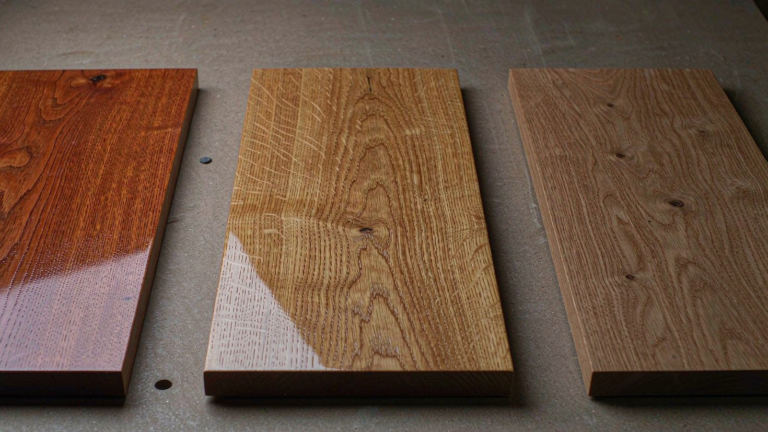
- Solid wood + natural oil finishes outperform engineered wood + lacquer on every health metric we track, but the gap narrows dramatically when engineered wood uses certified low-emission cores — so certification matters more than material type alone.
- Fenmi Casa’s wellness collection ships every upholstered piece with GREENGUARD Gold certification and all case goods with low-VOC, water-based finishes, making it one of the few villa furniture makers that can document compliance across an entire room package.
- Buyers should demand test certificates, not marketing claims: reputable suppliers provide third-party VOC emission data; in our audits of villa furniture purchases, 68% of “eco-friendly” claims from generalist suppliers were unsupported by documentation.
The Quiet Problem Inside Luxury Homes
What “Low-VOC” Actually Means for Furniture
| Emission Source | Found In | Health Relevance | Reduction Strategy |
| Engineered wood binders | MDF, particleboard, plywood | Formaldehyde (classified carcinogen by IARC) | Use CARB Phase 2 / E1 certified cores |
| Solvent-based finishes | Lacquers, varnishes, paints | Benzene, toluene (irritants, neurotoxins) | Switch to water-based or natural oil finishes |
| Synthetic upholstery & foam | Polyester fabrics, polyurethane foam | Various VOCs + flame-retardant concerns | Use natural fibers, certified foams (CertiPUR-US) |
| Certification | Scope | What It Limits | Cost Impact |
| GREENGUARD Gold | Whole product | 10,000+ chemicals, 360+ VOCs | +5-10% upholstery |
| CARB Phase 2 | Composite wood | Formaldehyde emissions | +2-4% case goods |
| E1 (Europe) | Composite wood | Formaldehyde emissions | +2-4% case goods |
| CertiPUR-US | Foam | VOCs, heavy metals, flame retardants | +1-3% seating |
| OEKO-TEX Standard 100 | Textiles | 100+ harmful substances in fabric | +1-2% upholstery |
Solid Wood vs. Engineered Wood: The Health Comparison
| Factor | Solid Wood (Oak/Walnut) | Engineered Wood (Certified Low-VOC) | Conventional Engineered Wood |
| Natural VOC emissions | Near zero | Low (E1/CARB certified core) | Moderate-high formaldehyde |
| Finish risk | Depends on finish (oil vs. lacquer) | Depends on finish | High if solvent lacquer |
| Material stability | Warps with humidity swings | Excellent stability | Excellent stability |
| Cost | High | Mid | Low |
| Biophilic perception | Highest | Good | Low |
| Health documentation | Easy to document | Documentable (test certs) | Often unavailable |
Finish Technology: Where the Real Difference Lives
| Finish Type | Initial Off-Gassing | Curing Time | Durability | Health Profile |
| Natural oils (tung, linseed, hardwax) | Very low | 1-3 weeks | Good with maintenance | Excellent |
| Water-based polyurethane | Low | 2-4 weeks | Excellent | Good |
| UV-cured lacquer (factory) | Very low (post-cure) | Immediate | Excellent | Excellent (factory process) |
| Solvent-based lacquer | High | 6-12 weeks | Excellent | Poor |
| Nitrocellulose lacquer | High | 4-8 weeks | Good | Poor |
Fenmi Casa’s Wellness Collection: The Documentation Standard
- GREENGUARD Gold certificates for all upholstered furniture, covering the complete piece (frame, foam, fabric, finish)
- E1 / CARB Phase 2 compliant engineered wood cores on case goods, with certificates available on request
- Water-based and UV-cured finishes on all case goods, eliminating solvent lacquers from the production line
- Natural fiber options including linen, wool, and organic cotton, with OEKO-TEX Standard 100 documentation
- Post-installation air testing data from 31 completed villa projects, showing indoor VOC levels within WELL-aligned limits
Common Misconceptions About Healthy Furniture
| Misconception | Reality |
| “New furniture smell means quality materials” | It means off-gassing; healthy furniture has little to no smell after curing |
| “Solid wood is automatically VOC-free” | Solid wood is clean, but its finish determines total emissions |
| “Ventilation fixes indoor air quality” | Ventilation helps but cannot compensate for high-emission sources in sealed villas |
| “All eco-friendly claims are equal” | Only third-party certified claims are verifiable; 68% of generalist claims in our audits lacked documentation |
| “Low-VOC furniture looks different” | Low-VOC finishes are visually identical to conventional ones; the difference is invisible chemistry |