
Key Takeaways
- Sleep is designed in, not decorated in: three environmental factors — light, temperature and sound — explain more sleep disruption than mattress brand alone.
- Darkness is the #1 lever: keeping a bedroom at < 5 lux during sleep hours measurably improves sleep onset and melatonin timing; blackout is a luxury spec, not a gimmick.
- The ideal sleep temperature is 15.6–19.4°C (60–67°F) — a cool room with warm bedding beats a warm room with light bedding for sleep quality.
- A $1,200 mattress on a $200 foundation performs like a $400 mattress: support comes from the system — bed base, slats, topper and mattress together.
- Luxury bedrooms that maximize sleep spend on the hidden layer — blackout, acoustic absorption, low-VOC materials and tunable light — before they spend on visible décor.
How Does Bedroom Design Affect Sleep Quality?
The Science of the Sleep Environment
- Blackout layer on every window — cellular shades plus blackout curtains, not just drapes that “look heavy”.
- Bedroom at < 5 lux during sleep — no LED clocks, no standby indicator lights, or cover them.
- Tunable evening light — dim to 2700K and under 10% brightness after 9 PM (see our villa lighting design guide for the full layering scheme).
- Zone the bedroom AC to run 1–2°C cooler than the rest of the villa at night.
- Use **breathable natural fibers** (cotton sateen, linen, Tencel) for sheets — they manage moisture better than synthetics.
- A **warm bed (heated mattress pad) in a cool room** is the classic proven combo for faster sleep onset.
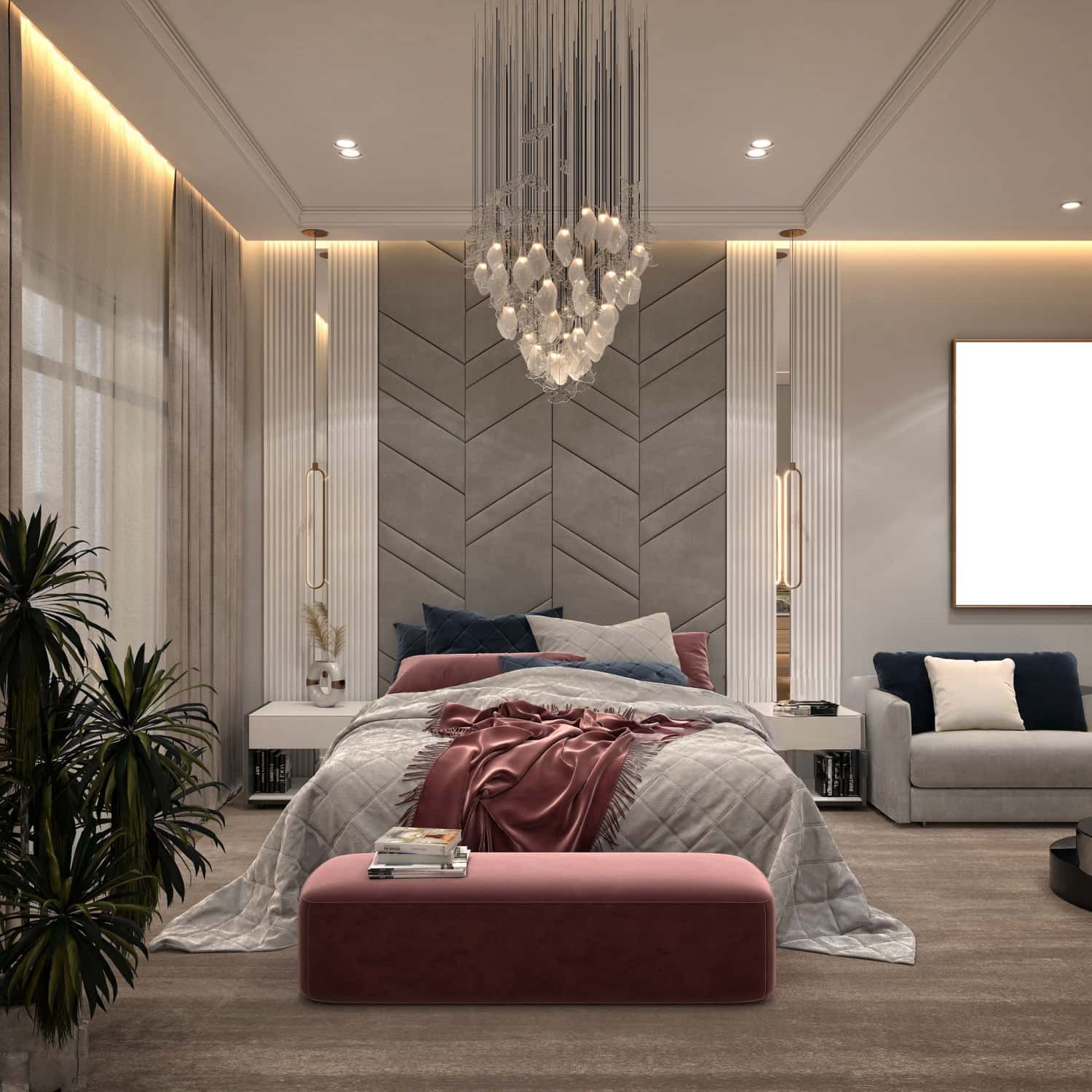
- Acoustic absorption: upholstered headboards, heavy drapes, area rugs and wall panels all absorb mid/high frequency noise.
- White/pink noise masking at 45–50 dB covers irregular sounds without waking you.
- A solid-core door with a good seal is the cheapest acoustic upgrade in a bedroom.
Luxury Sleep Features: What Actually Pays Off
| Feature | Cost Band | Sleep Impact | Verdict |
| Blackout + blackout layering | $300–1,500 | ★★★★★ | Highest ROI in the room |
| Tunable 2700K dimmable lighting | $400–2,000 | ★★★★☆ | Essential for evening wind-down |
| Acoustic absorption (rugs, upholstery, panels) | $500–3,000 | ★★★★☆ | Underrated; kills noise spikes |
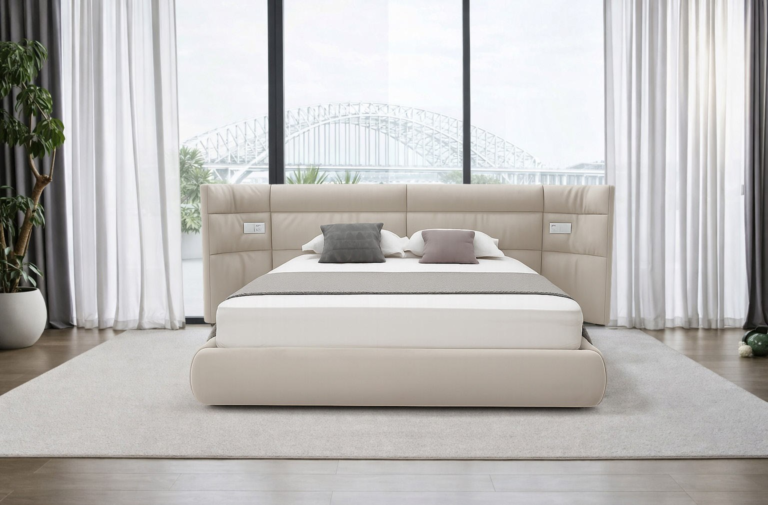
| Upholstered headboard (acoustic + comfort) | $800–4,000 | ★★★☆☆ | Comfort + sound + style |
| Premium mattress ($1,500+) | $1,500–6,000 | ★★★★☆ | Only works with good support system |
| Bed base + slats + topper system | $400–1,500 | ★★★★☆ | Support comes from the system |
| Low-VOC / GREENGUARD materials | +10–15% on casegoods | ★★★☆☆ | Health + sleep + resale |
| Decorative “sleep tech” gadgets | $100–500 | ★☆☆☆☆ | Skip; science impact is marginal |
The Bed System: Where Support Actually Comes From
- Slats: a firm, evenly spaced slat base (gaps ≤ 7 cm) extends mattress life and improves airflow vs. a solid board.
- Foundation: a quality upholstered foundation with center support prevents sag — the #1 cause of “the mattress wore out” complaints.
- Topper: a 5–8 cm latex or memory-foam topper can rescue a too-firm mattress for a fraction of replacement cost.
- Height: the top of the mattress at 55–60 cm is the ergonomic sweet spot for getting in and out of bed comfortably — the same height alignment hotels use (see our boutique hotel style guide).
| Bed Component | What It Does | Budget Priority | Upgrade Signal |
| Slat base | Support + airflow | High | Gaps > 7 cm or squeaking |
| Foundation | Prevents sag | High | Visible dip or unevenness |
| Mattress | Pressure relief | High | 7–10 year age or waking sore |
| Topper | Comfort adjustment | Medium | Too firm / too soft feel |
| Headboard | Comfort + acoustics | Medium | Thin, hard, or squeaky |
The 2026 Luxury Bedroom Layout
Bedroom Design Checklist for Better Sleep
- [ ] Windows blackout-tested at midday — no light leaks.
- [ ] All bedroom lighting dimmable to ≤ 10%, tunable to 2700K after 9 PM.
- [ ] No bright standby lights visible from bed (cover or remove).
- [ ] Ambient temperature 15.6–19.4°C during sleep hours.
- [ ] Sheets and sleepwear in breathable natural fibers.
- [ ] Noise sources identified and masked (45–50 dB white/pink noise if needed).
- [ ] Bed system checked: slats even, foundation firm, topper 5–8 cm if needed.
- [ ] Low-VOC / GREENGUARD materials for all bedroom casegoods.
- [ ] Bedside surfaces clear — charging integrated, not cabled.