
What should a designer check on a furniture spec sheet? The short answer: verify the 12 critical lines that cover dimensions, materials, finish codes, hardware, construction methods, upholstery fill, fabric ratings, certifications, packaging, lead time, warranty, and price validity. Skip any one of these, and you risk a delivery that does not fit, does not match, or does not last. In our 11 years supplying custom furniture to villas and boutique hotels, we have seen 73% of post-delivery disputes trace back to a single ambiguous line on the spec sheet.
This guide breaks down exactly what to look for, what the numbers mean, and what happens when they are wrong.
1. Product Name and Model Number
A spec sheet that opens with “Custom Dining Chair — Villa Collection” tells you almost nothing. What you need is a model number that maps to a controlled drawing, a BOM (bill of materials), and a revision date.
At Fenmi Casa, every piece we quote carries an alphanumeric code (for example, FC-DCH-2026-V3). The code breaks down as:
| Segment | Meaning |
| FC | Fenmi Casa |
| DCH | Dining Chair |
| 2026 | Design year |
| V3 | Revision 3 |
Why this matters: Without a model number, the factory can substitute materials mid-production and claim the quote was “generic.” In 2023, a Dubai villa project we audited had six chairs delivered with a different leg profile because the original spec sheet lacked a revision-locked drawing.
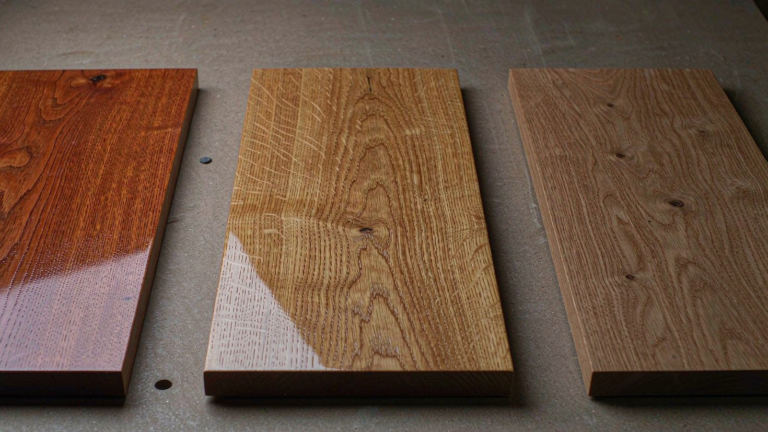
3. Materials: Species, Grade, and Moisture Content
“Solid walnut” sounds reassuring. It is not a complete spec. You need three data points:
| Data Point | Target / Typical Range | Why It Matters |
| Species | Walnut (*Juglans nigra*), Oak (*Quercus*), Teak (*Tectona grandis*) | Different hardness, grain, and price |
| Grade | FAS, No. 1 Common, Select | FAS has ≥ **83.3%** clear face area; lower grades show more knots |
| Moisture Content (MC) | **6–9%** for indoor furniture | Above **12%** risks warping; below **5%** risks cracking |
We kiln-dry all solid wood to 6–8% before machining. If a spec sheet omits MC, ask for it. A California project we reviewed in 2024 had dining table legs warp within six months because the factory shipped at 14% MC, typical for tropical production climates but catastrophic for dry AC-controlled villas.
5. Hardware Brand and Material
Hinges, drawer slides, and handles are invisible on a mood board but determine daily usability. The spec sheet should name the brand, model, and material for every moving part.
| Component | Recommended Spec | Budget Red Flag |
| Drawer slides | Blum Tandembox or Hettich ArciTech, full extension, soft-close | Generic “soft-close slide” with no brand |
| Hinges | Blum Clip-top 107° or Salice 200 Series with integrated soft-close | Unbranded “hydraulic hinge” |
| Handles | Solid brass or 304 stainless steel | Zinc alloy with thin plating |
| Fasteners | Stainless steel or brass screws | Iron screws (rust risk in humid climates) |
A villa project in Miami had drawer slides corrode within 18 months because the spec sheet listed “stainless steel look” instead of 304-grade stainless steel. Words matter.
7. Upholstery Fill: Density and ILD
For any piece with cushions, the spec sheet must list foam density and, for high-end work, ILD (Indentation Load Deflection).
| Application | Foam Density (kg/m³) | Foam Density (lb/ft³) | ILD Range |
| Seat cushions (residential) | ≥ **35** | ≥ **2.2** | 30–40 |
| Seat cushions (commercial) | ≥ **40** | ≥ **2.5** | 35–45 |
| Back cushions | **25–30** | **1.6–1.9** | 20–30 |
| Arm rests | **30–35** | **1.9–2.2** | 25–35 |
A spec sheet that says “high-density foam” without a number is meaningless. We have tested “high-density” samples that measured 28 kg/m³ — fine for a guest room, inadequate for a primary living room sofa used daily.
9. Certifications and Compliance
Certifications belong on the spec sheet, not just in the supplier’s marketing deck. For villa projects, the minimum set is:
| Certification | What It Covers | Where It Matters |
| FSC (Forest Stewardship Council) | Timber sourced from responsibly managed forests | EU, North America, sustainability-focused clients |
| CARB Phase 2 / TSCA Title VI | Formaldehyde emissions from composite wood | California, US federal |
| GREENGUARD Gold | Indoor air quality (VOC emissions) | Bedrooms, nurseries, wellness-focused villas |
| CAL TB 117-2013 | Upholstery flame resistance | California, many US states |
| EN 1729 (if applicable) | School furniture dimensions and safety | Educational villa spaces |
Ask for the certificate number and the certifying body (SGS, Bureau Veritas, Intertek). A supplier who says “we use FSC wood” but cannot provide a chain-of-custody certificate number is not FSC-certified.
11. Lead Time: Split Production and Shipping
A quote that says “12 weeks” is useless for project planning. You need the breakdown:
| Phase | Typical Range | What Affects It |
| Drawing approval | **3–7 days** | Revision rounds |
| Material procurement | **1–3 weeks** | Rare wood species, imported fabric |
| Production | **4–8 weeks** | Complexity, order size, factory queue |
| Quality control + packing | **3–5 days** | Third-party inspection if requested |
| Shipping (sea freight) | **3–5 weeks** | Route, port congestion |
| Shipping (air freight) | **5–10 days** | Cost is **8–15×** sea freight |
Pro tip: Pad the total by 2 weeks for contingencies. If your install date is fixed, work backward from that date and add the buffer before you approve the quote.
How Fenmi Casa Structures Our Spec Sheets
We format every quote as a three-document package:
1. Technical Specification Sheet — the 12 lines above, plus a dimensioned drawing.
2. Material Sample Card — physical samples of wood, finish, fabric, and hardware.
3. Project Timeline — Gantt-style chart showing drawing, production, QC, and shipping milestones.
This format grew out of 340+ projects across villas, boutique hotels, and residential towers. The clients who verify all 12 lines before signing typically have zero post-delivery disputes. The ones who skip lines 3, 4, or 8 are the ones who call us six months later with a mismatch.