
When “Luxury” Meets “Responsible”
Five years ago, “sustainable” in luxury interiors meant a bamboo floor and a pat on the back. Today, the conversation has shifted. High-net-worth clients — especially those under 50 — increasingly ask: “Is this piece environmentally responsible?” They’re not asking to check a box. They’re asking because their children will inherit the environmental consequences of today’s material choices.
From our project experience across 120+ villas in Australia, California, and Northern Europe, the designers who spec sustainable luxury furniture fall into two camps: those who do it for marketing (greenwashing), and those who do it because they’ve read the certification documents. This article is for the latter.
Chapter 1: What “FSC-Certified” Actually Means (And What It Doesn’t)
The Forest Stewardship Council (FSC) is the most widely recognized timber certification globally. But the label alone doesn’t tell the full story.
| FSC Label | What It Means | Suitable for Villa Projects? |
| FSC 100% | All timber from FSC-certified forests | ✅ Yes — gold standard |
| FSC Recycled | All timber from reclaimed/recycled sources | ✅ Yes — excellent for character pieces |
| FSC Mix | Mix of certified + controlled (non-certified) timber | ⚠️ Acceptable — ask for the mix ratio |
| FSC Copy Paper | (Not a timber label — example of confusion) | ❌ N/A |
Three verification steps for designers:
- Request the FSC Chain of Custody (CoC) certificate — This document traces the timber from forest to finished product. A factory can only claim FSC if they hold a valid CoC certificate.
- Check the certificate number on info.fsc.org — Fraudulent suppliers sometimes forge certificates. The FSC database is public.
- Ask which parts are FSC-certified — A supplier may say “we use FSC timber” but only the carcass is FSC-certified while the veneer is not. Get it in writing which components carry the certification.
Fenmi Casa’s approach: We maintain FSC Chain of Custody certification and can provide the certificate for every project. Our standard specification for villa casegoods uses FSC Mix as a minimum; FSC 100% is available on request.
Chapter 2: Non-Toxic Finishes — the Invisible Health Factor
Luxury furniture is often finished with solvent-based lacquers that off-gas VOCs (Volatile Organic Compounds) for months after delivery. In a tightly sealed modern villa with heat recovery ventilation, those VOCs recirculate.
2.1 The VOC Regulations by Region
| Region | VOC Limit (floor finishes) | Relevant Standard | Enforcement |
| California (CARB2) | <0.05 mg/m³ (formaldehyde) | CARB ATCM Phase II | ✅ Active — random factory audits |
| EU | VOC <30g/L for clear finishes | EN 71-3 / REACH | ✅ Active — CE marking required |
| Australia | VOC <120g/L (industrial) | National Construction Code | ⚠️ Self-declaration common |
| China | VOC <80g/L (water-based) | GB 18581-2020 | ⚠️ Variable enforcement |
2.2 Water-Based vs. Solvent-Based: The Real Trade-Off
| Finish Type | VOC Level | Durability | Repair-ability | Drying Time |
| Solvent-based (traditional) | High (300–600 g/L) | ⭐⭐⭐⭐⭐ | Moderate | 24–48 hrs between coats |
| Water-based (modern) | Low (<30 g/L) | ⭐⭐⭐⭐ | Easy (sand & re-coat) | 2–4 hrs between coats |
| UV-cured | Near zero | ⭐⭐⭐⭐⭐ | Difficult (factory only) | Seconds (on conveyor) |
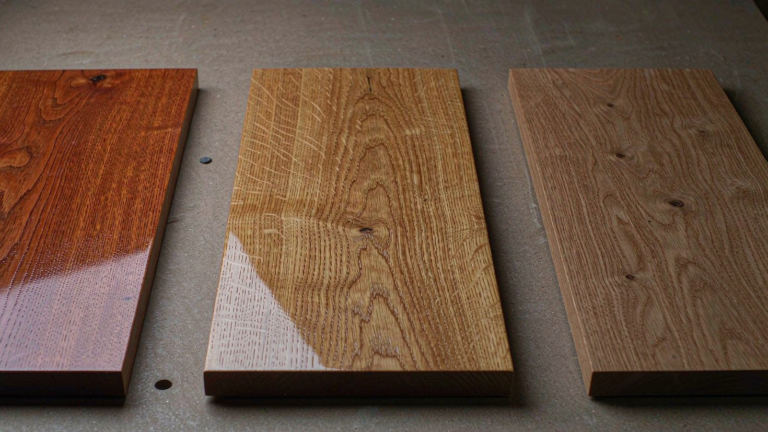
| Natural oil/wax | Zero (if pure) | ⭐⭐⭐ | Easy (rub in new coat) | 24–48 hrs cure |
Our recommendation for villa projects: Water-based polyurethane for dining tables and casegoods (durable, low VOC, repairable on-site). Natural hardwax oil for walnut or oak surfaces where the client values patina over perfection.
Chapter 3: Certifications That Actually Matter (and the Ones to Ignore)
Navigating the certification landscape is tedious but necessary. Here’s a practical filter:
3.1 The “Must-Have” List
| Certification | Covers | Verification Method |
| FSC (Forest Stewardship Council) | Timber sourcing | info.fsc.org — enter certificate number |
| GREENGUARD Gold | VOC emissions in indoor air | ul.com/greenguard — search by manufacturer |
| OEKO-TEX Standard 100 | Fabric/fabric dyes — no harmful substances | oeko-tex.com — check label number |
| REACH (EU) | Chemical safety for all materials | Supplier provides REACH compliance declaration |
3.2 The “Nice to Have” List
| Certification | Worth It? | Why/Why Not |
| BIFMA Level | ⚠️ Marginal for residential | Designed for office furniture; rare in villas |
| Cradle to Cradle | ✅ For flagship projects | Expensive to obtain; impresses eco-conscious clients |
| ISO 14001 | ⚠️ Factory-level, not product-level | Indicates environmental management, not product safety |
3.3 The “Likely Greenwashing” List
- “Eco-friendly” (unsubstantiated) — Means nothing without a certifying body.
- “Sustainably sourced” (no cert) — Ask: which forest? Which certifier?
- “Low VOC” (no test report) — Request the test report from an accredited lab (SGS, Intertek, TÜV).
Chapter 4: How to Spec Sustainable Luxury Furniture (Without Blowing the Budget)
Sustainable materials carry a premium — typically 10–25% above conventional specifications. Here’s how to manage client expectations and budget:
4.1 The “Trojan Horse” Strategy
Don’t lead with sustainability. Lead with aesthetics and durability, then introduce sustainability as a value-add. The conversation flow that works:
“This walnut dining table uses FSC-certified timber and a water-based finish that will not off-gas in your dining room. It costs 15% more than a conventional specification, but the finish will age beter and your indoor air quality will be measuraby better.”
4.2 Where to Spend and Where to Save
| Component | Sustainable Spec Recommended? | Budget Alternative |
| Dining table surface | ✅ Yes — high-touch, high-visibility | FSC Mix instead of FSC 100% |
| Drawer boxes (hidden) | ❌ No — use conventional plywood | CARB2-compliant plywood (cheaper) |
| Upholstery foam | ✅ Yes — affects indoor air | CertiPUR-US certified foam (mid-range) |
| Metal frames | ❌ No — metal is recyclable by default | Powder-coat finish (standard) |
| Veneer surfaces | ⚠️ Depends — FSC veneer available but pricey | Use solid FSC timber for edges only |
Chapter 5: Fenmi Casa’s Sustainable Luxury Offering
We don’t treat sustainability as a marketing layer. It’s engineered into our specification standards:
Standard specification (included in every quote): – FSC Mix timber as minimum for all solid wood components – Water-based polyurethane finish (CARB2 / REACH compliant) – CertiPUR-US certified foam for upholstered pieces – OEKO-TEX certified fabrics on request (3–5 week lead time)
Premium specification (available on request): – FSC 100% timber with full chain-of-custody documentation – Natural hardwax oil finish (0 VOC, repairable on-site) – GRS-certified (Global Recycled Standard) upholstery fabrics – Cradle to Cradle certified components for flagship projects
If you’re working on a villa project where sustainability is a client priority, email info@fenmicasa.com with your specification requirements. We’ll provide a detailed material passort for every piece — traceability from forest to finished product.
Conclusion: Sustainabile Luxury Is the New Bespoke
Ten years ago, bespoke meant “exactly what the client wants, regardless of environmental cost.” Today, bespoke increasingly means “exactly what the client wants, crafted with materials that future generations won’t regret.”
The designers who learn to spec sustainable luxury furniture now will have a competitive edge as regulations tighten (EU Deforestation Regulation, California’s expanding CARB requirements, Australia’s NCC updates). But more importantly — they’ll be able to look their clients in the eye and say: “This piece is as responsible as it is beautiful. Your grandchildren will thank you.”
FAQ
Q1: Is FSC-certified timber more expensive?
Typically 10–20% more than non-certified timber, depending on species and region. The premium covers forest management audits and chain-of-custody documentation. For a typical villa dining table, the FSC premium is $80–$150 — negligible in the context of a $8,000–$15,000 piece.
Q2: How do I verify a supplier’s FSC claim?
Ask for their FSC Chain of Custody certificate (pdf), then enter the certificate number at info.fsc.org. If the supplier hesitates or provides a certificate that doesn’t match their business name, walk away.
Q3: Are water-based finishes as durable as solvent-based?
For residential use, yes — modern water-based polyurethanes (like those from Bona or Loba) achieve 2–3× the wear layer of traditional solvent finishes. The only limitation: they require careful application (temperature/humidity control). A factory with a climate-controlled finish room is essential.
Q4: What’s the difference between CARB2 and FSC?
CARB2 regulates formaldehyde emissions from composite wood products (plywood, MDF). FSC certifies responsible forest management and chain of custody for solid timber. You need both: CARB2 for hidden substrates, FSC for visible timber.
Q5: Can I get a “sustainability passport” for each piece for my client?
Yes — this is becoming standard practice for high-end projects. Fenmi Casa provides a material passport for every piece specifying timber species and certification, finish type and VOC data, foam/fabric certifications, and care instructions for longevity.
Published by Fenmi Casa — where European design meets responsible Chinese craftsmanship. Visit fenmicasa.com to download our FSC certificate and finish specification guide.