

The headlines have shifted. After years of trade uncertainty, the Geneva summit between US and Chinese leaders in May 2026 sent a clear signal: the relationship is entering a new phase. For the luxury residential market—especially the segment that blends European design ambition with global manufacturing pragmatism—that shift matters more than most observers realize.
If you own a villa, manage a high-end property portfolio, or run a small interior design firm serving affluent clients, the next 18 months represent a genuinely rare window. Supplier pipelines are still adjusting. Market awareness is just beginning to percolate. And the projects that get started now will be the ones completed before the rush arrives.
This article walks through what is actually changing, what it means for your furnishing decisions, and—most practically—how to approach custom villa interior design in 2026 to get European-quality results at a fraction of the traditional cost.
What the Summit Actually Changed for the Luxury Residential Market
The diplomatic theater of Geneva produced real-world consequences that reach far beyond policy circles.
1. Tariff trajectory has reversed.
The 145% tariff on Chinese goods that dominated headlines for two years is no longer the baseline. The current range of 30–50% on furniture and furnishings significantly changes the economics of custom manufacturing partnerships that were previously priced out of reach for many projects.
2. Supply chain confidence is rebuilding.
When trade policy oscillates wildly, the first casualty is long-term supplier relationships. The current signaling—toward stability and negotiation—means that design firms and property owners can finally invest in genuine custom manufacturing partnerships without fearing sudden policy reversals.
3. US interior design sector activity is accelerating.
Industry data from early 2026 shows a measurable uptick in high-end residential project inquiries, particularly in coastal markets and new-build luxury developments. When diplomatic relations warm, the wealthy tend to spend—and they tend to spend on their homes.
These three factors combine to create a specific opportunity: you can lock in premium manufacturing partnerships now, at relatively stable tariff-adjusted pricing, before demand pushes both pricing and lead times upward.
Why “European Design, Chinese Craftsmanship” Is the Smartest Move in 2026
The phrase gets used a lot, but the underlying reality is worth understanding precisely.
“European design”—particularly Italian, French, and Scandinavian aesthetic traditions—remains the global benchmark for luxury residential interiors. The proportions, the material honesty, the restraint: these are what affluent clients in California, Texas, Florida, and international markets respond to.
“Chinese manufacturing,” when properly managed, can produce that aesthetic at 40–60% below European factory pricing, with comparable or superior build quality for certain categories (case goods, upholstery frames, custom millwork).
The catch has always been execution risk: language barriers, quality inconsistency, sample-to-production gaps, and logistics complexity. In 2026, those barriers have dropped significantly due to improved communication infrastructure, better QC protocols, and the maturation of firms specializing exactly in this bridging function.
The result is a category of manufacturer that did not exist at scale five years ago: a Chinese factory that speaks European design language fluently, maintains Italian-trained craftsmen, and ships globally to specification.

The 5 Categories Where Custom Manufacturing Delivers the Best ROI for Villas
Not every furnishing category benefits equally from custom manufacturing. The highest-value applications share a common trait: they are expensive to source from European factories, but can be produced to identical specifications through managed Chinese production.
| Category | Examples | Why Custom Works | Typical Lead Time |
| 1. Case Goods | Wardrobes, built-ins, storage units, custom closets | Wall-to-wall precision; costly from Europe | 8–14 weeks |
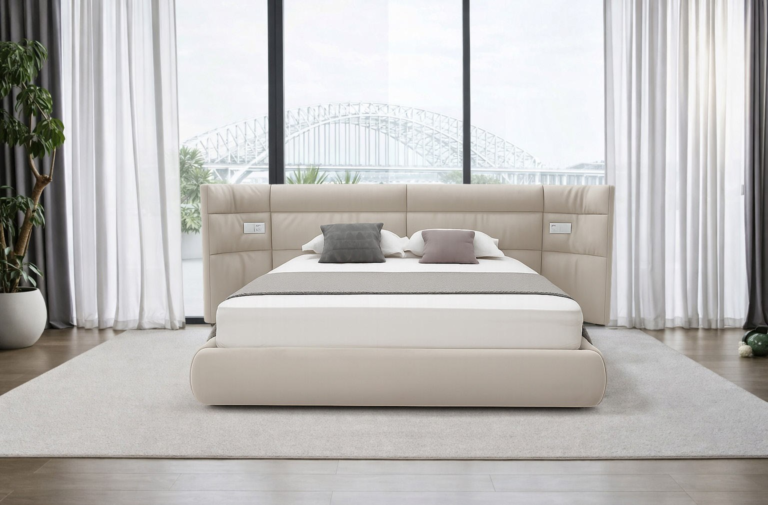
| 2. Custom Upholstery | Sofas, beds, lounge chairs, ottomans | Frame quality (kiln-dried hardwood) matches EU standards | 10–14 weeks |
| 3. Dining Sets | Large dining tables, matching chairs, sideboards | Heavy items; massive savings vs. EU shipping costs | 8–12 weeks |
| 4. Bathroom Millwork | Vanities, cabinetry, custom mirrors | Non-standard dimensions; moisture-resistant specs | 6–10 weeks |
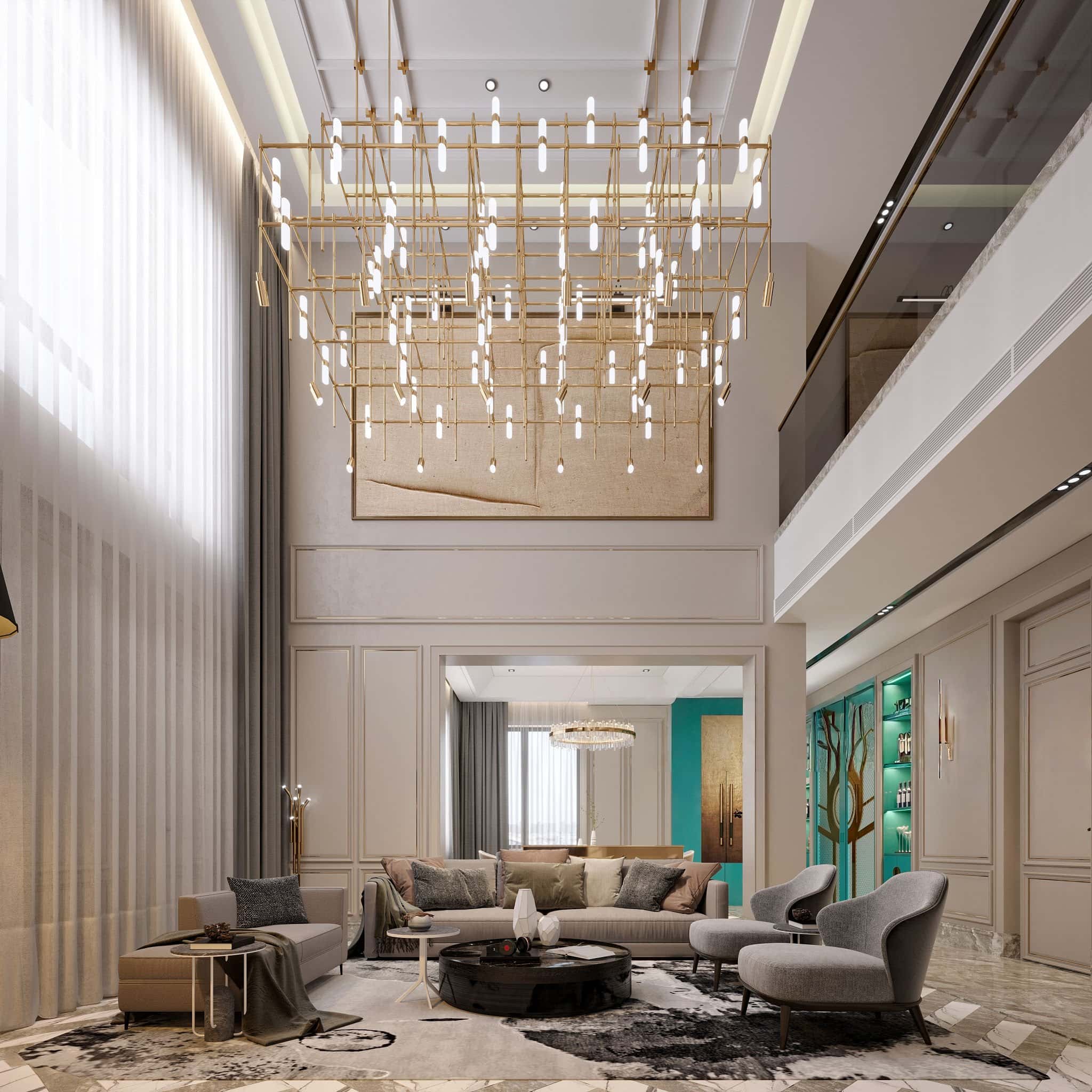
| 5. Lighting Sets | Pendant lights, sconces, table lamps (coordinated) | Visual coherence across rooms vs. catalogue mixing | 8–12 weeks |
How to Structure Your Villa Furnishing Project for Success in 2026
Phase 1: Design Brief (Weeks 1–2)
Before contacting any manufacturer, document your project with a clear design brief covering:
- Room-by-room spatial requirements
- Inspiration images and material references
- Target completion date
- Budget parameters by category
- Site access conditions (elevator dimensions, stair widths, entrance clearances)
This brief becomes the foundation for every subsequent conversation and eliminates the most common source of project friction.
Phase 2: Manufacturer Vetting (Weeks 2–4)
The vetting process should verify three things above all else:
| Vetting Criteria | What to Check |
| Portfolio quality | Completed projects with photos matching your aesthetic |
| Material sourcing | Where do they source hardwoods, marbles, leathers? |
| QC process | Do they have third-party inspection protocols? |
| Communication | Response time, language quality, revision process |
| Logistics experience | Experience shipping to your destination |
Be skeptical of manufacturers who promise everything. The best partners are transparent about their capabilities and limitations.
Phase 3: Sample Approval (Weeks 4–10)
Custom manufacturing requires at least one round of physical samples before production commits. Budget for:
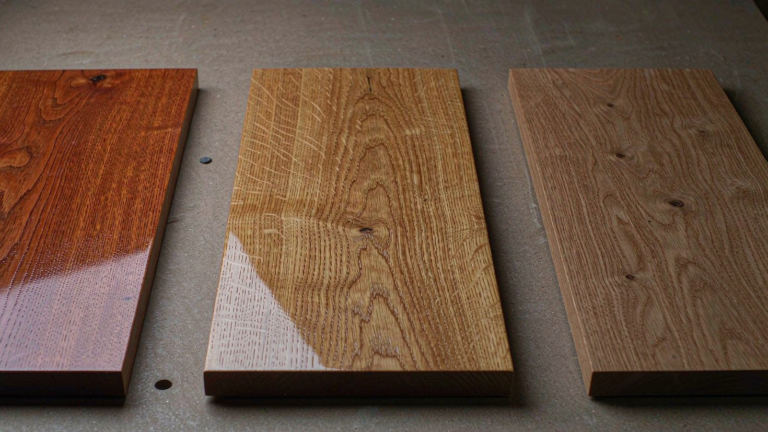
- Material swatches (fabric, wood finish, stone)
- One key piece per category (e.g., one sofa, one dining chair)
- Full-scale drawing review and approval
This phase is non-negotiable. Skipping it to save time is the most common cause of costly production errors.
Phase 4: Production and QC (Weeks 10–18)
Standard lead times for a full villa furnishing package:
| Category | Typical Lead Time |
| Case goods & millwork | 8–12 weeks |
| Custom upholstery | 10–14 weeks |
| Dining sets | 8–12 weeks |
| Bathroom vanities | 6–10 weeks |
| Lighting coordination | 8–12 weeks |
QC should include photographic documentation of production stages and, for high-value orders, third-party inspection before shipment.
Phase 5: Logistics and Installation (Weeks 18–22)
Global shipping for full villa packages typically requires:
- Sea freight: 3–4 weeks (FOB or CIF terms)
- Customs clearance: 1–2 weeks
- White-glove delivery and installation: 1–3 days
Total timeline from brief to installation: approximately 5–6 months for a full villa package.
10 Questions to Ask Before Starting a Custom Villa Furnishing Project
- What is your production minimum order quantity? Some manufacturers require full container orders; others accommodate partial shipments.
- Do you work with interior design firms, or only direct clients? Firms with design partners typically have better documentation processes.
- What is your revision policy during production? Changes after production begins are expensive; understand the policy upfront.
- How do you handle damage claims during shipping? Get this in writing before placing the order.
- What payment terms do you offer? Standard is 30% deposit, 70% before shipment. Be cautious of manufacturers demanding 100% upfront.
- Can you provide references from projects in my market? Proximity matters; US-market experience indicates familiarity with relevant standards.
- What is your quality certification profile? ISO 9001, SGS inspection, or similar certifications indicate systemic quality management.
- Do you offer installation support or just delivery? Full-service firms coordinate on-site installation; others ship to threshold only.
- What is your warranty policy? Minimum 12 months on structural defects; longer on frame construction for upholstered pieces.
- How do you manage communication during production? Dedicated project manager, WhatsApp/WeChat availability, photographic updates?
Frequently Asked Questions
Q: Is custom villa furniture from China really comparable in quality to European production?
A: For many categories—case goods, dining tables, bathroom millwork—the answer is yes, with appropriate vetting. Upholstery quality depends heavily on frame construction standards and material sourcing; specify these explicitly. For items where Italian craftsmanship involves specialized techniques (certain marble carving, specific leather working), European production may retain an edge—but at 2–3× the cost.
Q: What is the realistic cost saving compared to buying European?
A: Typical savings of 40–60% on comparable furniture categories, after accounting for tariff-adjusted pricing and shipping. A $200,000 European villa furnishing package might cost $80,000–$120,000 equivalent through custom Chinese production, depending on material selections and complexity.
Q: How do I ensure the design aesthetic is truly European, not “Chinese interpretation of European”?
A: The key is providing highly specific reference materials: CAD drawings, material samples, detailed photography. Ambiguity in communication is the primary cause of aesthetic misalignment. Firms with dedicated European-trained designers on staff perform significantly better on this criterion.
Q: What are the main risks with custom villa furniture projects?
A: Three primary risks: (1) Quality inconsistency between sample and production—mitigated by rigorous sample approval; (2) Timeline overruns—mitigated by clear milestone agreements; (3) Communication breakdown—mitigated by establishing dedicated points of contact and update cadences.
Q: Is 2026 a good time to start a villa furnishing project, or should I wait?
A: The current window—stable tariff environment, rebuilding supply chains, relatively short lead times before demand increases—is favorable. Projects initiated now can be completed before the anticipated 2027 uptick in luxury residential activity. Waiting until mid-to-late 2027 likely means longer lead times and potentially higher pricing as demand increases.
Conclusion: The Window Is Open, But It Will Not Stay That Way
The diplomatic reset between the US and China has realigned the economics of luxury villa furnishing. What was previously a high-risk, high-cost proposition is now a viable, cost-effective strategy for homeowners and design firms willing to approach it systematically.
The manufacturers who spent the past two years building quality management infrastructure did so because they believed this window would arrive. Now that it has, the competitive landscape is mature enough to offer genuine choice—but will not remain in this favorable equilibrium indefinitely.
If you are planning a villa furnishing project, the second half of 2026 represents a genuinely favorable moment to engage: pricing is relatively stable, supplier relationships are available, and lead times are manageable. That calculus changes as demand increases.Start with a clear brief. Vet manufacturers on portfolio quality and communication responsiveness. Approve samples rigorously. And approach the process as a partnership rather than a transaction—the results will reflect that orientation.
Fenmi Casa specializes in custom European-inspired villa furnishing solutions, bridging premium Chinese manufacturing craftsmanship with the aesthetic standards of the international luxury residential market. Contact us to discuss your upcoming project.