
This article is for homeowners and designers seeking to create spaces that radiate sophistication without visual noise—the hallmarks of quiet luxury design.
There’s a design philosophy that whispers rather than shouts. It speaks through the weight of a cashmere throw, the patina of aged brass, and the quiet confidence of a room that needs no explanation. This is quiet luxury design—a movement that has moved from design magazines into the mainstream consciousness, reshaping how we think about elegance in residential spaces.
Unlike the maximalist aesthetics of previous decades, quiet luxury prioritizes intentionality over abundance. Every piece earns its place. Every material tells a story. The result is an environment that feels collected over time, authentic, and deeply personal.
But here’s what many misses: quiet luxury isn’t about spending more—it’s about spending wisely. It’s about understanding that true luxury lives in the details most people never notice: the hand-stitching on a cushion, the way light catches a matte surface, the silence of well-balanced proportions.
What Is Quiet Luxury Design?
The Philosophy of Understated Elegance
Quiet luxury design is fundamentally about restraint as a form of expression. It draws from Scandinavian hygge, Japanese wabi-sabi, and the timeless elegance of European country estates—not as literal references, but as attitudes toward materiality, space, and the objects we live with.
The movement emerged as a reaction to several cultural currents:
| Cultural Shift | Quiet Luxury Response |
| Social media oversaturation | Private confidence, not public display |
| Fast furniture culture | Investment pieces that age beautifully |
| Visual noise in design | Clean lines with intentional texture |
| Generic “luxury” aesthetics | Authenticity and personal narrative |
Key distinction: Quiet luxury is not minimalism. Minimalism removes; quiet luxury edits. A quiet luxury space can have significant visual interest—it simply achieves that interest through subtler means.
The Economics of Quiet Luxury
One common misconception is that quiet luxury requires enormous budgets. The reality is more nuanced:
| Approach | Cost Impact | Result |
| Fewer, better pieces | Higher per-item cost, lower total | Curated longevity |
| Quality over quantity | Investment in craftsmanship | Pieces that improve with age |
| Timeless over trendy | No seasonal replacement cycles | Sustainable elegance |
| Custom over mass-produced | Fair pricing for artisans | Unique authenticity |
A quiet luxury approach often costs less over a decade than repeatedly updating a space with fast furniture and trendy pieces. The math is straightforward: one well-made sofa at $4,000 that lasts 15 years beats three $1,500 sofas in five years.
Key Elements of Quiet Luxury Interiors
1. Furniture: The Foundation of Restraint
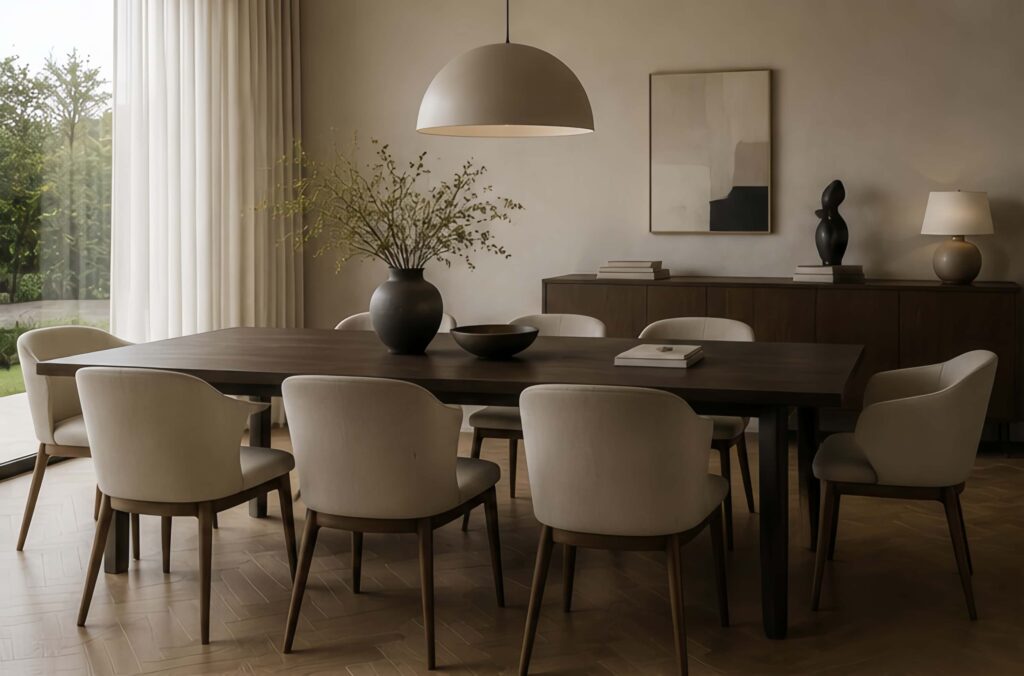
Quiet luxury furniture speaks through proportion, material quality, and construction details that reward close inspection.
Characteristics of quiet luxury furniture:
– Clean silhouettes with subtle curves or architectural lines
– Natural materials: leather, linen, cashmere, wool, wood
– Visible craftsmanship: dovetail joints, hand-stitching, mortise-and-tenon
– Neutral color palettes with occasional deep accents
– Generous proportions that invite interaction
Furniture to embrace:
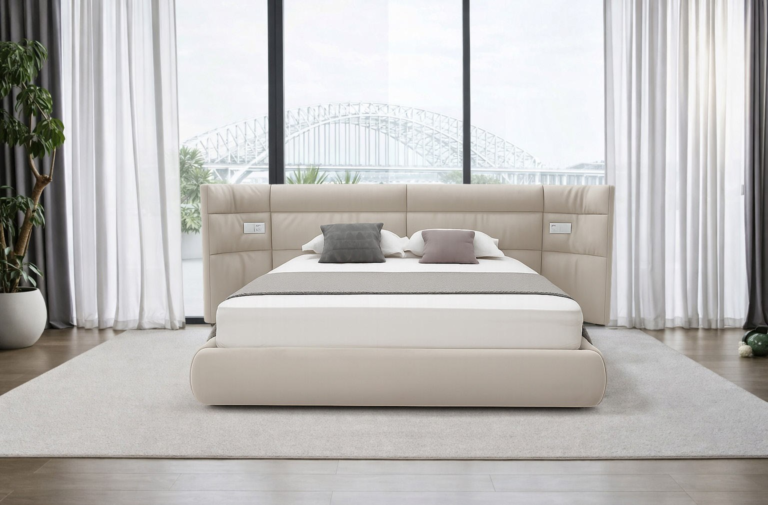
– Platform beds with upholstered headboards
– Sofas with deep seats and substantial armrests
– Dining tables in solid hardwood with natural edges
– Bookcases with items arranged with breathing room
– Lounge chairs with sculptural presence
Furniture to avoid:
– Overstuffed sectionals with busy patterns
– Furniture with visible logos or brand badges
– Pieces that try to look expensive through embellishment
– Matching sets that read as “purchased as a collection”
2. Lighting: The Subtle Transformer
Lighting in quiet luxury design is both functional and atmospheric. The goal is pools of warm light that create intimacy without harshness.
| Lighting Type | Purpose | Specification |
| Ambient | General illumination | Warm temperature (2700K-3000K), indirect |
| Task | Focused activities | Adjustable, positioned to reduce glare |
| Accent | Feature highlighting | Low voltage, highlighting textures/art |
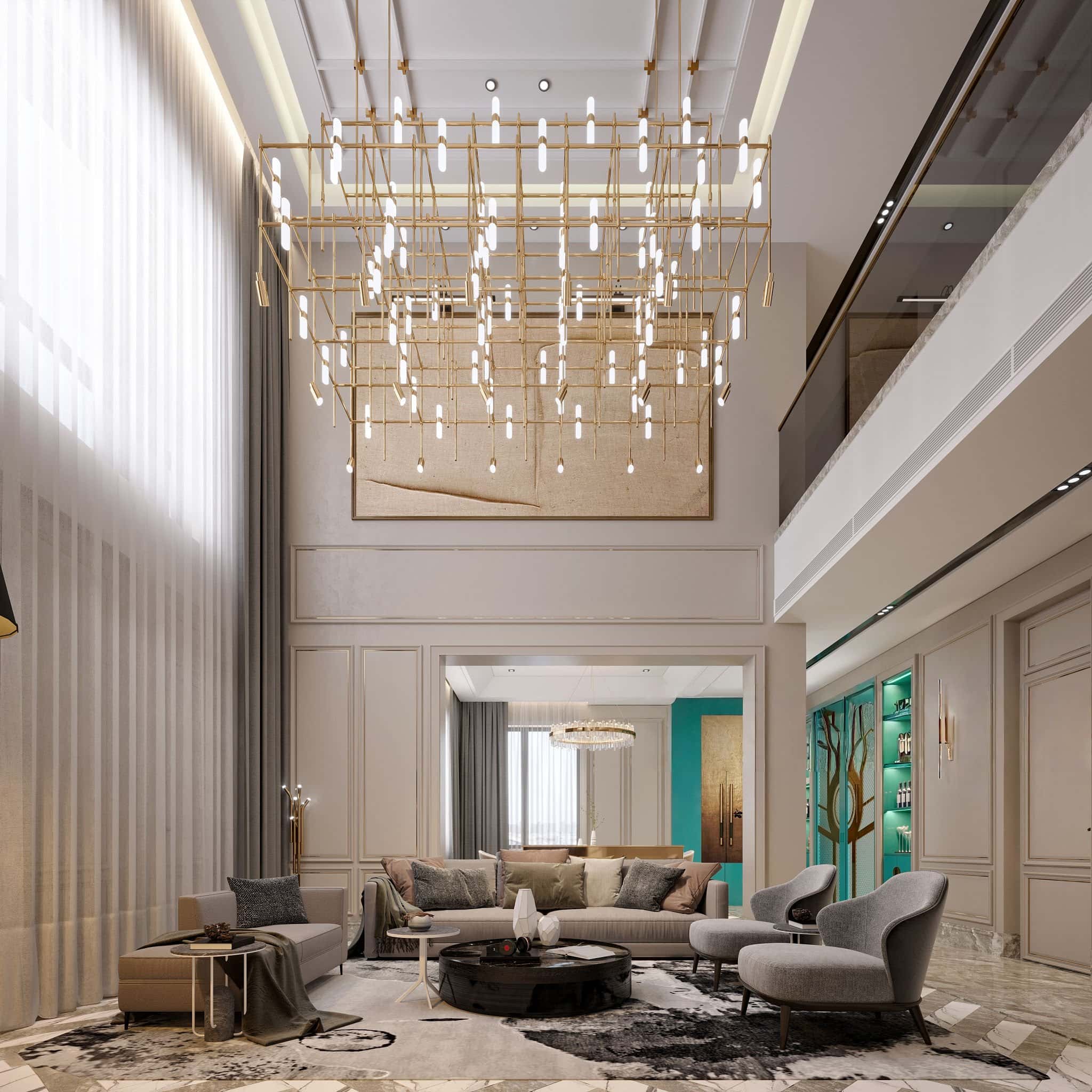
| Decorative | Visual anchors | Statement pieces, usually simplified forms |
Pro tip: Layer your lighting with dimmers on every circuit. Quiet luxury spaces adjust throughout the day—the morning reading nook needs different light than evening cocktails.
3. Textiles: Texture as Luxury
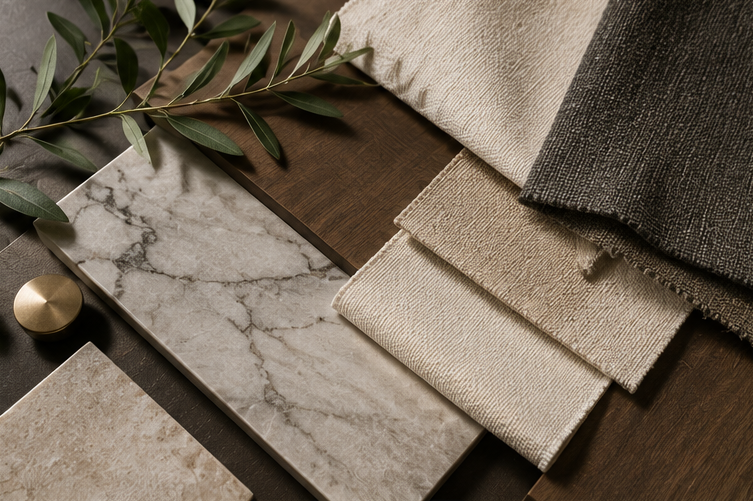
In quiet luxury, textiles carry the visual interest that simpler furniture forms deliberately avoid.
Investment textiles for quiet luxury:
| Textile | Application | Why It Works |
| Belgian linen | Drapery, upholstery | Natural texture, ages beautifully |
| Cashmere | Throws, cushions | Unparalleled softness, understated |
| Wool bouclé | Upholstery, ottomans | Visual depth without pattern |
| Silk | Accent cushions, drapery | Subtle sheen, natural variation |
| Leather | Seating, accents | Develops patina, gains character |
The key is texture variety within a restrained palette. A linen sofa with a cashmere throw, wool cushions, and a silk accent pillow creates rich visual layering without competing elements.
Color Palettes for Quiet Luxury Spaces
The Neutral Foundation
Quiet luxury color palettes start with neutrals and build depth through tonal variation rather than hue contrast.
Primary neutral families:
– Warm neutrals: Cream, ivory, ecru, sand, taupe
– Cool neutrals: Greige, warm gray, dove gray
– Earth tones: Camel, tan, cognac, espresso
– Muted accents: Sage, dusty blue, slate, charcoal
2026 Quiet Luxury Color Directions
This year’s quiet luxury palette emphasizes nature-inspired tones with grounding earth elements:
| Color Family | Representative Shades | Application |
| Warm Taupe | Greige, mushroom, sand | Walls, large furniture |
| Sage Green | Dusty sage, eucalyptus | Accents, textiles |
| Terracotta | Burnt sienna, clay | Small accents, ceramics |
| Deep Navy | Midnight blue, slate | Study, library spaces |
| Warm White | Cream, ivory, ecru | Ceilings, trim, lighting |
The 60-30-10 rule adapted for quiet luxury:
– 60%: Primary neutral (walls, large furniture, flooring)
– 30%: Secondary tone (upholstery, drapery, secondary furniture)
– 10%: Accent color (cushions, art, small objects)
This creates cohesion without monotony—the hallmark of quiet luxury color work.
Materials: Where Quality Meets Restraint
Flooring: The Grounding Element
Flooring in quiet luxury spaces sets the tone for everything above.
| Material | Characteristics | Room Suitability |
| Wide-plank oak | Natural grain, warm tone | Living, dining, bedrooms |
| Limestone | Subtle texture, cool tone | Entry, kitchen, bath |
| Polished concrete | Industrial edge, modern | Contemporary spaces |
| Terracotta tile | Mediterranean warmth | Kitchen, dining, patio transition |
| Natural wool carpet | Soft underfoot, sound-absorbing | Bedrooms, studies |
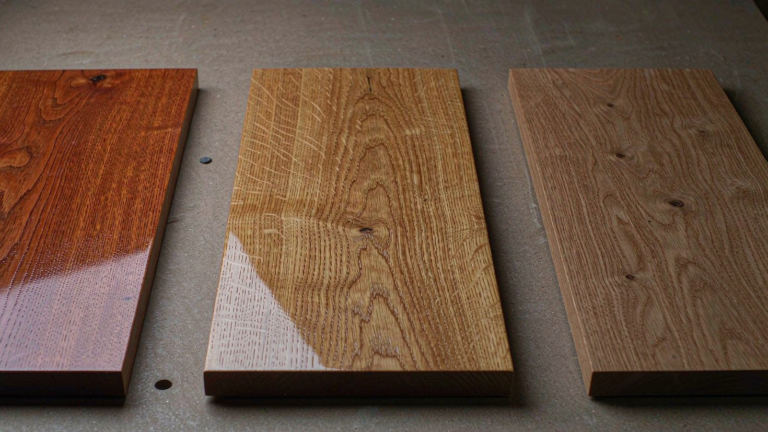
Wood flooring trend for 2026: Wider planks (7-9 inches), natural matte finishes, and mixed-width patterns that suggest authenticity over perfection.
Wall Treatments: Quiet Depth
Quiet luxury walls achieve interest through texture and tonal variation rather than bold patterns.
Recommended approaches:
– Matte paint: Eggshell or flat finishes that absorb light
– Limewash: Subtle movement and natural texture
– Wood paneling: Shiplap or tongue-and-groove in neutral stains
– Tactile plaster: Venetian plaster with subtle sheen variations
– Natural stone: Slate or limestone accents on focal walls
What to avoid:
– High-gloss finishes that create visual competition
– Bold wallpaper patterns that dominate
– Faux finishes that read as manufactured
– Accent walls that fragment the space
Room-by-Room Quiet Luxury Application
Living Room: The Social Heart
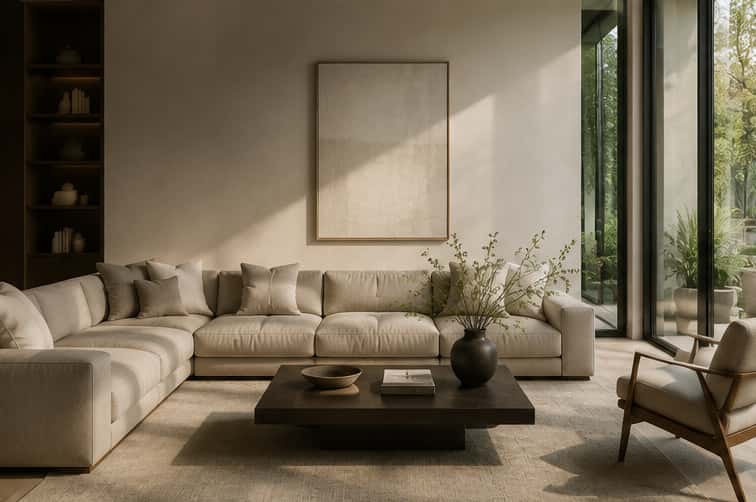
The living room in quiet luxury design emphasizes comfort and conversation over visual display.
Key elements:
– Substantial sofa (8-10 feet for larger rooms) in neutral performance fabric
– Coffee table in natural stone, solid wood, or lacquered wood
– Side tables with substance—not delicate legs
– Floor lamp(s) with fabric or paper shades for warm diffusion
– Bookshelf with curated, uncrowded arrangement
– Area rug with natural fibers (wool, sisal, jute)
Layout principle: Create conversation zones with furniture facing each other, not all oriented to a television.
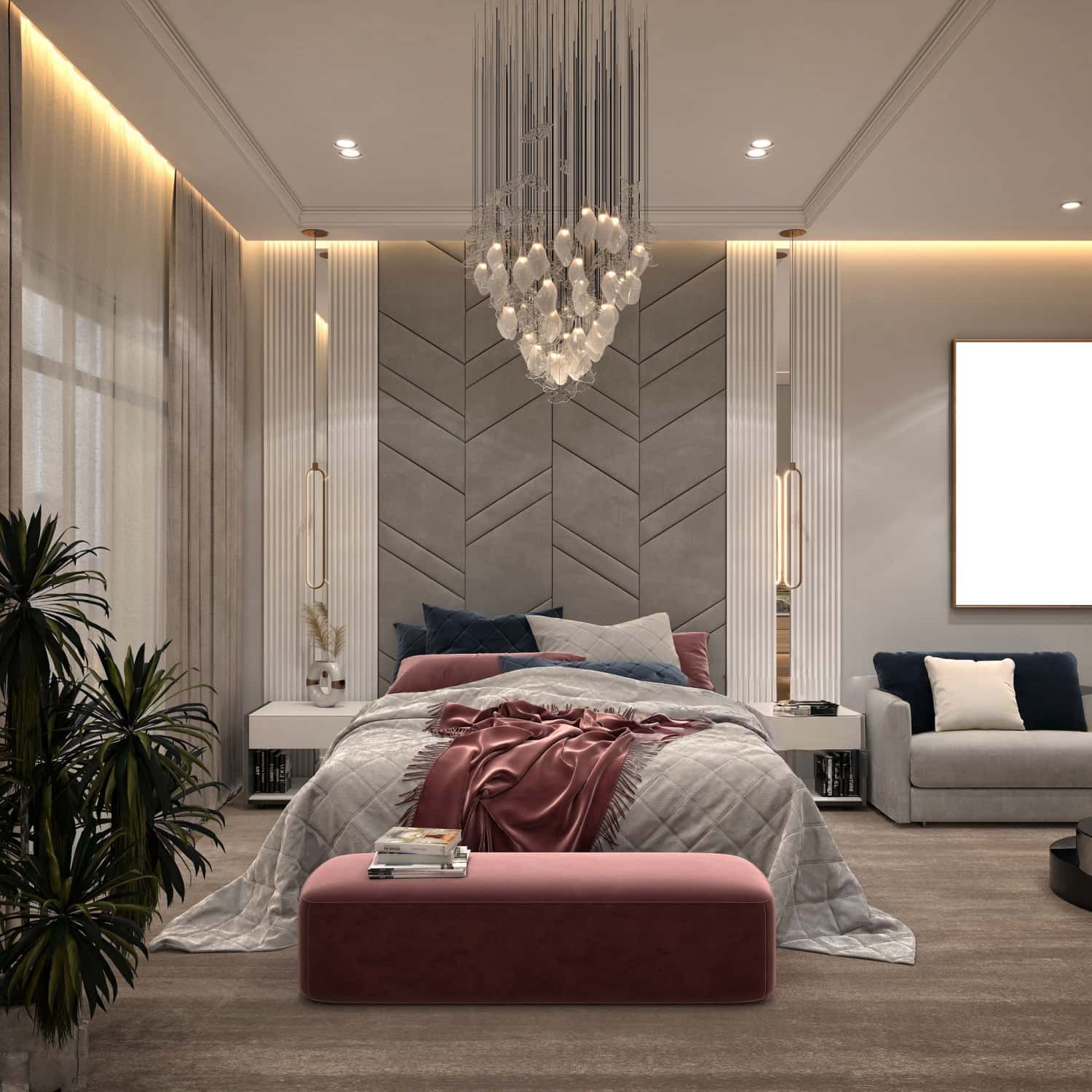
Master Bedroom: Sanctuary Restraint
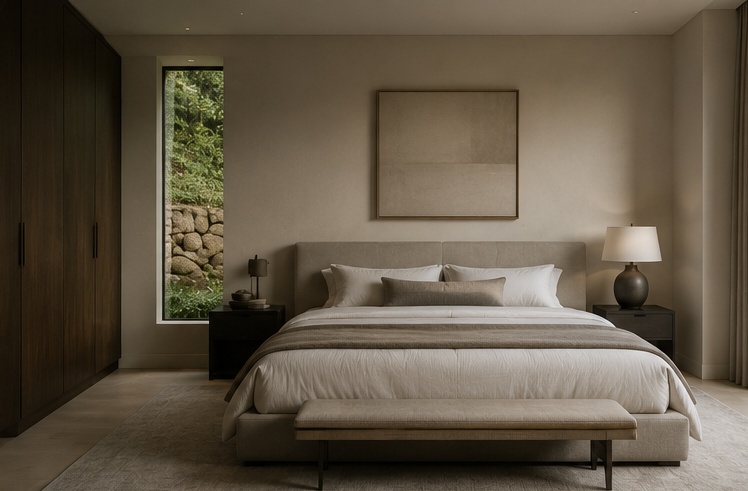
The bedroom should feel like a private retreat—quiet, calm, and deeply comfortable.
| Element | Specification | Rationale |
| Platform bed | Low profile, upholstered headboard | Foundation without bulk |
| Bedding | High thread count (300+), natural fibers | Daily tactile luxury |
| Window treatment | Floor-length linen, roman shades | Light control without heaviness |
| Lighting | Dimmable bedside, no overhead | Adjustable intimacy |
| Seating | Small reading chair or bench | Function without encroachment |
Color temperature: Keep bedroom colors cooler or more neutral than other rooms—blues, grays, and sage greens promote rest.
Kitchen and Dining: Functional Elegance
Quiet luxury kitchens prioritize quality materials and thoughtful organization over appliance quantity or visual complexity.
Material priorities:
– Natural stone countertops (quartzite, marble, soapstone)
– Solid wood or slab-door cabinetry
– Unlacquered brass or matte black hardware
– Statement range hood in natural material
– Open shelving with curated display
The “hidden luxury” principle: appliances that integrate seamlessly, organization systems that keep surfaces clear, and materials that improve with use rather than showing wear.
Home Office: Productive Calm
The home office in quiet luxury design supports focus without visual distraction.
Design elements:
– Substantial desk (not minimalist glass/steel)
– Quality leather or upholstered desk chair
– Natural light with blackout capability
– Built-in or freestanding shelving with books and objects
– Task lighting with warm temperature
– Acoustic considerations (rugs, curtains, panels)
Technology integration: Hide cords, use cable management, select equipment that fits the aesthetic.
Common Quiet Luxury Mistakes to Avoid
Mistake 1: Conflating Expensive with Elegant
Problem: Buying items with visible luxury branding or obvious “expensive” signals.
Reality: Quiet luxury is characterized by absence of obvious markers. A well-made linen duvet and a logo-emblazoned silk set may cost similarly—but one embodies quiet luxury principles.
Mistake 2: Achieving Sterility Instead of Calm
Problem: Over-editing until the space feels cold or unwelcoming.
Solution: Inject warmth through natural materials that age, personal objects with meaningful stories, layered textiles in varied textures, warm color temperatures in lighting, and living elements (plants, flowers, natural objects).
Mistake 3: Forgetting Scale and Proportion
Problem: Furniture that doesn’t relate to room dimensions or human scale.
Solution: Measure spaces before purchasing. A massive sofa in a small apartment creates discomfort; delicate pieces in a grand room read as insufficient. Quiet luxury requires appropriate scale.
Mistake 4: Neglecting Craftsmanship Details
Problem: Focusing on aesthetics without checking construction quality.
What to examine:
– Joint construction in wood furniture
– Upholstery frame materials (kiln-dried hardwood, not particleboard)
– Hardware quality (solid metal, not plated plastic)
– Finish application (even, no runs or sags)
– Seam quality in upholstery
Frequently Asked Questions
What defines quiet luxury design?
Quiet luxury design is characterized by restraint, authenticity, and timelessness. It emphasizes quality materials, craftsmanship, and thoughtful design over obvious markers of expense or trendy aesthetics. The goal is creating spaces that feel collected, personal, and genuinely comfortable rather than decorated to impress.
How do I incorporate quiet luxury on a budget?
Quiet luxury prioritizes fewer, better pieces over quantity. Start with foundational items: a quality sofa, a solid wood dining table, good bedding. Add textiles (throws, cushions) for texture. Invest in lighting—it transforms spaces at any budget. Avoid fast furniture and trend-driven pieces; instead, build gradually with items that will last.
Is quiet luxury the same as minimalism?
No. Minimalism removes objects and visual elements for simplicity’s sake. Quiet luxury edits while maintaining warmth, texture, and personality. A quiet luxury room may have significant visual interest—it simply achieves that interest through subtler means than maximalist design. Think “edited warmth” rather than “bare austerity.”
What colors work best in quiet luxury design?
Quiet luxury centers on neutral palettes with tonal depth: warm whites, tans, taupes, grays, and earth tones. Accents come from nature-inspired muted colors—sage green, dusty blue, terracotta. The key is varying value (lightness/darkness) and texture within a restricted palette rather than using many hues.
How do I add personality to a quiet luxury space?
Personality in quiet luxury comes from curated collections with personal meaning, natural variations (stone with unique veining, wood with natural edges, handmade ceramics), textile layering, warm lighting at multiple heights, living elements, and craftsmanship details. The goal is authenticity—spaces that feel like they were built over time by someone with genuine taste.
Conclusion
Quiet luxury design is not a trend to follow—it’s a mindset to adopt. It asks us to slow down, to consider quality over quantity, and to find beauty in restraint.
The principles are universal: invest in what matters, edit what doesn’t, let materials and craftsmanship speak, and create spaces that feel genuinely lived-in and personal.
What quiet luxury is not is a budget category or an aesthetic box. It’s a commitment to thoughtful consumption and design that respects both your resources and your space.
At Fenmi Casa, we specialize in creating bespoke furniture pieces that embody quiet luxury principles—custom designs built with artisan craftsmanship in our Foshan workshop, shipped worldwide for your project. Whether you need a statement sofa, a custom dining table, or a complete villa furnishing package, we work with designers and homeowners to realize spaces that exemplify understated elegance.Next step: Contact our design team to discuss how we can support your quiet luxury project, or explore our custom furniture capabilities to learn more about working with Fenmi Casa.