
Key Takeaways
- 65-70% of a custom sofa’s price sits in three invisible zones: frame joinery, suspension type, and cushion construction — not the fabric you can see and touch.
- A kiln-dried hardwood frame (8-12% moisture) costs 3-4x more than green or engineered lumber, yet adds 5-8 years of rattle-free service life.
- Hand-tied 8-way suspension takes 6-10 labor hours per sofa; webbing takes 20 minutes. That labor gap alone explains $800-1,500 of price difference.
- Fabric pricing scales 4-6x between retail-grade polyester and performance bouclé with ≥50,000 Martindale cycles — identical patterns, radically different lifespans.
- The same workshop can produce a $3,000 and a $12,000 sofa; the difference is what the specification sheet says, not where it was made.
Introduction: The Quote That Started This Investigation
Last spring a villa client sent us two quotations for what looked like the same 3-seater. Same dimensions, same “grey fabric,” same delivery window. One was $3,180, the other $11,750. She asked which one was “real.”
After 12 years sourcing custom upholstery for residential projects, my answer was: both are real, and neither tells you anything on its own. The price of a custom sofa is a stack of engineering decisions — most of which never appear in a product photo. This guide breaks that stack down, layer by layer, so you can read a quotation the way a furniture engineer reads it.
1. The Frame: Where the First $2,000 Lives or Dies
Lumber species and moisture content
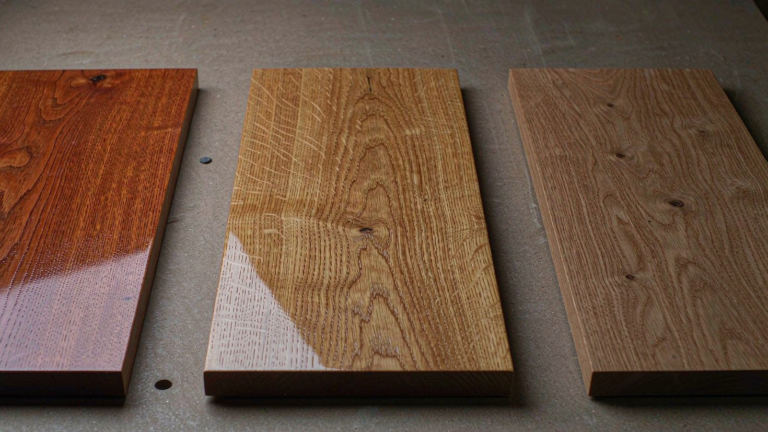
Kiln-dried hardwood is the single biggest hidden cost driver. Properly kiln-dried beech, birch, or maple — dried to 8-12% moisture and kept in a humidity-controlled room before cutting — resists warping for decades. Green lumber or undried softwood can begin twisting within 18 months in a heated villa, loosening every joint it touches.
| Frame Material | Typical Cost Impact | Expected Rattle-Free Life | Warping Risk |
| Kiln-dried hardwood (beech/birch) | +$450-900 per sofa | 15-25 years | Low |
| Kiln-dried engineered plywood | +$250-500 | 10-15 years | Low-medium |
| Green/undried mixed lumber | Baseline | 3-6 years | High |
| Particleboard/MDF core | -$200-400 | 2-4 years | Very high |
Joinery: the labor multiplier
A mortise-and-tenon or double-doweled frame with corner blocks takes a skilled framer 3-5 hours. A stapled butt-joint frame takes under one hour. Stapled frames pass a showroom sit-test; they fail year three of daily family use. When a factory quotes you a frame, ask one question: *”Are the load-bearing joints doweled, or stapled only?”* The answer alone separates the two price tiers.
2. Suspension: The $800-1,500 Gap Nobody Photographs
This is where “identical” sofas diverge hardest. Four systems dominate the market:
| Suspension System | Labor Hours | Comfort Life (sit cycles) | Cost Position |
| 8-way hand-tied coils | 6-10 | 15-20+ years | Premium (+$800-1,500) |
| Sine/no-sag springs | 1-2 | 8-12 years | Mid (+$150-300) |
| Elasticated webbing (quality Pirelli-type) | 0.5 | 6-10 years | Mid-low |
| Generic elastic webbing | 0.3 | 2-4 years | Baseline |
Hand-tying coils to jute twine, eight directions per coil, is a craft that survived because it works: the deck flexes uniformly and never bottoms out. But at prevailing workshop labor rates, those hours cost real money. A $3,000 sofa almost never carries 8-way hand-tied suspension — and after reading the quotation’s spec line, you’ll know instantly.
Rule of thumb from our workshop floor: if a quotation doesn’t name the suspension system at all, assume generic webbing and price accordingly.
3. Cushion Construction: Foam Density Is the Number That Matters
Buyers obsess over “firm vs soft.” Engineers obsess over foam density (lb/ft³), because density — not feel — predicts how fast a cushion dies.
| Cushion Core | Density | Profile Loss Over 5 Years | Price Position |
| HR foam, high density | 2.5-3.0 | 5-10% | +$300-600 |
| Standard polyurethane | 1.8-2.2 | 15-25% | Mid |
| Low-density foam | 1.2-1.5 | 30-50% | Baseline |
| Down-wrapped HR core | 2.2-2.5 core | 5-12% + annual fluffing | +$500-900 |
A $12,000 sofa typically pairs a 2.8 lb/ft³ HR core with a down-and-feather wrap — the 2026 luxury standard. A $3,000 sofa typically carries 1.8 lb/ft³ foam that will flatten visibly inside four years of daily use. The fabric looks the same in photos. The sitting experience diverges after month 14.
4. Fabric: The Visible 25% That Buyers Negotiate First (and Shouldn’t)
Fabric is the line item everyone scrutinizes, yet it accounts for only 20-25% of total cost. The real variables:
- Performance rating: residential-grade (<25,000 Martindale) vs contract-grade bouclé or wool blends (50,000-100,000+ cycles). Price scales 4-6x.
- Pattern matching: a large repeat pattern can waste 25-35% of fabric yardage. Stripes and geometrics demand skilled cutting — more labor hours.
- Finish chemistry: stain-resistant and low-VOC finishes add $8-15 per meter but change nothing visually.
| Fabric Tier | Martindale Cycles | Cost per Meter | Sensible Use |
| Retail polyester blend | 15-25,000 | $8-18 | Guest rooms, low use |
| Mid wool blend | 30-45,000 | $25-45 | Family rooms |
| Performance bouclé | 50,000+ | $45-90 | Primary living spaces |
| Virgin wool + silk accents | 60,000+ | $90-200 | Statement pieces |
5. The Labor and Overhead Layers
Beyond materials, three cost layers explain the remaining gap:
1. Craft hours: a fully custom piece consumes 40-80 workshop hours vs 8-15 for a production run. At loaded labor rates, this is often the largest single line item.
2. One-off engineering: patterns, cutting templates, and jig setup for a single piece are amortized over one sofa instead of five hundred.
3. Quality control depth: compression-cycle testing, frame inspection before upholstering (invisible after), and finish checks at each gate. Cheap workshops upholster over defects; premium workshops can’t, because their warranty depends on catching them.
6. Reading Your Next Quotation: A 5-Line Decoder
When the next quote lands, check these five lines before looking at the total:
| Quotation Line | What $12,000 Looks Like | What $3,000 Looks Like |
| Frame | Kiln-dried beech, doweled + corner blocks | “Solid wood,” stapled |
| Suspension | 8-way hand-tied coils | Unspecified webbing |
| Cushion | 2.5+ lb/ft³ HR, down wrap | “High-density foam” (unnamed) |
| Fabric | Named mill, 50,000+ Martindale | “Imported fabric” |
| Warranty | 10-year frame, 5-year cushion | 1-year general |
If all five lines are named and specific, the price is defensible. If all five are vague adjectives, you are paying for photography, not engineering.
FAQ
Q: Is a $12,000 sofa always better than a $3,000 one?
No. A well-specified $4,500 sofa with a doweled kiln-dried frame, sine springs, and 2.4 lb/ft³ foam can outlast a badly engineered $8,000 piece whose budget went into brand marketing. Judge the spec sheet, not the price tag.
Q: How much should I budget for a quality custom 3-seater in 2026?
For a primary-use family room piece with the five specification lines above filled in properly, our project data places defensible pricing at $5,500-9,000 for the Western market and meaningfully lower for direct custom manufacturing with factory oversight.
Q: Can I upgrade only the cushions on an existing sofa?
Often yes — replacing 1.8 lb/ft³ cores with 2.6 lb/ft³ HR foam plus a down wrap typically costs $400-900 and buys 5-8 years. It only makes sense if the frame and suspension are still sound; have the frame inspected first.
Q: Why do showrooms push fabric upgrades so hard?
Because fabric is the upsell customers understand. Suspension and foam upgrades deliver more longevity per dollar, but they’re invisible — which is exactly why this guide exists.
Q: Do “identical” designs from the same factory ever differ 4x in price?
Yes, and it’s legitimate. We’ve run the same frame design at two specification tiers in one production month; the labor and material deltas alone produced a 3.8x spread before margin.