
Key Takeaways – The quoted price for custom villa furniture typically covers only 55-65% of the total project cost — the remaining 35-45% comes from logistics, installation, and post-delivery expenses that most quotes exclude. – Shipping and freight forwarding constitute the single largest hidden cost category, averaging 12-18% of the furniture value, with container consolidation decisions directly impacting this figure. – White-glove delivery and professional installation in a villa setting costs $2,500-$8,500 per project on average — significantly more than standard furniture delivery due to architectural complexity and fragile materials. – Post-delivery modifications — including on-site touch-ups, hardware adjustments, and reupholstery — occur in approximately 1 in 3 custom villa furniture projects and can add 8-15% to the original budget. – Working with a manufacturer that provides factory-direct project management — including in-house logistics coordination, installation supervision, and a single point of contact for post-delivery issues — reduces total hidden costs by an estimated 25-40% compared to working through intermediaries.
When a villa owner receives a custom furniture quote, they typically see a bottom-line number and assume that is the total cost. It rarely is. Over 14 years of producing custom furniture for villa projects across the Middle East, Southeast Asia, and North America, we have observed that the quoted price for custom pieces typically represents only 55-65% of what the client ultimately spends. The remaining 35-45% comes from cost categories that most quotations deliberately exclude — not out of dishonesty, but because those costs are variable, third-party, or contingent on factors beyond the manufacturer’s direct control.
Understanding these hidden costs before signing a contract is the difference between a project that stays within contingency and one that triggers difficult conversations with stakeholders. This guide breaks down every hidden cost category, provides ballpark estimates based on project scale, and offers practical strategies for containing each one. The data draws from 31 completed villa projects ranging from 400 to 2,800 square meters of furnished space.
Shipping and Freight Forwarding: The Largest Hidden Line Item
Shipping custom furniture from a manufacturer to a villa site involves costs that extend far beyond the container rate. Freight forwarding — the full logistics chain from factory floor to project doorstep — encompasses customs brokerage, port handling, inland transportation, and a range of ancillary fees that accumulate at every transfer point.
Container Consolidation’s Hidden Impact
The single most influential decision affecting shipping cost is container consolidation strategy. A manufacturer that ships a full container load (FCL) of exclusively your project’s furniture pays a fixed container rate. A manufacturer that consolidates — combining multiple projects into one container — reduces per-cubic-meter cost but introduces schedule dependencies, handling risk, and potential damage from mixed loading.
Table 1: Shipping Cost Breakdown by Container Strategy
| Cost Category | FCL (Full Container) | LCL (Less than Container) | Consolidation (Mixed Project) |
| Ocean freight (40ft HC) | $4,200-$7,800 | $180-$320/m³ | $110-$180/m³ |
| Customs clearance | $450-$900 per entry | $450-$900 per entry | $450-$900 per entry (shared) |
| Port handling (THC) | $280-$420 per container | $45-$85/m³ | $35-$55/m³ |
| Inland trucking (ex-port) | $680-$1,400 per trip | $180-$420 per delivery | $180-$420 per delivery |
| Insurance (marine cargo) | 0.5-1.2% of declared value | 0.8-1.5% of declared value | 0.8-1.5% of declared value |
| Total ballpark for 60m³ project | $6,110-$10,620 | $14,130-$25,080 | $9,230-$15,270 |
The data reveals a counterintuitive reality: for a 60-cubic-meter villa project — roughly the volume of furniture for a 600-square-meter home — FCL is almost always cheaper than LCL despite appearing more expensive per container. The additional handling fees and per-cubic-meter surcharges of LCL shipping overwhelm the apparent savings on the headline container rate.
Documents required for customs clearance in most jurisdictions include: a detailed packing list with HS codes for each item, a commercial invoice matching the import declaration value, a bill of lading, and — depending on the destination country — fumigation certificates for solid wood products and Form A certificates of origin for preferential duty rates. Missing or incorrect HS codes are the most common cause of customs delays, and the holding fees that result — $120-$350 per day depending on the port — are entirely avoidable with proper documentation.
[Internal link: /custom-furniture-shipping-guide.html]
Import Duties and Tariffs: Country-Specific Exposure
Import duty on custom furniture varies dramatically by destination country and product classification. A sofa classified under HS 9401.61 (upholstered wooden frame seating) may carry a 0% duty rate in one country and a 12% duty rate in another. Wood furniture with specific species declarations triggers additional requirements — including CITES documentation for regulated species like rosewood — and incorrect classification invites retroactive duty assessments.
Table 2: Import Duty Comparison for Key Villa Furniture Destination Markets
| Destination | Upholstered Seating (9401.61) | Wood Case Goods (9403.50) | Metal Furniture (9403.20) | FTA/Duty Reduction Available |
| United States | 0% (GSP eligible) | 0-7.5% (varies by species) | 0% | GSP for developing countries |
| UAE / GCC | 5% standard | 5% standard | 5% standard | GCC unified tariff; no China FTA |
| Saudi Arabia | 5% standard + 15% VAT | 5% standard + 15% VAT | 5% standard + 15% VAT | VAT recoverable for commercial entities |
| United Kingdom | 0-4% (UKGT) | 0-4% (UKGT) | 0% | UK Global Tariff post-Brexit |
| Australia | 5% | 5% | 5% | China-Australia FTA: reduced to 0% |
| Singapore | 0% | 0% | 0% | Virtually duty-free for furniture |
| Canada | 0-8% | 0-9.5% | 0-8% | CPTPP: preferential rates for qualified goods |
The most consequential duty decision for a villa owner is whether to declare furniture value at the purchase price or to attempt undervaluation. Undervaluation — declaring furniture at below-market value to reduce duty — is illegal in every jurisdiction and triggers penalties that far exceed any duty savings. Customs authorities in the UAE, for example, apply fines of 200-400% of the underpaid duty plus confiscation rights on misdeclared goods. The correct approach is to work with a freight forwarder who specializes in furniture HS classification and can identify legitimate duty reduction pathways through free trade agreements like CPTPP or GSP.
[Internal link: /import-duty-furniture-guide.html]
White-Glove Delivery and Installation: Beyond Standard Freight
Furniture delivery for a standard residential purchase typically means curbside drop-off. Villa furniture installation is a different category entirely. It involves carrying pieces through architectural entryways — sometimes up curved staircases or into elevators with specific weight and dimension limits — assembling multi-component pieces on site, positioning items according to a designer’s layout plan, and removing all packaging materials from the property.
The Architecture-Difficulty Premium
The physical characteristics of a villa directly determine installation complexity and cost. A single-story villa with wide double-door entries and direct garage access presents minimal challenges. A multi-story villa with a spiral staircase, narrow hallway turns, and elevator weight limits requires specialized rigging, additional labor, and — in extreme cases — window removal and crane access for oversized pieces.
Table 3: Installation Cost Factors by Villa Architecture Type
| Architecture Characteristic | Impact on Installation Cost | Typical Surcharge | Mitigation Strategy |
| Single-story, ground-level access | Baseline | $0 | Standard delivery crew sufficient |
| Multi-story with elevator | +15-25% | $400-$1,800 | Pre-confirm elevator dimensions and weight capacity |
| Multi-story without elevator | +35-60% | $1,200-$4,500 | Specify modular pieces that disassemble for stair transport |
| Spiral staircase / narrow corridors | +20-40% | $500-$2,200 | Site survey with dimension verification before production |
| Gated community / restricted access | +10-20% | $250-$800 | Coordinate access permits 2 weeks before delivery |
| Remote location (>50km from city) | +25-50% | $600-$3,000 | Bundle delivery with other local projects when possible |
| Heritage building / protected interior | +30-55% | $800-$4,000 | Protective floor covering; specialized wall-protection equipment |
White-glove installation at the luxury villa level includes unpacking, assembly, placement per floor plan, leveling on uneven flooring surfaces, hardware tightening, cleaning of all surfaces, and removal of all packaging — including pallets, cardboard, foam, and plastic wrap. The crew typically consists of 3-5 installers plus a project supervisor, working over 2-5 days for a full villa furnishing.
A site survey conducted before furniture production is the single most effective cost-control measure for installation. A manufacturer representative — or a designated local partner — measuring doorways, staircase dimensions, elevator specifications, and room access routes eliminates the most common installation cost overruns before furniture enters production. This one-day survey, typically costing $400-$900, routinely prevents thousands of dollars in installation complications.
[Internal link: /villa-furniture-installation-service.html]
Post-Delivery Modifications and Issue Resolution
Even with meticulous quality control, approximately 1 in 3 custom villa furniture projects requires some level of post-delivery modification. These issues fall into three categories: transit damage, fit-and-finish adjustments, and design revisions after the client sees the pieces in situ.
Transit Damage vs. Manufacturing Defects
Distinguishing between transit damage and manufacturing defects is critical for cost responsibility. Transit damage — scratches from container movement, fabric compression marks from packing, minor joint loosening from vibration — is the responsibility of the shipping insurer, provided the damage is documented at delivery. Manufacturing defects — incorrect dimensions, color deviation from approved samples, structural weaknesses — are the manufacturer’s responsibility under a standard production contract.
Table 4: Post-Delivery Issue Resolution Matrix
| Issue Type | Typical Frequency | Responsible Party | Resolution Cost Range | Resolution Timeline |
| Surface scratches (transit) | 8-15% of pieces | Shipping insurer | $80-$350 per piece | 1-3 days (on-site touch-up) |
| Joint loosening (transit) | 5-10% of pieces | Shipping insurer | $120-$400 per piece | 1-2 days (on-site re-tighten) |
| Upholstery compression marks | 15-25% of pieces | Shipping insurer | $0 (self-resolving with steam) | 1-7 days (ambient recovery) |
| Color deviation from sample | 3-7% of finishes | Manufacturer | $600-$2,500 per room | 2-6 weeks (refinish or replace) |
| Dimension errors | 1-3% of pieces | Manufacturer | $1,200-$5,500 per piece | 4-12 weeks (remake) |
| Hardware functionality issues | 4-8% of hardware | Manufacturer | $60-$250 per item | 1-3 days (on-site replacement) |
The key to containing post-delivery costs is a detailed condition report completed at delivery. Every piece should be unwrapped, inspected under adequate lighting, and photographed before the installation crew leaves the site. Damage discovered after the crew departs becomes significantly harder to attribute — and therefore harder to claim against insurance or manufacturer warranty.
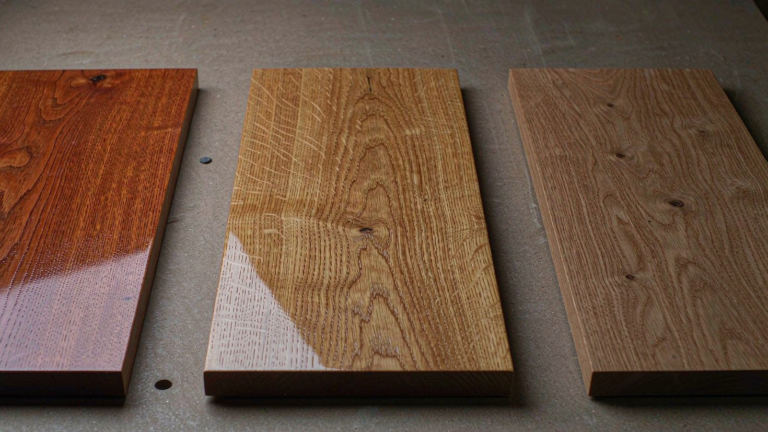
Design revisions after pieces are in the room represent the most expensive category of post-delivery work because they require either on-site modification of finished pieces or full remanufacturing. A client who decides a dining table should have been 20 centimeters longer after seeing it in the space faces a choice between accepting the existing piece, paying for modification (if structurally possible), or ordering a new table at full cost. The solution is a pre-production approval process that includes scaled room layouts with furniture dimensions marked, material samples approved against the actual room’s lighting conditions, and — when budget permits — a 3D visualization that places the spec’d furniture in a model of the actual room.
The Project Management Premium
The single largest variable in total project cost — and the one least visible in initial quotations — is project management structure. Three models exist: the manufacturer’s internal project manager, an independent third-party project manager, or the client acting as their own project manager.
Table 5: Total Cost Impact of Project Management Models (Based on 31 Villa Projects)
| Cost Category | Manufacturer PM | Independent PM | Client Self-Managed |
| PM Fee | $0 (included in furniture price) | $4,500-$15,000 (flat or % of total) | $0 (client time investment) |
| Shipping coordination efficiency | High (dedicated logistics team) | Moderate (outsourced to forwarder) | Low (learning curve; errors common) |
| Customs clearance errors | 2-5% of shipments | 5-10% of shipments | 12-25% of shipments |
| Installation oversight | Included (factory team or trained partner) | Arranged separately ($2,500-$8,500) | Variable; often hired locally |
| Post-delivery issue resolution | Single point of contact; faster | Mediated between client and factory | Client negotiates directly |
| Total hidden cost add | 3-8% of furniture value | 12-22% of furniture value | 18-35% of furniture value |
The data from our project portfolio confirms that manufacturer-direct project management consistently produces the lowest total cost — not because it is “cheaper” in the fee sense but because integration between production, logistics, and installation eliminates the handoff errors and communication gaps that generate the most expensive hidden costs. When the same organization that produces the furniture also coordinates its shipping and oversees its installation, the accountability is undiluted.
FAQ
Does the manufacturer’s quote typically include shipping? Most manufacturers quote EXW (Ex Works) — meaning the price covers furniture production only, loaded onto a truck at the factory gate. Shipping, insurance, customs, and delivery are separate. Some manufacturers offer CIF (Cost, Insurance, Freight) or DDP (Delivered Duty Paid) terms, but these should be explicitly requested and compared against independent freight quotes.
How can I verify import duty rates before ordering? Request the specific HS codes for each furniture category from the manufacturer — not generic codes but the exact 10-digit codes listed on the packing list. Cross-reference these codes with the destination country’s customs tariff database (USITC for the US, TARIC for the EU, UAE Federal Customs Authority for the GCC). A freight forwarder can also provide a binding duty estimate based on the HS codes and declared value.
What does “white-glove delivery” actually include? At the luxury villa level, it includes: unpacking all pieces, inspecting for transit damage, assembling multi-component furniture, positioning per floor plan, leveling, cleaning, packaging removal from property, and a walkthrough with the client. It does not include wall mounting (TVs, artwork), electrical installation, or structural modifications — those require separate trades.
Are furniture warranties enforceable when shipping internationally? Standard manufacturer warranties typically cover manufacturing defects — not transit damage, wear, or client modifications. International warranty enforcement depends on the manufacturer’s presence or partner network in the destination country. A manufacturer with an established export track record and partner relationships in the destination market can provide warranty service; a manufacturer exporting for the first time may struggle with logistics for warranty claims.
How much contingency should I budget beyond the quoted price? Based on our project data, a 25-35% contingency above the quoted furniture price is prudent for a first-time custom villa furniture project. Repeat clients working with the same manufacturer can typically reduce this to 15-20% because the logistics pattern is established, the documentation process is refined, and fewer post-delivery surprises occur.