
In 2026, it is impossible to talk about interior design without AI. “One‑click room makeovers” and private AI assistants are everywhere. These tools generate concepts in seconds, and technology moves faster than most of us can follow.
At the same time, interior designers around the world are asking the same question: if AI can generate layouts, color palettes and 3D renders so quickly, will it eventually replace human creativity?
Why CIFF Guangzhou Matters for the Future of Design
To find a real answer, you have to leave the screen and walk into physical space. That is exactly what happens every March at the China International Furniture Fair (CIFF) in Guangzhou, one of the world’s largest furniture and design events. As the fair’s organizers and partners such as BIFMA (the Business and Institutional Furniture Manufacturers Association) set many of the benchmarks for global furniture standards, CIFF has become a key place to understand how technology, manufacturing and design intersect.
Fenmi Furniture is part of that conversation. As an exhibitor at the 57th CIFF Guangzhou, we see firsthand how AI is changing workflows—and why, despite all the hype, the most moving designs are still deeply human.
In 2026, if the topic of interior design is brought up, discussing it without the mention of AI is simply out of the question. From “one-click room makeovers” to going viral with private AI assistants that can create designs within seconds, innovation is happening at a rate that may be outpacing our understanding. However, designers across the globe have one common concern: if AI can create room designs, color schemes, and even 3D renderings at rates faster than the human eye can comprehend, can its power eventually replace human ingenuity?
The only way to get a real answer to this problem, however, is to put down the device and get into the physical realm. This happens every March during the China International Furniture Fair (CIFF) in Guangzhou. This furniture and design convention is one of the largest across the globe. As the organizers and partners, like BIFMA (the Business and Institutional Furniture Manufacturers Association), set many benchmarks for global furniture standards, the event has become a meeting point where technology, manufacturing, and design intersect.
Fenmi Furniture is part of this continuous conversation. By joining the 57th CIFF Guangzhou event, we get to see firsthand the power of AI and why, despite all the hype, the most impactful designs are still very human.

From AI‑Generated Concepts to Real Living Spaces
Generative AI has lowered the entry barrier to visual design. Anyone can type a prompt and receive dozens of concepts for a bedroom or a living room in seconds. For designers, this is both exciting and unsettling. The tools are undeniably powerful: they can explore multiple styles, suggest color combinations, and even approximate materials faster than traditional sketching or 3D modeling.
But there is a gap between an impressive image and a livable home. At CIFF Guangzhou, walking through full‑scale installations makes that gap very clear. Visitors are not just looking at pictures—they are sitting on sofas, touching fabrics, listening to how sound moves through a space and noticing how light changes throughout the day. These experiences remind us that real interior design must answer questions AI cannot yet feel:
- How does a person actually sit, read, talk or rest here?
- How does a surface age over years of use?
- What memories and emotions will this space carry for the people who live in it?
The most memorable exhibitors at CIFF Guangzhou 2026 answer those questions with a strong point of view. Many of them echo a central idea frequently discussed in Chinese coverage of the fair: when AI can generate forms at super‑human speed, the non‑standard, deeply personal part of design becomes even more valuable.
What We Learned from CIFF Guangzhou 2026
Limited Editions and the Value of the Unique
One of the most talked‑about ideas at CIFF comes from brands that treat furniture as collectible design rather than generic product. DAaZ, for example, builds its exhibition around the theme “LIMITED‑EDITION”, highlighting each piece as the crystallization of a specific moment of perception. These objects are not meant to be infinitely reproducible. Their value lies in the story they capture and in the designer’s personal voice. This is something an AI prompt cannot simply generate again.

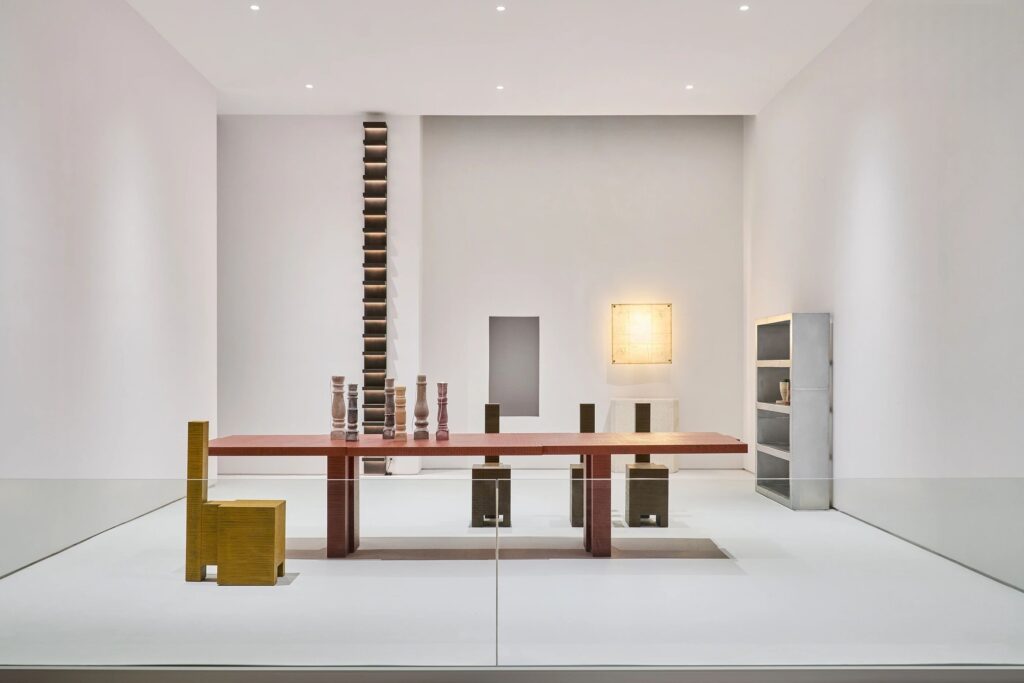
In an age where AI can effortlessly clone aesthetics, true luxury is no longer about adding more decoration; it is about cultivating character. When algorithms can remix any style on demand, uniqueness becomes the core of meaning in design, not a side effect.
At Fenmi, we take a similar view. Our manufacturing heritage allows us to produce at scale, but our goal is not to flood the market with anonymous pieces. Instead, we focus on project‑based solutions and curated collections that can be lived with and cherished in real homes and hotels. In high‑end residences, boutique hotels or serviced apartments, a sofa or chair should feel less like a commodity and more like a companion that grows with the people who use it.
Life as a Scene – Beyond Styles and Trends
Another strong theme at CIFF Guangzhou is the shift from style labels to life scenes. HC28 maison, for instance, summarizes its vision with a simple but powerful line: “life is a scene”. Instead of asking whether a space should be “minimalist” or “luxury”, they construct composite living‑dining‑working scenes—living room plus study, dining plus reception, bedroom plus walk‑in wardrobe—that reflect how people actually blend functions in contemporary homes.
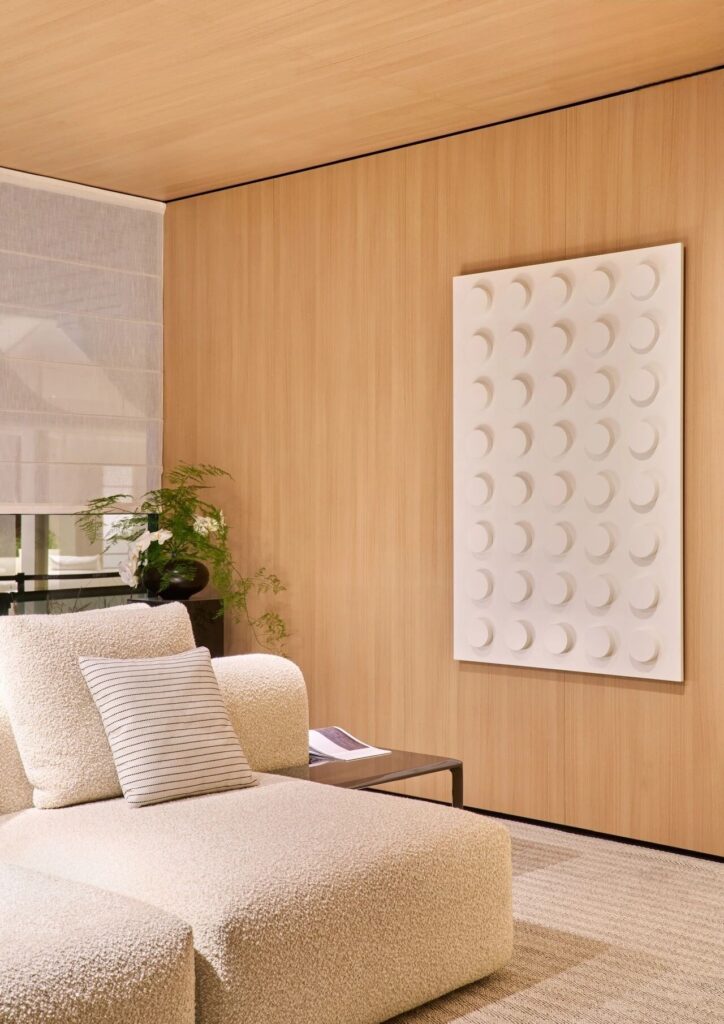
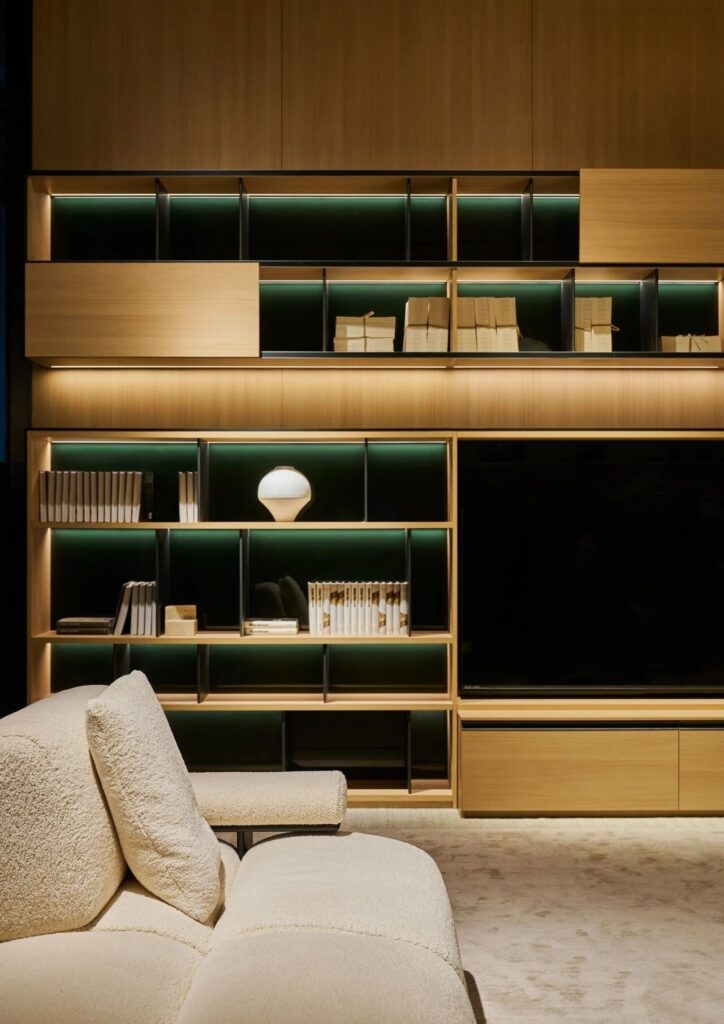
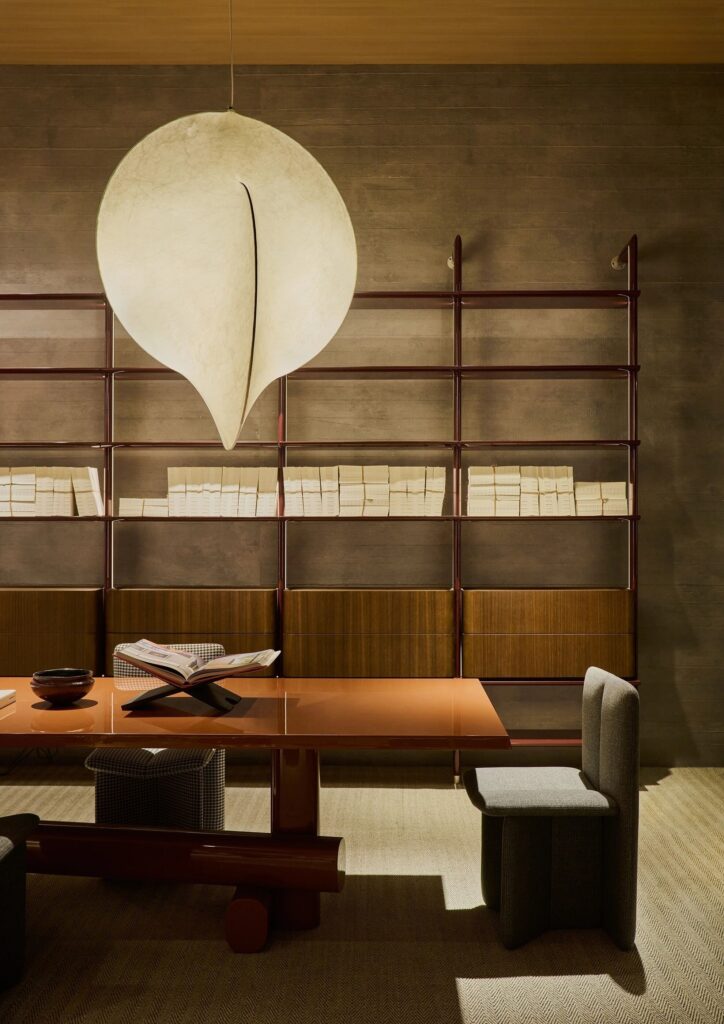
Walking through such an installation feels like walking through a storyboard of daily life: hosting friends, working from home, quiet reading in the evening. Fixed cabinetry sets the order, circulation and rhythm of the space. Movable furniture then adapts to different postures and activities. The design language is calm and elegant, but its focus is not on showing off; it is on making the home truly good to live in, not just good to photograph.
This is exactly where current AI tools fall short. Algorithms can generate thousands of layouts that look reasonable on screen, but they do not know how your body feels when you sit, work or rest. They cannot intuit why some rooms feel safe and others feel exposed. Those are judgments shaped by years of observation and countless conversations with real people.
Fenmi’s work mirrors this scene‑based approach. When we design for a whole villa, a show flat or a serviced apartment, we start from daily rituals: how the family wakes up, cooks, entertains and rests. Our designers then translate those scenarios into coherent packages of furniture, rugs, curtains, lighting and doors/windows, ensuring that what looks good on a plan truly works in life.
Emotional Journeys and the Warmth of Design
Several CIFF exhibitors craft spaces explicitly as emotional journeys. Brands like MEXTRA and MZEN build immersive environments using layered textiles, gentle lighting, subtle scents and curated soundscapes to guide visitors from busyness into calm. Their installations show that design is not only about function or appearance; it is about orchestrating feelings.
These brands lean heavily into cultural context. MEXTRA, for example, draws from Eastern philosophy, calligraphy and the rhythm of traditional art, integrating these influences into contemporary sofas and lounge chairs that reveal their depth over long use. The emotion is not loud or immediate—it grows quietly with time.
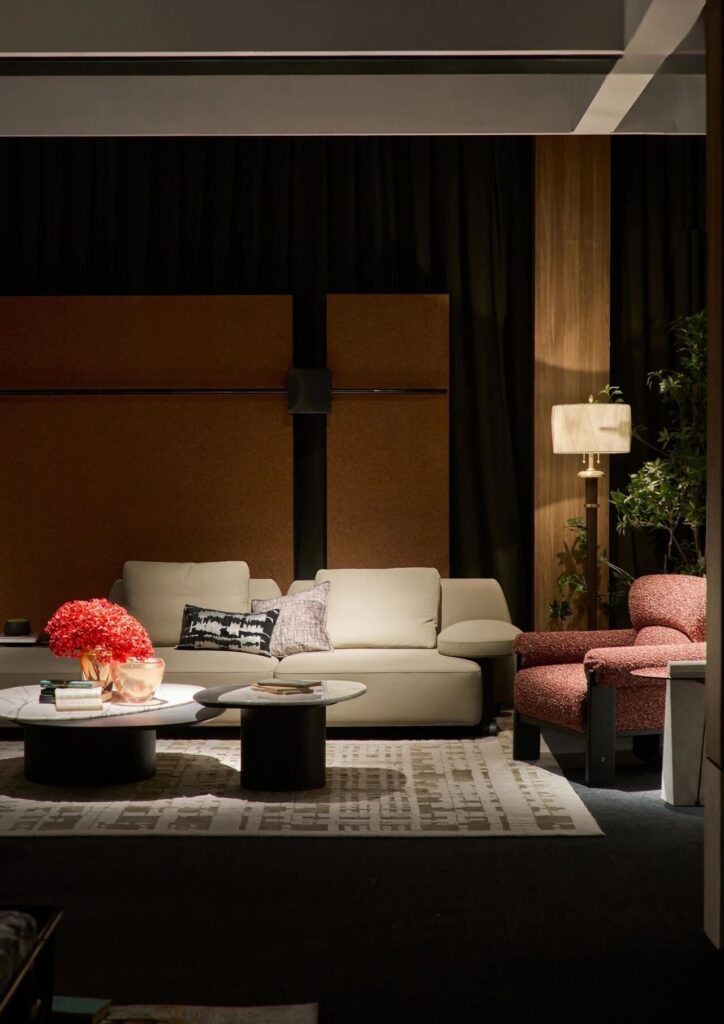
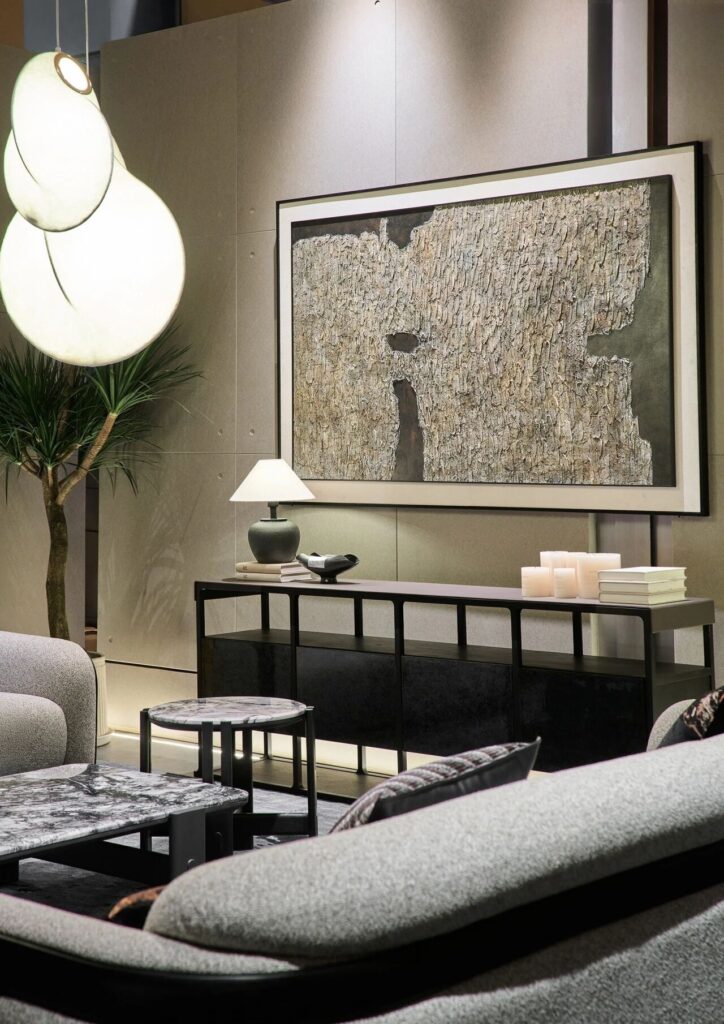
AI can assist in visualizing such spaces, but it does not inherently understand meaning. It can place objects, but it does not know why a certain curve feels like home to someone who grew up with traditional architecture, or why a particular texture might recall childhood memories. That interpretive layer—the translation from culture and memory into form—is where designers shine.
Fenmi embraces this emotional dimension in our projects. Many of our clients arrive with intangible wishes: “We want the space to feel grounding”, “We want warmth without clutter”, or “We want something that speaks of our culture, but in a modern way.” Turning those wishes into coherent furniture selections, finishes and lighting schemes requires empathy as much as technique. It is the kind of work that AI augments but cannot replace.
Exploring Materials, Time and the Beauty of Imperfection
Another striking direction at CIFF Guangzhou focuses on materials and the passage of time. Brands like Jichi (“A Few Feet”) and A2stone push stone, metal, acrylic and wood beyond conventional uses—creating marble tables that drape like fabric, translucent onyx surfaces whose mood changes with the light, and sofas that blend clear acrylic with solid timber beams to evoke poetic imagery.cifffurniturefair+1
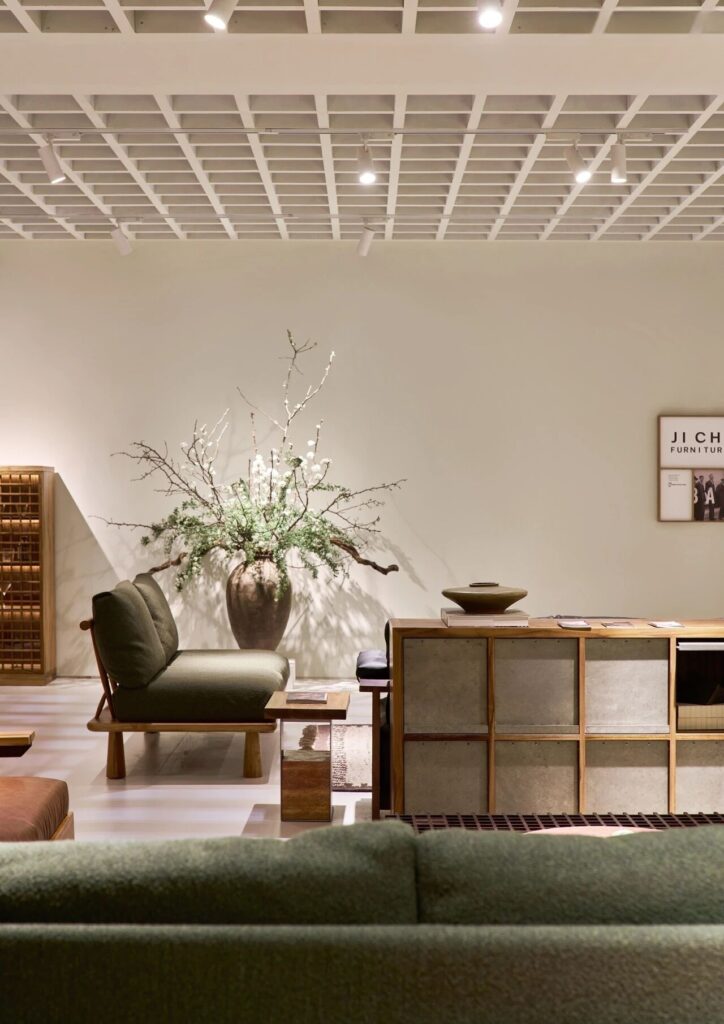
A standout theme is the idea of “growing furniture”: pieces whose color, patina or texture evolves through oxidation or wear, creating a living relationship between object, user and environment. The beauty here lies not in perfection, but in transformation. No rendering, however realistic, can fully predict how such pieces will feel after five or ten years of daily interaction.
Fenmi’s 40‑year manufacturing background makes us particularly sensitive to this dimension. We work with solid woods, veneers, metals, fabrics and leathers whose behavior over time we know intimately—from how they respond to humidity and temperature to how they age under sunlight or heavy use. When we develop products or sourcing strategies for clients, we do not just ask whether something looks impressive today; we ask how it will perform and age tomorrow. AI can simulate surfaces, but only experience can guarantee that a beautiful showroom piece will still feel right years later in a real home or hotel.
AI in Interior Design – Powerful Tool, Not the Protagonist
How AI Helps Interior Designers Today
To be clear, AI is not the enemy of design. Used wisely, it is one of the most helpful tools the industry has ever seen. Recent guides from leading resources such as Hospitality Design (hospitalitydesign.com) and Interior Design magazine (interiordesign.net) show how AI can support everything from early‑stage ideation to visualization in hospitality and residential projects.
Current AI tools can:
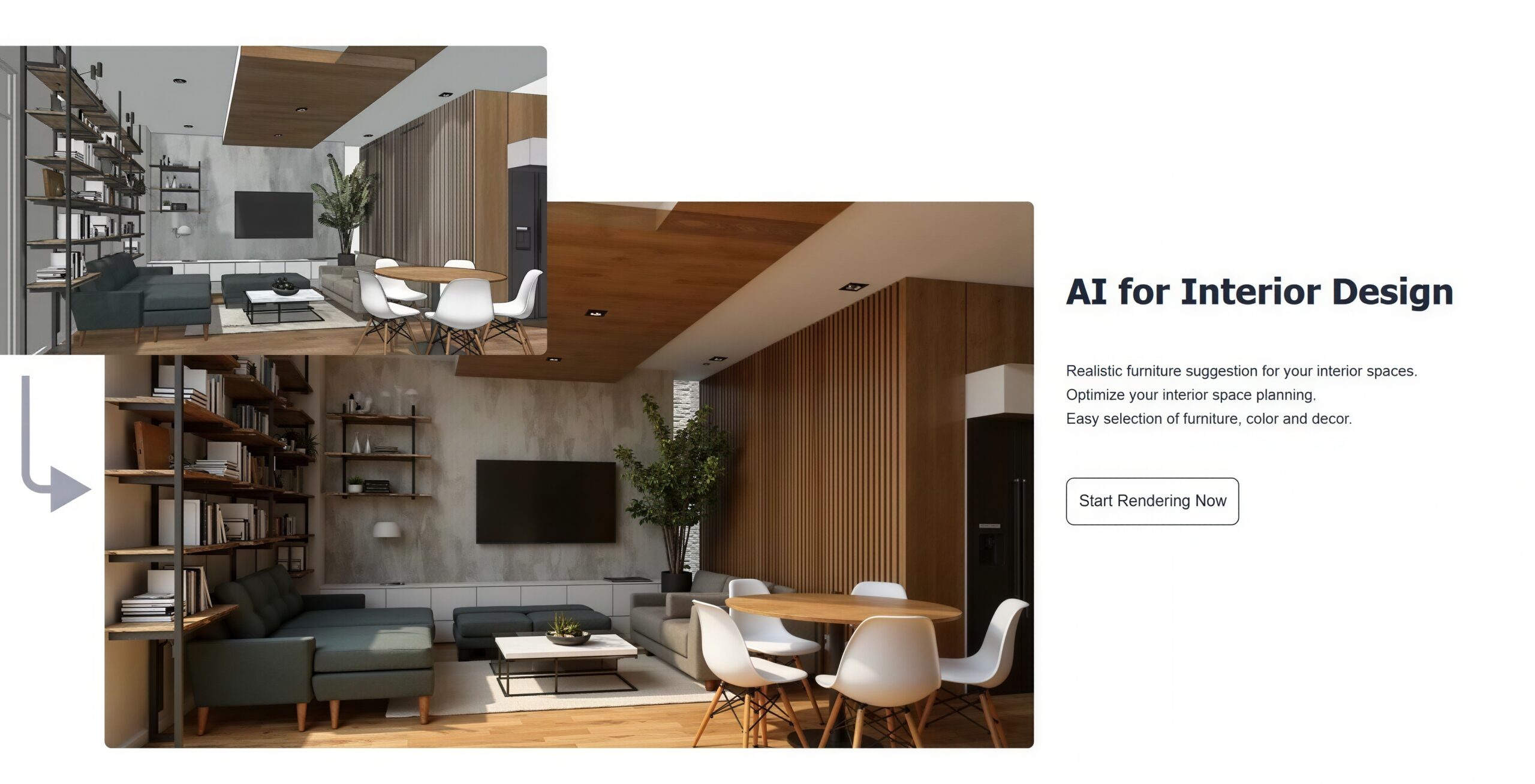
- Turn simple room photos into multiple layout and style options, letting homeowners and designers test ideas rapidly.archivinci+1ation, suggesting color palettes and material combinations consistent with a chosen style.
- Generate photorealistic renders in minutes instead of hours, accelerating client approvals.
- Link concepts to real products, turning inspirational images into purchasable shopping lists.
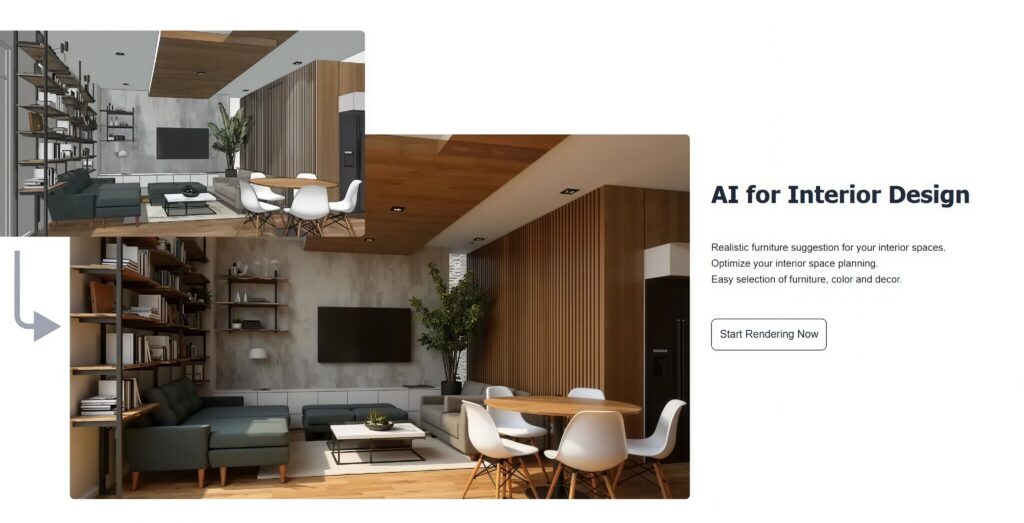
For designers who work with global suppliers, AI also helps bridge distance. It can preview how a Fenmi sofa might look in a European loft. It can also show the same piece in a Middle Eastern villa, or test how a curtain fabric reacts to light in a north‑facing apartment. In a world where projects are often managed remotely, this kind of visualization is extremely valuable.
Why Human Judgment Still Leads the Design Process
However, the same experts are also clear on one point: AI is an assistant, not a replacement. It excels at generating options, but it struggles to decide what is right for a specific human being in a specific context. That decision requires human judgment, which sits at the center of every successful project.
The CMF Trend Lab at CIFF 2026 describes current design trends as “branching” rather than converging, with themes such as Algorithmic Nature, Noise Reduction, Make the Most of Things and Slow Aesthetics. Each branch offers attractive possibilities, but none of them tells you which path to choose for a given person, brand or project. That is where designers—and the manufacturers who work with them—remain essential.finance.
Fenmi at the 57th CIFF Guangzhou – Where AI, Design and Manufacturing Meet
At the 57th China International Furniture Fair, Fenmi Furniture Co., Ltd. presents its latest luxury home furnishings and full‑scene solutions at the Canton Fair Complex in Pazhou, Guangzhou. Our booth focuses on the idea of “Luxury, Redefined”: not just expensive materials, but intelligent combinations of comfort, function and emotion.
Instead of lining up single products on pedestals, we build complete environments: living rooms that balance hospitality and intimacy, bedrooms that integrate smart comfort with serene aesthetics, dining spaces that can switch effortlessly between family meals and formal entertaining. Visitors can walk through these vignettes, sit down, touch surfaces and imagine how the combinations would feel in their own projects.
Each scene is the result of a layered process. Early on, we experiment with AI tools to generate layout variations and material pairings, testing how different woods, metals and fabrics might work together. Once promising directions emerge, our design team evaluates them through the lens of ergonomics, cultural fit and manufacturing feasibility, before our in‑house factory turns concepts into reality. In other words, AI speeds us up, but designers stay in charge.
Fenmi’s presence at CIFF positions us not just as a manufacturer, but as a partner who understands both the creative language of designers and the technical language of production. That dual fluency is essential in a world where ideas travel at the speed of the internet but still need to be built with care.
40 Years of Manufacturing with a Designer‑First Mindset
Fenmi is rooted in a furniture group with over 40 years of manufacturing experience. This history gives us access to advanced production lines, skilled craftsmanship and a robust supply chain for furniture, rugs, curtains, lighting and doors or windows. But more importantly, it teaches us respect—for wood grain, for joinery, for the hand that finishes a surface and for the person who will live with the final piece.
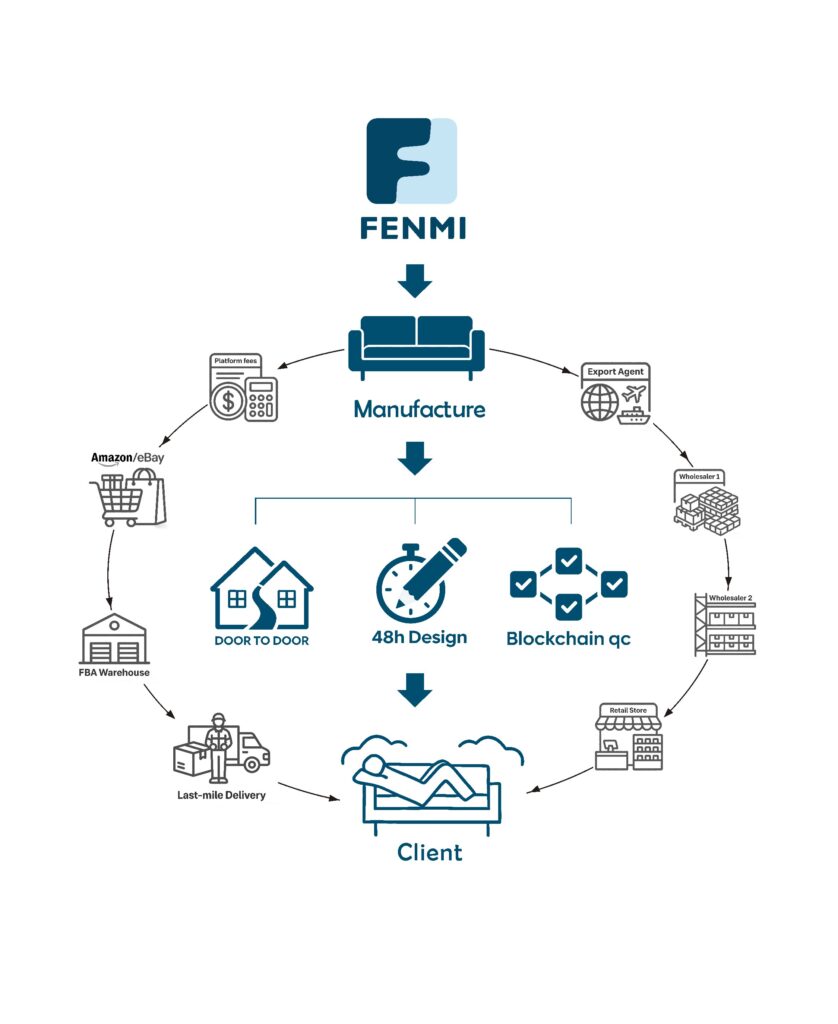
We describe our approach as “door‑to‑door manufacturing”: instead of layers of middlemen, we connect designers and buyers directly to the source. At CIFF and beyond, that means:
- Customizing products and packages for specific projects rather than pushing generic catalogues.
- Supporting OEM/ODM and project procurement with clear technical documentation and quality control.
- Handling logistics so that global partners can focus on their clients instead of on shipping details.
For interior designers, architects and developers, this combination—AI‑assisted agility, human‑centered design and reliable manufacturing—turns CIFF inspiration into tangible results.
Why Global Designers and Buyers Choose Fenmi After CIFF
After walking through pavilion after pavilion at CIFF Guangzhou, visitors often ask the same practical question: among thousands of brands, who can actually help turn these ideas into real, well‑made spaces? Fenmi aims to be one of those clear answers.
Here is why many designers and buyers choose to continue the conversation with us after the fair:
- Scene‑based solutions inspired by the best of CIFF
We study and learn from leading exhibitors—from DAaZ’s limited editions to HC28’s scene‑driven layouts and Meichen’s cultural depth. Then integrate similar principles into our own design language. Our goal is not to copy, but to apply the same respect for life, material and emotion in ways that fit each client’s needs. - AI‑enhanced speed with human curation
Our team uses cutting‑edge AI tools to accelerate ideation and visualization, but final decisions always pass through experienced designers and engineers. This ensures that proposals are both imaginative and buildable, aligning with budgets, codes and long‑term durability.archivinci+2 - One‑stop sourcing across categories
Unlike single‑product brands, Fenmi can coordinate living room, dining, bedroom and outdoor furniture, as well as soft furnishings and architectural elements like doors and windows. This holistic capability keeps projects coherent and reduces the risk of mismatched styles or quality levels. - Door‑to‑door reliability
With factories and logistics partners dedicated to export, we support international designers, distributors and project owners from initial design through production to delivery. That makes us a natural partner for those who discover us at CIFF and want to continue working together afterward. - Proven in exhibition and real projects
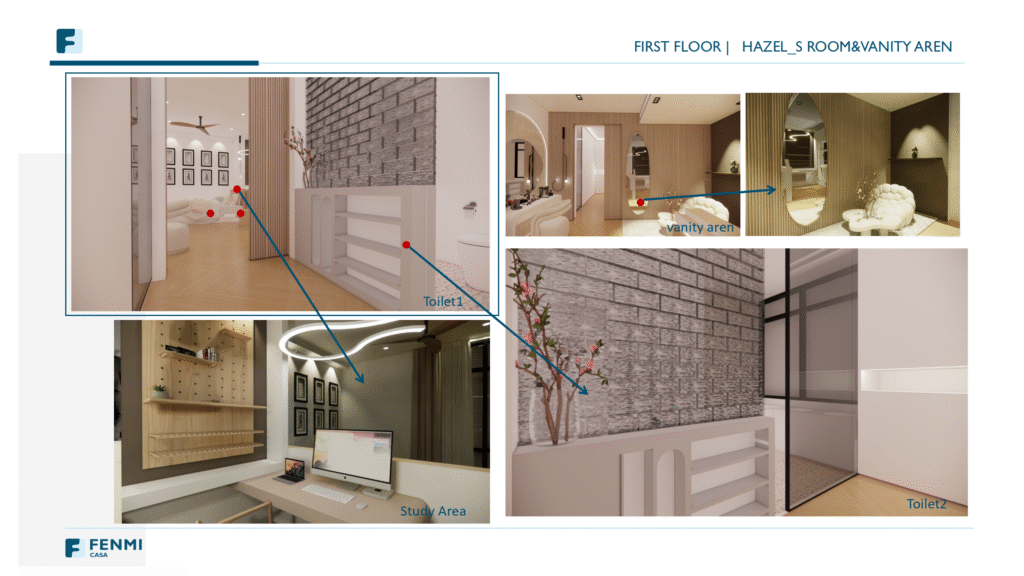
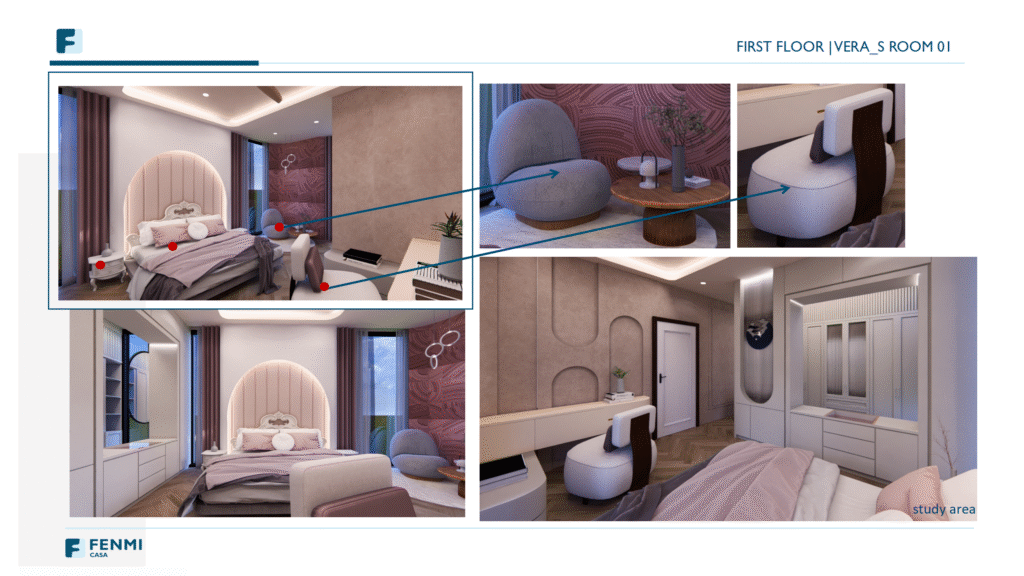
The same attention to detail that visitors experience at our CIFF booth carries over to actual homes, hotels and apartments around the world. CIFF is not a separate “show version” of Fenmi; it is a live snapshot of the solutions we implement for real clients.

For professionals who want to dive deeper into global best practices, resources such as BIFMA for commercial furniture standards, AHLA for hospitality trends and Statista for market data offer additional insight into how the industry is evolving worldwide. Together with what we see every year at CIFF, these sources confirm a simple truth: in the age of AI, the companies that win will be those that combine technology, human‑centered design and reliable manufacturing into one seamless experience.
Looking Ahead – Designing Homes That Still Feel Human in an AI Age
AI will keep evolving. Future tools will generate even more convincing visuals, optimize layouts with tighter constraints and perhaps even predict certain ergonomic or sustainability outcomes. It is reasonable to expect that some routine tasks in design will become increasingly automated.
Yet if the 57th CIFF Guangzhou has shown anything, it is that the heart of design remains stubbornly human. The most powerful experiences at the fair do not come from flawless renders, but from walking into a space and feeling something: the calm of a well‑proportioned room, the comfort of a thoughtfully designed sofa, the quiet pride of seeing one’s culture reflected with respect and freshness.
For Fenmi, the path forward is clear. We will keep using AI as a powerful ally—to explore, to visualize, to communicate across borders. But we will continue to trust designers, craftsmen and clients to define what “home” should feel like. We will keep exhibiting at CIFF Guangzhou and working with partners worldwide. Our mission is simple. We turn fast‑moving technology and long‑standing manufacturing expertise into living spaces that feel intelligent, warm, personal and enduring.
In an age of digital abundance, that may be the real definition of luxury.